Showing posts with label Digital Printing. Show all posts

Wednesday, September 27, 2023

The Printing Methods Guide

In today's fast-paced world, the art of printing has evolved along with technology to meet the diverse needs of various industries. From creating vibrant promotional materials to crafting intricate 3D models, printing methods have come a long way. In this Clash printing guide, we'll explore the fascinating world of printing, delving into different methods and techniques that have revolutionized the way we bring ideas to life.
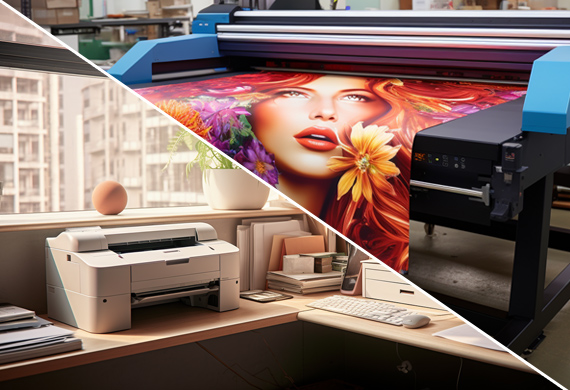
different printing methods

Key Takeaways of Different Printing Methods

  • Printing techniques are birthed from new technology, and this guide covers printing methods: digital to screen, offset lithography, and 3D printing.

  • Inkjet and laser printers perform digital printing, and are of the most widely use printing methods.

  • LED UV Printing is a cost-effective and time-efficient method that yields high-quality results with improved durability.

  • Gravure printing produces long runs of detailed visuals with fine details, while flexography offers versatility for packaging materials.

Understanding Digital Printing

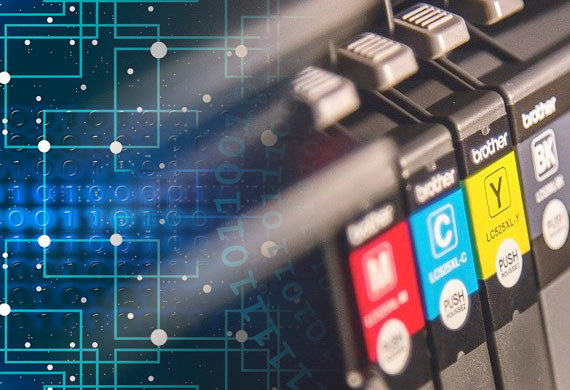
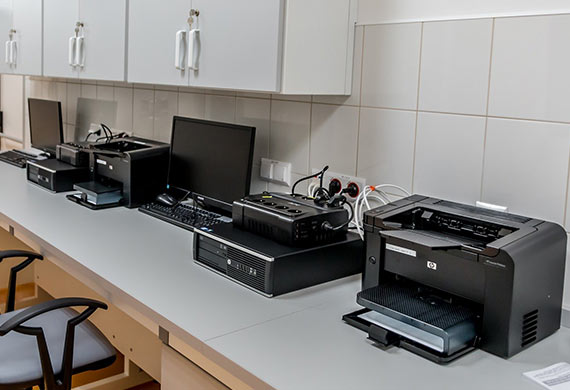
Digital printing has gained popularity for its versatility and efficiency. Among the different printing methods, digital printing is a modern method that consists of various techniques like inkjet printing and laser printing. It is one of the most commonly used methods in the modern world. These methods have transformed the way we produce digital images on physical surfaces, offering quick turnaround times and cost-effective solutions for small print runs.

One of the key advantages of digital printing is its ability to produce high-quality prints at a reasonable cost without being limited by maximum print roll width. This makes digital printing an ideal choice for businesses seeking to create.

  • Promotional materials

  • Logos

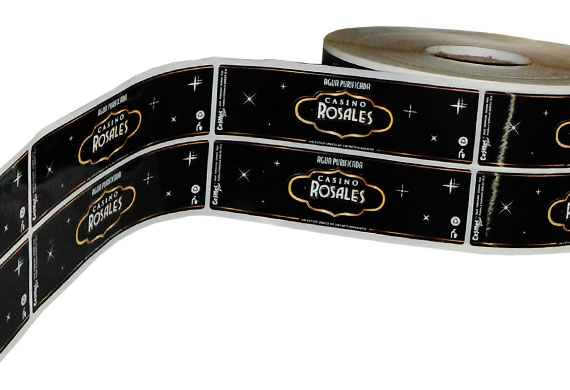
  • Labels

  • Transactional printing

Inkjet Printing

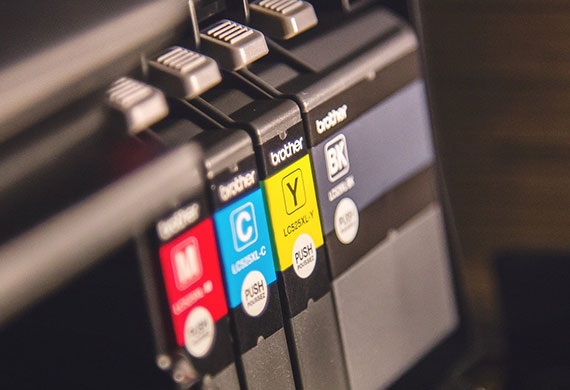
Inkjet printing, a preferred digital printing technique, employs a print head with minuscule nozzles that disperse ink onto passing paper. This technique is known for its ability to create prints of superior quality with vivid colors. Additionally, inkjet printing is a rapid printing method, making it well-suited for short-run jobs.

However, inkjet printing is unsuitable for large-scale printing projects, as it is less productive than other printing techniques. Furthermore, the ink used in inkjet printing is more expensive than other printing techniques.

Nevertheless, inkjet printing is widely used for various applications, including photographs, posters, brochures, and other promotional materials.

Laser Printing

Laser printing, another well-liked digital printing technique, operates by utilizing a laser beam to scan back and forth across a drum within the printer, forming a pattern of static electricity. This static electricity attracts toner particles, which are then transferred onto the paper to generate the printed image or text. Laser printing, as one of the printmaking techniques, is noted for its speed, efficiency, and high-quality prints.

While laser printing offers many advantages, it does have its drawbacks. The initial setup and upkeep of laser printing can be costly, and it is not compatible with certain materials. However, laser printing is regularly utilized for printing documents, photographs, and other visuals, as well as printing labels, packaging, and other items.

Delving into Screen Printing
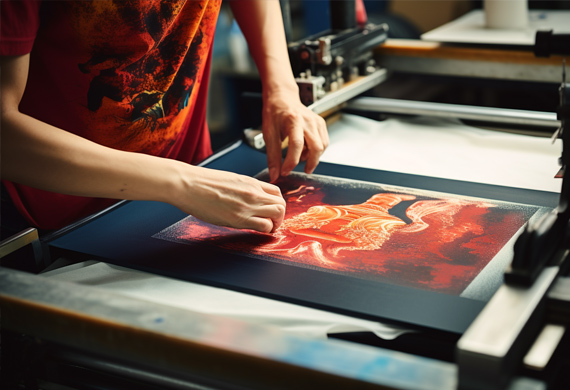
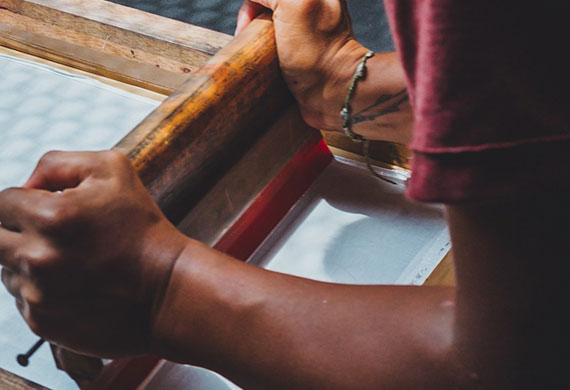
person printing a t-shirt using a screen printing technique

Screen printing is a widely used technique for creating vibrant graphics on apparel and fabric items, such as t-shirts, paper, and metal surfaces. This method is often employed for printing posters, t-shirts, and other promotional materials, using various vivid inks.

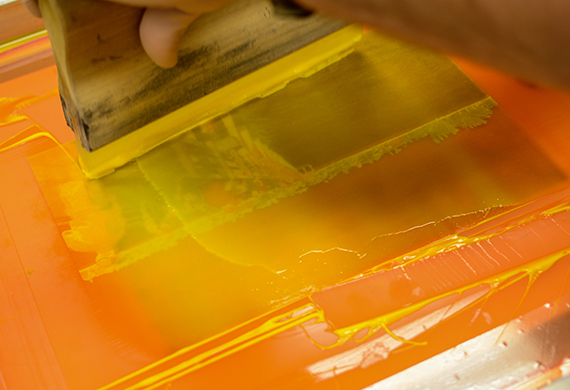
The process involves creating a stencil on a mesh screen and then pushing ink or paint through the stencil onto a surface. The sections of the screen that are not part of the stencil are made impervious to the ink, thus allowing for precise printing of the desired design.

Screen printing is economical for producing large volumes of prints, but it is not appropriate for smaller projects due to its setup costs. In subsequent sections, we'll learn more about the screen printing process and examine its strengths and weaknesses.

The Screen Printing Process

The screen printing process involves:

  1. Laying a design on the top of the screen

  2. Covering it with photo emulsion

  3. Exposing it to light

  4. Washing away the excess emulsion, leaving a stencil

  5. Pulling ink through the stencil using a squeegee

The result is a high-quality print that is both versatile and cost-effective.

At present, multiple varieties of materials are employed in screen printing. This allows for a wide range of applications, from printing on fabric to paper and even metal surfaces. Additionally, screen printing offers increased ink thickness for various finishes, durability against washing and other physical stressors, and versatility for printing on different surfaces.

Advantages and Limitations

While screen printing offers numerous benefits, such as its ability to produce high-quality prints and its versatility, it does have some limitations. Some of these limitations include:

  • The process is labor-intensive and not suitable for printing small quantities.

  • Screen printing has a higher initial setup cost compared to other printing processes.

  • The setup and printing time for screen printing is longer compared to other printing processes.

Despite these limitations, screen printing remains popular for many printing projects due to its ability to produce vibrant and durable prints.

Despite these limitations, screen printing also remains a popular choice for printing graphics on apparel and other promotional items.

Offset Lithography: A Classic Choice
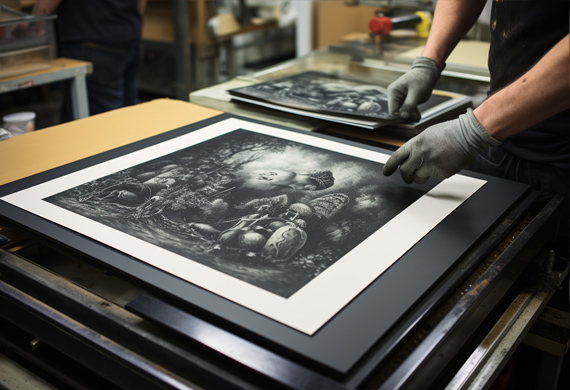
printing press with a printing plate and a flat surface

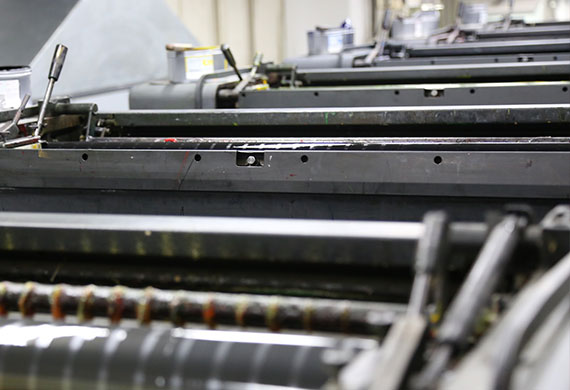
Offset lithography is a traditional printing method that produces high-quality images on flat surfaces, utilizing printing plates and rubber blankets to transfer images. This method has been a staple in the printing industry for many years and is still widely used today for large-scale printing projects, such as newspapers, magazines, and books. Offset lithography is often employed for printing packaging, labels, and other promotional materials.

While offset lithography offers numerous benefits, such as high-quality images, cost-efficiency, and the ability to print on various substrates, it requires specialized equipment and a longer setup time than other printing processes.

In the following sections, we'll scrutinize the offset printing process, its optimal applications, and factors to consider.

The Offset Printing Process

The offset printing process involves using a printing plate, a rubber blanket, and an inked image to transfer an image onto a substrate. The printing plate is initially coated with a photosensitive emulsion, which is then exposed to a light source. Subsequently, the exposed areas of the plate are washed away, leaving the image to be printed.

The rubber blanket is then employed to transfer the image from the plate to the substrate. Offset printing offers high-quality results, cost-efficiency, and the capability to print on various materials. However, this method requires specialized equipment and necessitates a certain amount of time for setup.

Despite these limitations, offset printing remains a popular choice for printing materials such as newspapers, magazines, brochures, stationery, and books. In contrast, letterpress printing is often reserved for more specialized projects that may involve a printing press.

Applications and Considerations

Offset lithography is ideal for high-volume print jobs, such as:

  • Printing books

  • Printing magazines

  • Printing newspapers

  • Printing packaging

  • Printing labels

  • Printing other promotional materials

However, it may not be cost-effective for smaller runs, given the cost of the printing plates, the cost of the inks, and the time necessary to set up the printing process.

Thus, while offset lithography offers many advantages, it is essential to consider the specific needs of a project before deciding on this printing method.

Flexography: High-speed printing for Packaging
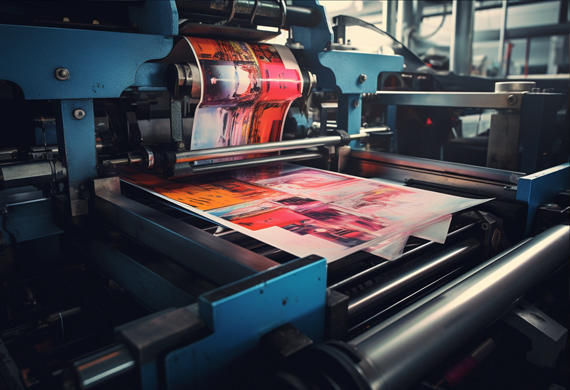
printing plate with semi-liquid inks being used for printing

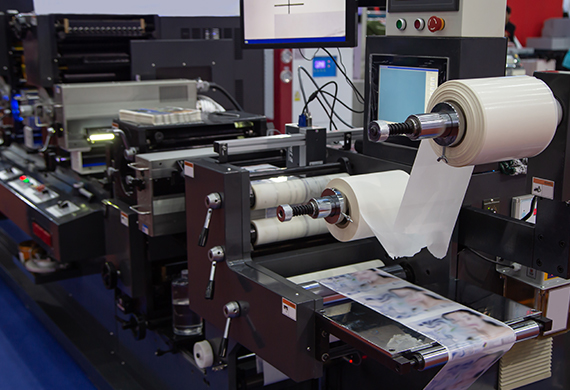
Flexography is a fast and efficient printing method used primarily for packaging materials, utilizing photopolymer plates and quick-drying inks. This method has gained popularity in recent years due to its ability to print on a wide variety of substrates, such as plastic, metal, and corrugated cardboard. Additionally, flexography is ideal for high-speed printing, making it a go-to choice for packaging and labeling projects.

In subsequent sections, we'll dissect the elements of flexographic printing, including the printing plates and ink varieties, and study its strengths and weaknesses.

Flexographic Printing Plates

Flexographic printing plates are thin sheets of photopolymer material that are mounted on cylinders and used to print on various surfaces. The process of creating these plates involves the following:

  1. Forming a positive mirrored master of the required image as a 3D relief in the material.

  2. Employing rubber-based materials in the production of flexographic plates.

  3. Note that the production of these plates involves complex and manual steps.

Flexographic printing plates offer the following benefits:

  • A High degree of detail and precision

  • A broad range of colors and textures

  • Cost-effective

  • It can be used to print on various surfaces, including paper, plastic, metal, and fabric.

Inks and Materials

Flexography utilizes a variety of inks, including water-based inks, solvent-based inks, and energy-curable inks. These quick-drying, semi-liquid inks allow for rapid printing on many materials, such as paper, cardboard, plastic film, laminates, foils, and corrugated boards.

Although flexography offers numerous benefits, such as higher speed, improved resolution, and the ability to print on multiple substrates, it does have certain drawbacks. The cost of the equipment and the ink can be relatively high, making it a costlier option compared to other printing methods.

Flexography remains popular for packaging, labels, and other printed materials despite these limitations.

Large Format Printing: Bigger is Better
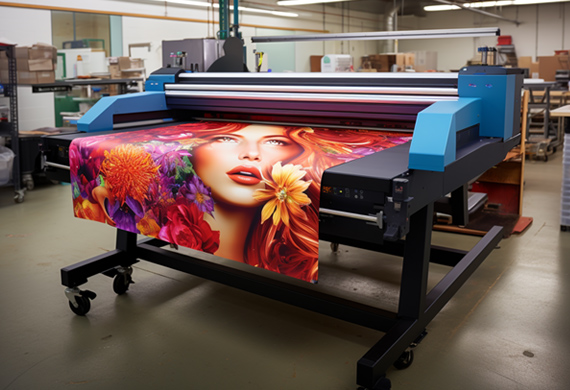
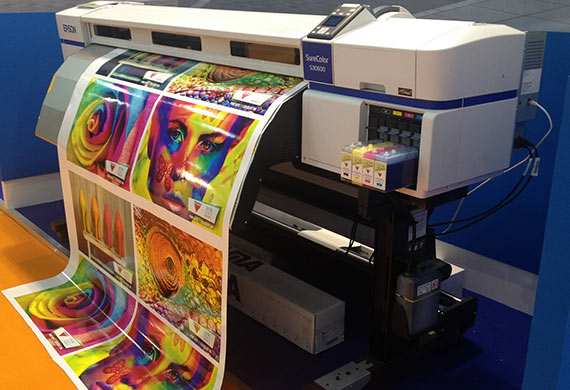
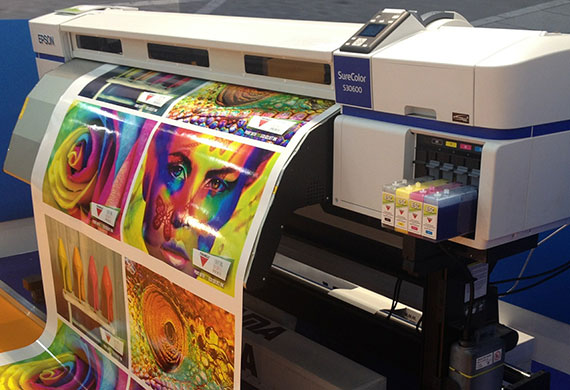
large format printer printing a large print media

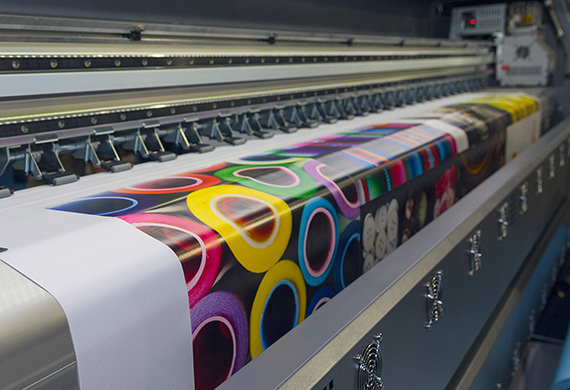
Large-format printing is the perfect solution for creating oversized print materials such as banners, billboards, and building wraps. This method allows for the production of large print media that can effectively convey messages and visuals to a broader audience. Whether it's an advertisement for a new product or an eye-catching design for an event, large-format printing ensures that your message is seen and remembered.

In subsequent sections, we'll delve into the two primary types of printing for large format, roll-fed inkjet printing, and flatbed presses, while also examining their strengths and weaknesses.

Roll-Fed Inkjet Printing

Roll-fed inkjet printing is a method of printing that utilizes a set of rollers to pull the paper from a tray or feeder and advance it when the print head assembly is ready. The paper is fed in roll form and is transported to the printer unit, where the printing is performed. This method is commonly employed in production inkjet presses and enables continuous printing on a roll of paper.

Roll-fed inkjet printing provides numerous advantages, including:

  • Higher speed

  • Improved resolution

  • The capability to print on multiple substrates

  • Continuous printing on larger rolls of media leads to cost-effectiveness and greater efficiency.

However, roll-fed inkjet printing has certain drawbacks, such as requiring specialized equipment and the possibility of paper jams.

Flatbed Presses

On the other hand, flatbed presses are printing machines that utilize a flatbed as a flat surface to secure the substrate while the printing plate is pressed against it. The printing plate is then inked, and the substrate is imprinted with the desired image. Flatbed presses can print directly onto rigid materials with high accuracy and detail, making them suitable for intricate designs.

Flatbed presses are typically utilized for large-scale advertising projects, such as billboards, banners, and signs. Additionally, they are employed for printing packaging, labels, and other printed materials. Flatbed presses offer the advantage of printing on a wide variety of materials, making them a versatile option for large-format printing projects.

Gravure Printing: Fine Details and Long Runs
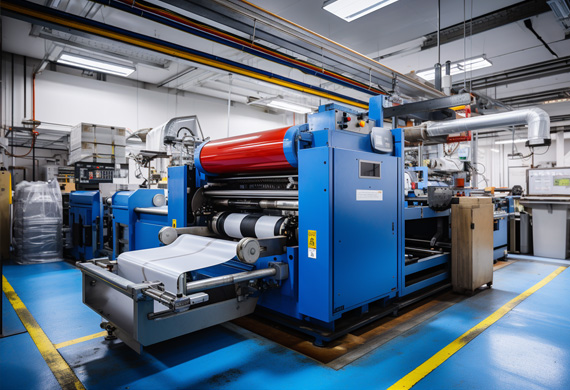
rotary printing press with an image carrier

Gravure printing is a high-quality, long-run printing method that uses copper cylinders and rotary printing press to create detailed images. This method is particularly suitable for producing extended runs of intricate visuals, including magazines, newspapers, and packaging. With its ability to produce fine details and a broad range of colors, gravure printing is a popular choice for projects requiring a high level of detail and precision.

In subsequent sections, we'll delve into the gravure printing process and its optimal applications.

The Gravure Printing Process

The gravure printing process involves:

  1. Engraving text and/or photos onto an image carrier, such as a cylinder, through an etching process or with a diamond tool or laser.

  2. Filling the engraved cells on the cylinder with ink.

  3. As the cylinder rotates, transferring the ink directly to the substrate.

  4. Resulting in a high-quality print with excellent ink laydown.

Gravure printing offers a high degree of detail and accuracy, as well as a broad spectrum of colors and hues. However, it is a laborious and costly process and unsuitable for small runs or fast turnaround times.

Ideal Applications

Gravure printing is ideal for projects that require intricate details and extended print runs, such as magazines, newspapers, and packaging. Its ability to produce high-quality prints with fine details makes it a popular choice for these types of projects.

However, due to its labor-intensive nature and high costs, gravure printing may not be the best option for smaller projects or those with tight deadlines.

3D Printing: Bringing Digital Models to Life
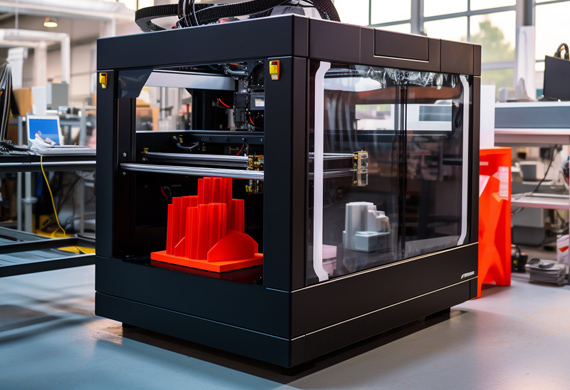
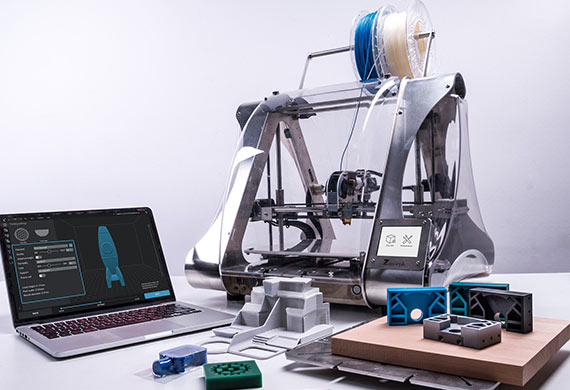
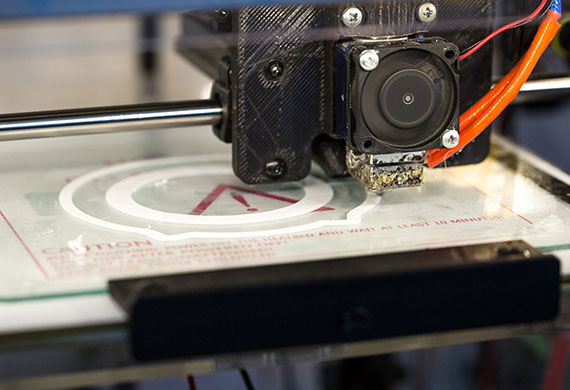
3D printer printing with continuous patterns

3D printing is an innovative method that uses digital models to create physical objects by adding layers of material. This groundbreaking technology has transformed manufacturing by enabling the production of intricate and personalized objects with remarkable accuracy. From creating prototypes to producing custom-designed products, 3D printing is revolutionizing the way we bring ideas to life.

In subsequent sections, we'll discuss the diverse 3D printing types and materials used, along with the merits and demerits of this advanced method.

Types of 3D Printing

There are several types of 3D printing, including:

  • Fused Deposition Modeling (FDM)

  • Stereolithography (SLA)

  • Selective Laser Sintering (SLS)

  • Digital Light Processing (DLP)

FDM, the most widely utilized type of 3D printing, involves melting and extruding plastic filaments to create objects.

On the other hand, SLA uses a laser to cure liquid resin into solid objects. SLS employs a laser to sinter powdered materials into solid objects. Each of these 3D printing methods has its own advantages and disadvantages, but all offer the ability to create intricate and customized objects with impressive precision.

Materials and Limitations

3D printing can be used with a range of materials, such as:

  • ABS

  • PLA

  • HIPS

  • PETG

  • Nylon

  • Carbon Fiber Filled

  • ASA

  • Polycarbonate

  • Various blends of these materials

Additionally, there are options for printing with powders, resins, metals, and carbon fiber.

Despite its many advantages, 3D printing does have some limitations. The print size may be restricted, and not all materials are compatible with every 3D printing method. Nevertheless, 3D printing continues to evolve, offering new possibilities and applications for industries and individuals alike.

LED UV Printing: Fast and Efficient
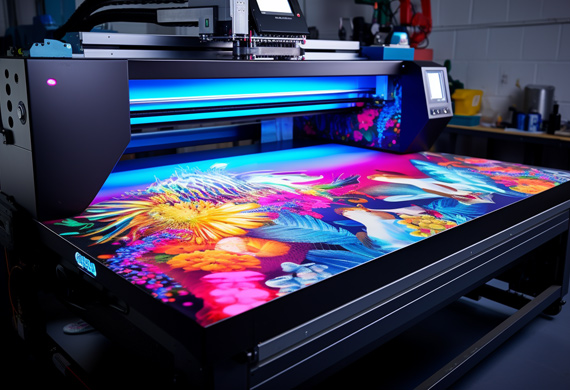
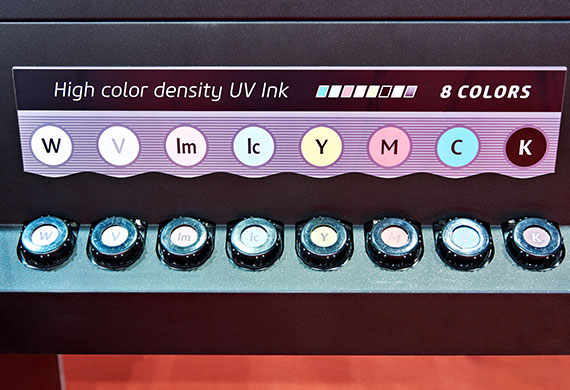
LED UV printer printing variable data

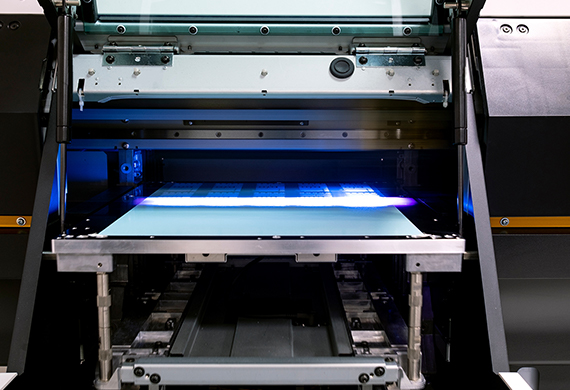
LED UV printing is a fast and efficient method that uses UV lights to instantly dry ink, resulting in high-quality prints and quick turnaround times. This method has become increasingly popular in recent years due to its ability to produce high-quality prints at a reasonable cost without being limited by maximum print roll width.

In subsequent sections, we'll learn more about how LED UV printing functions and examine its applications and benefits.

How LED UV Printing Works

LED UV printing works by curing ink with UV light, allowing for faster production and reduced drying times. This technology employs a UV light source to cure inks applied to the substrate, which results in a resilient, enduring print.

The benefits of LED UV printing include faster production times, shorter drying times, and enhanced durability. LED UV printing is also more eco-friendly than other printing techniques, as it does not require solvents or other hazardous substances. This method is utilized for a range of applications, including printing on plastics, metals, and other substrates.

Applications and Advantages

LED UV printing is a versatile method that can be used for a wide range of projects, including packaging, promotional materials, and signage. Its rapid turnaround times, high-quality results, and cost-effectiveness make it an attractive option for businesses and individuals seeking to create eye-catching printed materials.

Summary of Printing Methods

In conclusion, the world of printing offers a diverse range of methods and techniques, each with its own unique advantages and applications. From the versatility of digital printing to the intricate details of gravure printing, these methods enable us to bring our ideas to life in a myriad of ways. As technology continues to evolve, so too will the possibilities for printing and the ways in which we share and communicate our messages. The future of printing is bright, and we can't wait to see what innovations await!

Frequently Asked Questions

What are the 8 types of printing methods?

There are eight printing methods: Digital Printing, Screen Printing, Flexography Printing, Litho Printing, Transfer Printing, Engraving, Embossing, and Embroider Printing.

What are the 4 main types of printmaking?

Woodcut, etching, engraving, and lithography are the four main types of traditional printmaking, while screenprinting is a more modern technique.

What is the difference between inkjet and laser printing?

Inkjet printing uses liquid ink to produce high-quality images, whereas laser printing utilizes toner for precise and sharp prints.

What materials can be used in 3D printing?

3D printing can be used with various materials, such as ABS, PLA, HIPS, PETG, Nylon, Carbon Fiber Filled, ASA, polycarbonate, powders, resins, metals, and carbon fiber.

Clash Graphics Print Shop Atlanta Flyer Printing

2233 Peachtree Rd NE Ste 202 Atlanta, GA 30309
(678) 235-3464

Wednesday, May 18, 2022

7 Types of Printing

Prevent your lack of knowledge of the best type of printing for your project from wasting your money, or causing you to print an inferior product. Knowing different types of printing and how they are used can significantly increase your production quality and reduce your expense.

Several printing types  can be used by modern creators for better results

clashgraphics.com gathered information about seven types of printing for modern creators to produce higher product volumes with superior results.

1. Sublimation Printing

Printing types like sublimation can be used by modern creators

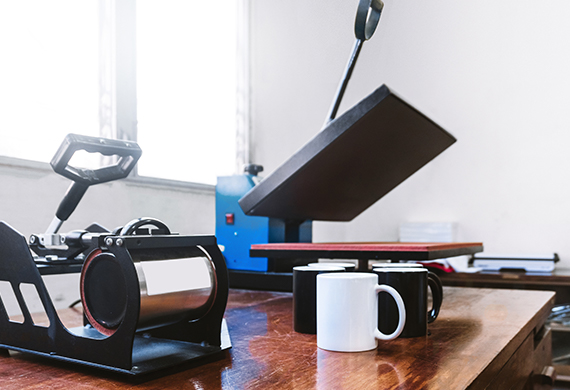
The sublimination printing process involves printing text or an image onto a special sheet of paper, then transferring the image onto another material (polyester or a polyester hybrid). In this process, solids (printed ink in this case) turn into a gas without phasing through the liquid stage.

Pros: Outstanding for fine lines and details, and arguably one of the best printing methods for all-over (seam to seam) printing and helps reduce waste by using less ink during product production and saves water when cleaning up afterward since no ink or paint comes into contact with fabric at any stage.

Cons: Sublimation items must have a white or light-colored print area, black or dark-colored surfaces can't be sublimated. The item may lose color over months due to UV ray effects if exposed to direct sunlight for long periods. And, like all inkjet printers, the printheads can clog up if not used regularly.

2. Screen Printing

Printing types like screen printing can be used by modern creators

Screen printing is the transferring of a stenciled design onto a flat surface using a mesh screen, ink, and a squeegee. Fabric and paper are the preferred screen-printing surfaces. With specialized ink, it's also to print on wood, metal, plastic, and glass substrates.

Pros: Screen printing produces a higher quality and more durable output than digital prints. This method can be used on a variety of different print materials.

Cons: This process has a much higher setup cost than digital printing and takes more time. It also has a slower turnaround time than other print methods, and small runs aren't ideal.

3. Offset Printing

Printing types like offset can be used by modern creators

Offset printing is a common printing method in which inked images are transferred from a plate to a rubber blanket and then to the selected printing surface.

Pros: High definition and quality for any project. With offset printing, you can expect a high-quality printed image every time, lower costs, and a fast turnaround time. You can use this process to print on most surfaces or shapes efficiently. Printing plates save time and money.

Cons: For low-quantity print jobs, offset printing can be costly and time-consuming. It takes a long time to create a plate and set up an offset printer. If you only need a few copies, the time spent on the initial setup will make offset printing a more expensive method than digital printing.

4. Letterpress Printing

Printing types like letterpress can be used by modern creators

Letterpress printing is a form of relief printing. Using a printing press allows multiple copies to be produced by repeated direct impressions of an inked, raised surface against sheets or a continuous roll.

Pros: The process is quite simple, and after an elevated first investment, it is not necessary to make any more outlandish expenses. It is possible to personalize prints and obtain them with a much more marked and different relief than with other printing methods.

Cons: This is a slower process where the application of color is limited, printing costs can be considerably more than other printing methods, and this method is dependent on the operator’s expertise.

5. LED UV Printing

Printing types like led uv can be used by modern creators

Using UV printing, it is possible to print unique designs, images, text, and textures on a range of materials or products. UV inks are exposed to the UV-LED lights built into the printer, which almost instantly cure the ink, turning it from a liquid to a solid.

Pros: Quick drying. Since the ink dries quickly (almost immediately) on the substrate, the chemical interaction with the substrate is significantly reduced, scratch-resistant, faster production, and comes out to lower cost.

Cons: UV inks won't dry without being cured, spills are incredibly difficult to clean up, initial startup costs are higher, and operators need to avoid skin contact.

6. Flexography Printing

Printing types like flexography can be used by modern creators

Flexography is a printing process utilizing a flexible relief plate. It is like a modern version of the letterpress that can be used for printing on nearly any substrate, including plastic, metallic films, cellophane, and paper.

Pros: Besides supporting multiple colors, it can be used with either water-based or oil-based inks. Currently, water-based inks have gained popularity due to their non-toxicity.

Cons: Flexography is not an ideal printing solution for small runs. Although the process is highly automated, setup can be very time-consuming.

7. Digital Printing

Printing types like digital printing can be used by modern creators

Digital printing prints digital-based images directly onto a variety of substrates. There is no need for a printing plate, unlike offset printing.

Pros: This low-cost, simple printing method allows multiple design possibilities with full color and gradation print (without the limitation of colors).

Cons: The range of printable fabrics is somewhat restricted when compared to screen printing, and due to fixed pricing, bulk print jobs don’t offer reduced costs.

Types of printing

In this article, you discovered seven types of printing to help you achieve superior artistic design and its efficient application to the substrate of your choice.

Knowing which printing types are available to you can increase your potential to create bigger, better, and more evolving concepts as an artist or designer.

Not learning the different types of printing at your disposal may leave your project inferior or cause you to use a more expensive process that's not necessary.

Sources:
web.tech.uh.edu/digitalmedia/materials/3350/Flexography.html
printcopymail.umich.edu/copysvcs/digitalprinting.htm
scholarworks.lib.csusb.edu/cgi/viewcontent.cgi?article=1032&context=cap-curr
print.iastate.edu/productsservices/offset/
quod.lib.umich.edu/d/did/did2222.0001.562/--letterpress-printing?rgn=main;view=fulltext
news.clemson.edu/from-intelligent-packaging-materials-to-flexographic-uv-printing-clemson-university-unpacks-sustainable-packaging/
makingcenter.parsons.edu/wp-content/uploads/2016/09/DyeSub_2021.pdf

Clash Graphics Print Shop Atlanta Flyer Printing

2233 Peachtree Rd NE Ste 202 Atlanta, GA 30309
(678) 235-3464
To view the original version on Clash Graphics, visit: https://www.clashgraphics.com/printing-tips/7-types-of-printing/

Wednesday, June 17, 2020

The Future of The Printing Industry

Not knowing where the printing industry is heading can put you at a disadvantage. Despite the explosion of online marketing and social media advertising, the printing industry is evolving but continues to be vibrant.

Future of the printing industry mixes traditional methods with technological advancements in paper ink and machinery

Clash Graphics gathered information about the future of the printing industry, what has happened over past decades, and new strategies and technologies driving it to remain relevant.

The Future of Printing

Making predictions is a risky business. However, there are three areas that top printers are embracing to remain profitable and relevant as technology and consumer trends change. Those areas are:

Innovation/Diversification - Through mergers, companies streamlining their processes, technological advancements, and changing market demands, only the printers that adopt new technology and transition from traditional print to more of a “communications company” will survive.

Digital Technology - In the future, print will remain relevant because of its reliability in driving an audience online. Ultimately, people like to hold printed objects. Through this tactility, marketers will undoubtedly continue to integrate print with digital technology.

Custom Print - The days of printing massive numbers of flyers, brochures, etc. to cover as many people as possible, are coming to an end. In today’s market, smaller, more customized runs that target specific customers and demographics are on the rise.

To grasp an idea of how printing has evolved over the years, read clashgraphics.com/printing-tips/how-many-types-of-printing/

What Happened to The Printing Industry?

For more than two decades, the printing industry endured a significant reduction in business volume, manpower, and, subsequently, revenue. This occurred due to the increases in business workplace technology (PC’s, software, etc.) and onsite printing capabilities (inkjet, laser, etc.). Other factors include:

Future of the printing industry and in office equipment for marketing and advertising development

  • Online direct marketing
  • Social media advertising
  • Increasing paper costs
  • Increased ink and supply costs
  • Postal rate uncertainties
  • “Paperless” initiatives
  • Healthcare cost increases
  • Increased cost for related support services

According to the Bureau of Labor Statistics (BLS), employment in the printing and related support activities industry (bookbinding, graphic design, data imaging, etc.) are expected to decline by roughly eighteen percent between 2016 and 2026.

Also, from BLS, continued loss of the market share to other media and continued automation causes net employment to decline in the future. But this is happening at a much slower pace than in recent years. In the decade between 2006 and 2016, the industry had declined by about thirty-four percent.

In contrast to BLS information, the Printing Industries of America (PIA) forecast a one to two percent increase in revenue from 2019 to 2020 and printers’ profits, are to sustain historic growth levels.

Changes in the Printing Industry

To compete with internet and social media marketing strategies, the printing industry has had to consolidate and diversify to remain both relevant and profitable. Services that were once third-party “related support activities” are now being integrated and offered in house.

Further defying BLS predictions, the majority of printers have adjusted their business models to account for changing industry trends and realities. Types of products that continue in demand include:

  • Direct mail
  • Menus
  • Specialty printing
  • Large format
  • Labels
  • Brochures
  • Business cards
  • Packaging
  • Promotional products
  • Product/Point-of-purchase displays

Future of the printing industry and large format print to continue meeting marketing and business needs

Some of the services that many printers have brought in-house include:

  • Kit fulfillment
  • Professional creative/graphic design
  • Web-to-print (documents, marketing, brand management)
  • Logistics management
  • Marketing development
  • Custom website creation and curation

For many printed products, like packaging, a substitute does not exist. For others like magazines, newspapers, books, and store catalogs, there are electronic equivalents. The internet, mobile technology, and tablet publishing have had a significant impact on the printing industry. However, once again, the statement that “print is dead” grossly overlooks key advantages of printed communication. Consider the following:

  • Printed material allows for easy distribution to a specific region or target market
  • Various printed publications maintain a level of popularity unrivaled by online/electronic media
  • Printed media are often more engaging than electronic equivalents
  • Printed material continues to produce positive results in marketing strategies and campaigns

With today’s online and technological capabilities, printers can assist a business from project creation to project completion, even distribution. As well, their consultants can help businesses build their brand and develop a comprehensive marketing strategy.

Future of the printing industry icludes printed material like newspapers magazines and easily circulated marketing products

Printing Technology

Significant advancements in technology have had an incredible influence on the printing industry. The following are just two of the printing technology trends making an impact on the industry:

Sustainable Packaging - Environmental concerns and high demand for recycled material have prompted the printing industry, specifically the packaging industry, to seek drastic changes in the form of:

  • The use of recycled paper
  • The use of flexible, biodegradable plastics
  • Using folding, collapsable, and reusable boxes
  • Using eco-friendly alternative ink when printing

By using friendly printing technology and techniques, the industry can improve biodegradability, recycling, and the use of sustainable raw materials.

3D Printing - The applications of 3D printing has gained significant interest in recent years. Some of the industries already implementing 3D printing include:

  • The Health Industry (printing skin for grafts and researching how to print organs)
  • The Food Industry (restaurant chefs use this technology to improve plating and design some foods)
  • The Fashion Industry (big brands use 3D printing in sneaker and t-shirt production among other applications)
  • The Architecture Industry (3D printing is widely used to create precise scale models and has been used to build/print full-size structures)

As new technologies are applied to the printing industry, machinery, systems, and raw materials become more efficient, sustainable, and in demand.

Future of the printing industry includes innovations and applications in 3d print

The Future of Printed Media

In this article, you discovered the factors influencing the future of the printing industry, what has affected it in the past, and the technology driving it forward.

By embracing new technology, a streamlined way of meeting customer needs, and offering diversified products and services, the printing industry has remained robust and relevant through the digital revolution.

Those that have failed to incorporate new technology and business strategies have either gone out of business, been absorbed by other companies, or are finding it more and more challenging to keep their doors open.

Sources:
qualityinfo.org/-/technology-reduces-employment-in-the-printing-industry
printing.org/press-room/printing-industries-of-america-to-bureau-of-labor-statistics-print-is-still-here-were
bls.gov/iag/tgs/iag323.htm
scholarworks.rit.edu/cgi/viewcontent.cgi?article=1048&context=books


Clash Graphics Print Shop Atlanta Flyer Printing

2233 Peachtree Rd NE Ste 202 Atlanta, GA 30309

(678) 235-3464
To view the original version on Clash Graphics, visit: https://www.clashgraphics.com/printing-tips/future-of-printing-industry/

Tuesday, May 19, 2020

How Many Types of Printing Are There

Avoid wasting your time and money on a bad print job. By knowing what types of printing are available to you, you can achieve stunning results on your next print project.

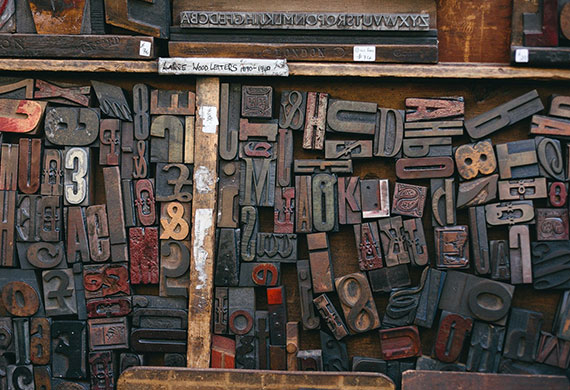
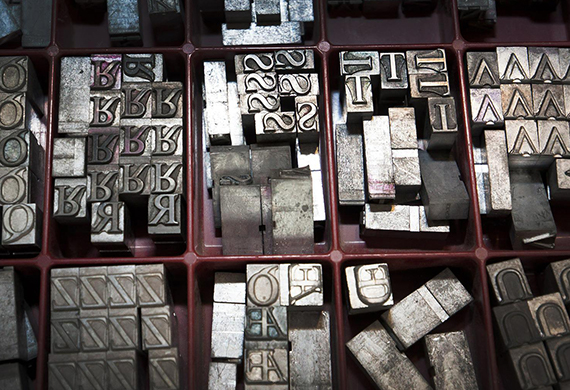
Wood printing blocks used in presses

Clash Graphics gathered information on 7 forms of printing to help you make informed decisions when selecting the right type of printing for your next print job.

Flexography

Flexography, sometimes called flexo, is an updated version of letterpress printing. This method of printing can be used on almost any type of substrate, including:

• Label stock
• Fabric
• Metallic film
• Corrugated cardboard
• Cellophane
• Bags
• Product packaging
• Plastic

Flexography used to print on various substrates

Flexography prints from a flexible printing plate that is wrapped around a rotating cylinder.
The process uses quick-drying, semiliquid inks transferred to the printing plate by rotating cylinders.

Offset Lithography (Offset)

Offset printing uses plates, frequently made from aluminum, which are used to transfer an image onto a rubber "blanket", and then rolls that image onto a sheet of paper. It's called offset since the ink is not transferred directly to the paper. Since offset presses run so efficiently once they are set up with plates and colors, offset printing is one of the best choices. Especially when more significant quantities are ordered, and provides accurate color reproduction and professional looking printing.

Offset printing uses a plate to transfer an image to a rubber blanket to roll the image onto paper

Digital Printing

Digital printing disposes of the need for plates, but instead uses toner for smaller printers and sometimes liquid ink in larger digital printers. Digital printing outperforms other types of printing when lower quantities are needed. Another benefit of digital printing is its flexible data capability. When each printed unit requires a unique code, name, or address, digital is the superior option.

Digital printing uses ink or toner to produce images from digital files

Read about the advantages and disadvantages of digital and offset printing at clashgraphics.com/printing-tips/digital-vs-offset-printing-explained/

Screen Printing

Screen printing is a technique in which mesh is used to apply ink onto a substrate, except in specific areas made impenetrable to ink by a blocking agent. A squeegee is moved across the screen to fill the open mesh with ink. A reverse stroke causes the screen to make contact with the substrate momentarily. Contact from the reverse stroke causes the ink in the mesh to wet the substrate and be pulled from it as the screen lifts off of the substrate. Only one color is applied at a time, so to produce a multicolored product, a single screen must be produced for each color.

Screen printing is a process which allows the application of one color at a time using a screen and squeegee

Find out more about screen printing at clashgraphics.com/printing-tips/screen-printing-heat-transfer-direct-to-garment-custom-t-shirts/

Wide-Format Printing

Large or wide-format printing is a medium that has been growing in popularity for advertising. Its purpose is to support maximum print roll width. The advantage of this type of printing is the ability to work with a bigger area. Wide-format printing can be used to produce banners, posters, murals, wallpapers, and billboards. This printing type is ideal for projects that require wide images, large texts, and visual or graphic-heavy designs.

Wide format printing allows for the easy creation of banners posters wallpaper and billboards

3D Printing

3D printing, also referred to as additive manufacturing, is the process of making a three-dimensional object from a digital file. 3D printed objects are made using an additive process. An additive process means that an object is created/formed by applying successive layers of material until the object is finished.

3D printing to make three dimensional objects from a digital file

LED UV Printing

In traditional printing types, inks are typically solvent-based and dry as their chemical components evaporate. LED-UV inks dry (cure) instantly using a UV light.

The difference between UV and LED-UV is the light used to cure the ink. LED-UV generates an energy wavelength from light-emitting diodes (LED) entirely used to cure the ink. Traditional UV produces an energy wavelength from a mercury-vapor bulb that is less efficient, as only part of the wavelength is used to cure inks and/or adhesives.

LED UV printing cures ink instantly during the print process

Defining Your Print Project

Once you have determined which printing type fits your project best, your next determination should be the type and quality of the substrate or paper. For more detail about paper types and qualities, visit clashgraphics.com/printing-tips/paper-quality-and-type/

Regardless of how many times you’ve proofed your project before sending it to your professional printer, always request a prepress proof. A prepress proof allows you to see what the finished product will look like and allow last-minute adjustments in color and print.

Prepress proofs allow you to detect imperfections and needed corrections before a print run

Types of Printing

In this article, you discovered information about 7 types of printing and how to determine which one best suits your printing project.

By knowing what printing options are available to you, you can adjust your project as needed while being in full command of the end result.

When you are entirely reliant on others to produce your vision, you may lose valuable time and resources, waiting for them to get it right. If they ever do.

Sources:
web.tech.uh.edu/digitalmedia/materials/3350/Flexography.html
westga.edu/pubprint/offset-printing.php
printcopymail.umich.edu/copysvcs/digitalprinting.htm
wisegeek.com/what-is-screen-printing.htm
libguides.utk.edu/AVM3D_Print_Lib_Guide
flaar-reports.org/index.php/services/


Clash Graphics Print Shop Atlanta Flyer Printing

2233 Peachtree Rd NE Ste 202 Atlanta, GA 30309

(678) 235-3464
To view the original version on Clash Graphics, visit: https://www.clashgraphics.com/printing-tips/how-many-types-of-printing/

Wednesday, January 22, 2020

Digital vs. Offset Printing Explained

You can avoid unnecessary expenses for your printing needs. Knowing the differences between digital and offset printing can help you make smarter decisions when it’s time to print.

Digital vs offset printing color quality and cost differences

clashgraphics.com gathered the following information about digital printing and offset printing, the differences, turnaround time, quality, color, and cost-effectiveness.

What Is Offset Printing?

Offset printing is the most used form of commercial and bulk printing. Invented in 1798 by Alois Senefelder, offset printing or offset lithography is a process in which:

1. Original text and images are scanned or uploaded to a computer
2. Films are produced using a high-resolution imagesetter
3. The image is transferred to a metal, plastic, or paper printing plate
4. Rollers apply oil-based ink and water to the plate (water prevents the ink from bleeding to the non-image area)
5. The inked image is transferred to a rubber blanket (cylinder)
6. The image is then transferred to paper as it passes between the blanket and another cylinder
7. A new plate is produced, and the process is repeated for each color added to the image

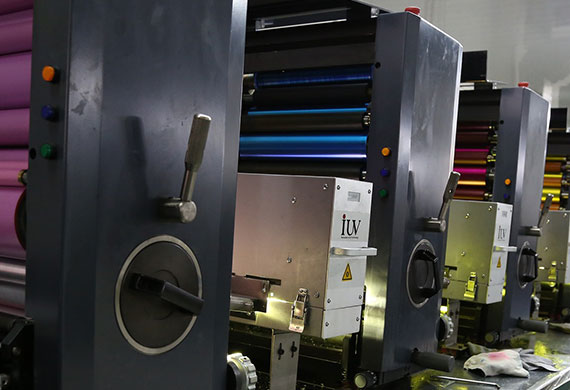
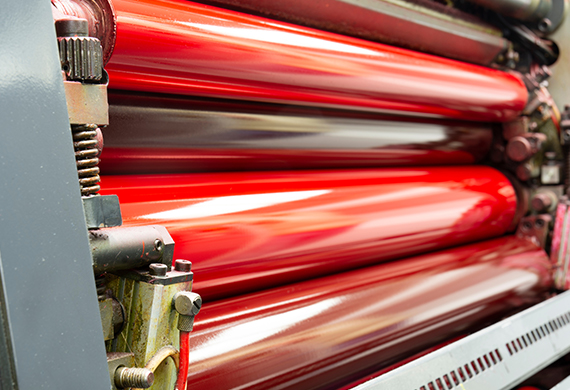
Offset printing machine with multiple color runs

The term offset refers to the process of the image not being printed directly from the plate. Rather, it is offset or transferred to another surface that makes contact with the paper.

What Is Digital Printing?

Digital printing refers to printing from a digital-based image directly to media using toner or liquid ink. In this process, the toner or ink sits and dries atop the medium rather than being absorbed by it. Benny Landa, who is known as “the father of digital printing,” shocked the entire printing industry when he unveiled the world’s first digital color printing press in 1993.

Unlike offset printing, the technical steps required to produce reproduction plates are not necessary. Digital printing also allows you to make changes to your project on the fly, without needing to reset any machinery.

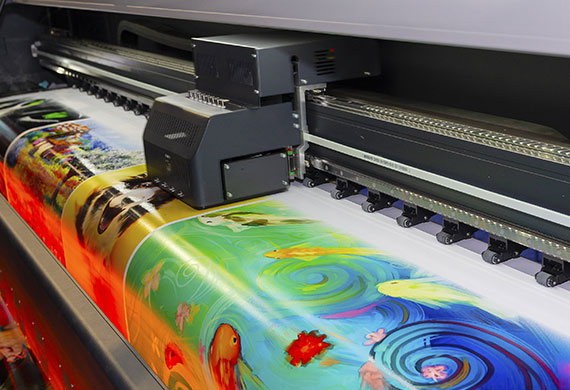
Digital large format printer vs offset printing

Project Turnaround Time

One consideration when choosing between digital and offset is how quickly you need the job done.

Offset - Due to the plate production process, fine-tuning of machinery, and typically higher order quantities, the turnaround time for an offset print job can be significantly longer.

Digital - With no need for plate production, machinery maintenance, and lower quantity print jobs, the turnaround time for digital print jobs is much faster.

Digital Printing Wins Turnaround Time

Print Project Quality

The print jobs you will have done are going to represent you or your business. Quality print is an absolute necessity to convey professionalism and confidence.

In this category, both offset and digital possess the capacity to produce high-quality print jobs.

Offset and Digital Printing Tie on Print Quality

Project Color Requirements

Some print projects may require exact color matches. Here are the differences between offset and digital.

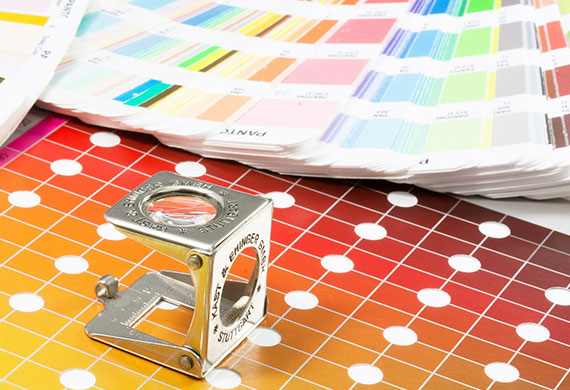
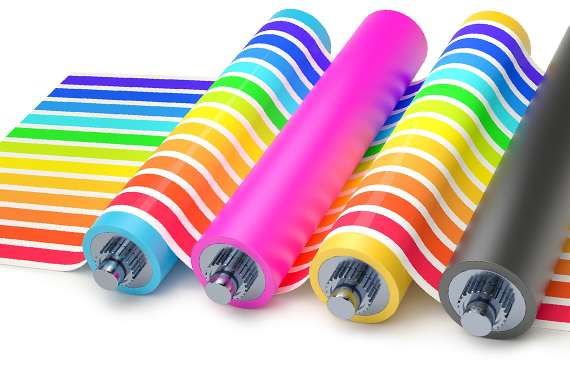
Offset - Traditionally, offset printing uses four ink cylinders - Cyan, Magenta, Yellow, and Black (CMYK). Offset, however allows for the printing of true colors such as Pantone color matching and HKS:

• Pantone Color Matching includes 1,114 individual spot colors
• HKS includes 120 spot colors and 3,520 tones

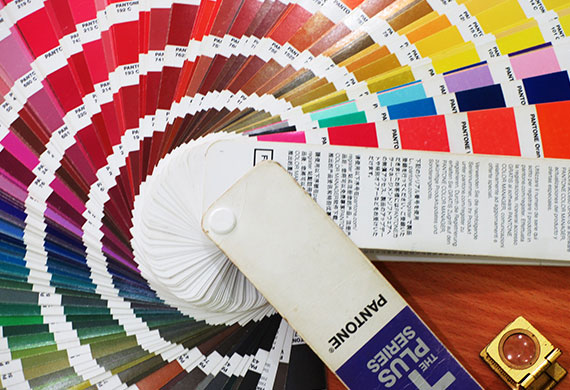
Digital vs offset printing with pantone colors

Digital - Digital printing uses inkjet or laser printers with a four-color-matching system. It is reliant on CMYK, lacking the capability to match the color and tone variations of Pantone and HKS.

Digital vs offset printing and cmyk color matching

If your print project requires an exact Pantone or HKS color match, digital will not fulfill your requirements.

Offset Printing Wins on Color Matching

Project Cost Effectiveness

Price is often the determining factor for which print process will be used.

Offset - The price for offset printing decreases as the printed number of units increases from a single or series of plates. The initial cost of plate production and machine setup makes smaller print jobs economically inefficient.

Digital - While the cost per unit is higher with digital printing, the costs associated with plate production and machine setup are eliminated.

For print jobs that require sequential numbering or individual personalizations, digital is the way to go, as a new plate would have to be produced for each individualization, making the print job astronomical in price.

Offset Printing Wins (for larger print jobs - over 500 units)

Digital Printing Wins (for smaller print jobs - less than 500 units)

The Difference Between Digital Printing And Offset Printing

Ultimately, digital and offset printing produce high-quality printed products. Their differences only become evident depending on your project’s color, budget, time, and quantity requirements.

Digital Vs. Offset Printing

In this article, you discovered the differences between digital and offset printing, their efficiencies regarding turnaround times, project quality, color limitations, and cost-effectiveness.

By knowing the efficiencies and drawbacks of digital printing and offset printing, you can better meet your printing needs while achieving your budget goals.

Failing to properly evaluate and select the best print options can generate an inadequate product, or create the need to completely rerun the project, simultaneously generating more expenses and frustration.

Sources:
pirate.shu.edu/~mckenndo/Offset%20Lithography.htm
printcopymail.umich.edu/copysvcs/digitalprinting.htm
landanano.com/about-us/benny-landa

Clash Graphics Print Shop Atlanta Flyer Printing

2233 Peachtree Rd NE Ste 202 Atlanta, GA 30309

(678) 235-3464
To view the original version on Clash Graphics, visit: https://www.clashgraphics.com/printing-tips/digital-vs-offset-printing-explained/

Tuesday, June 18, 2019

Benefits of Screen Printing vs. Sublimation and Offset vs. Digital Printing

Avoid costly mistakes and delays when taking your design to print. Discover the printing techniques available for your project, their benefits, and disadvantages.

Differences and benefits of dye sublimation screen print offset and digital printing

Knowing the basics of the four principle printing methods will help you make informed decisions to achieve the best results for your marketing materials or printed products.

clashgraphics.com explores screen printing vs. sublimation, and offset vs. digital, their differences, applications, and cost benefits.

Screen Printing vs. Sublimation

When you want to place your design, logo, or message on a t-shirt, coffee mug, mousepad, or other promotional materials, screen printing and sublimation are the options that may provide the best results. Here are the significant differences, applications, and benefits of each printing type:

Screen Printing Method

This method of printing involves the use of mesh stencils. One stencil for each color of a design is created by using ultraviolet light to harden a substance applied to the mesh that prevents the passage of ink. The rest of the substance is then washed away.

The washed away areas allow ink to be pushed through open holes in the mesh with a squeegee onto the garment or product, one color at a time.

This process creates a high level of vibrancy, even on dark shirts, as more ink is applied to the garment than in other printing methods.

Material - While screen printing can be used on nearly any material, it is best applied to flat surfaces and can produce high-quality images on:

• Shirts
• Sweatshirts and pants
• Workout Gear
• Backpacks
• Tote Bags
• Glass
• Flags
• Binders
• Ceramics
• Aprons

Advantage - This method is most efficient when:

• Large quantities of printed product are needed.
• The design is simple.
• Fewer colors are used.
• Printing on dark shirts and using bright colors.

Setup and Production - Screen printing setup is costly and time-consuming since one stencil must be made for each color of a design. Print shops will often require a minimum quantity for this printing method.

Disadvantage - Over time, printed images may crack, chip, fade or peel away from the product, especially when exposed to frequent washing or laundering.

Watch this video to see how screen printing is applied to paper.

Sublimation Method

Also referred to as dye sublimation, this method of printing uses sublimation ink digitally printed on sublimation paper, which is then transferred to a destination material through heat and pressure.

Temperatures ranging from 195 to 250 degrees and pressure cause the sublimation ink to convert from a solid state to a gaseous state, and the pores of the destination surface or material to open. The ink leaves the sublimation paper and permeates the surface of the destination material.

Once the heat is removed, the sublimation ink returns to a solid state and the pours of the material close around it. The image is infused with the surface of the destination material, whereas screen printing leaves an image layered onto the surface.

Material - Ideal results are achieved on 100% polyester and polyester blended garments or items with a polymer coating, on white or light-colored materials. There are plenty printable products, some of which include:

• Shirts
• Coffee Mugs
• Mouse Pads
• Ceramic Tiles
• Drink Coasters
• Christmas Ornaments
• Dog Tags
• Key Chains
• Clock Faces
• Lighters
• Umbrellas

As long as there is a receptive material for the sublimation ink, and uniform heating can be applied, this method produces outstanding results.

Advantage - This method is most advantageous when:

• Your design is detailed and has many saturated colors.
• Small quantities of printed product are needed.
• Using different designs on multiple items or material.
• You need a fade resistant design.

Setup and Production - Sublimation printing setup is costly, and product production is time-consuming. When compared to screen printing, the sublimation process produces more stunning and photorealistic results in a much easier way.

Disadvantage - Unlike screen printing, sublimation is limited to polyester-blended garments or items with a polymer coating.

Watch this video to see how sublimation printing is done on dark shirts.

Offset vs. Digital Printing

When you want to produce brochures, flyers, books, newsletters, posters, and other marketing material, your first step is to create your design, copy, and layout. Once this is done, decide between offset and digital printing (oftentimes unaware, and based on the printing company you use). Here are the significant differences, applications, and benefits of each printing type:

Offset Printing

Offset printing, also known as lithography, is the most common printing method for high volume commercial projects.

This method utilizes water, ink, rubber rolls, and metal plates (one plate is made for each color) which transfer ink to rubber rolls. As the paper moves through the rolls, color is layered on to produce the final image.

Material - Offset printing allows you to print on multiple media surfaces, which can include:

• Paper
• Card Stock
• Plastic
• Metal

And is most beneficial when used to mass produce:

• Posters
• Books
• Book Covers
• Brochures
• Business Cards
• Mailers
• Flyers
• Newsletters
• Newspapers
• Magazines

Advantage - This method is most efficient when:

• Large quantities of printed product are produced (over 500 pieces).
• An exact color match is required.

Setup and Production - Offset printing setup is costly and time-consuming due to the production of each plate used in the process. However, once the project has been set up, production time is fast with impressive color and quality.

Disadvantage - While offset printing has many advantages, the following should be taken into consideration:

• Rush jobs don’t happen with offset printing. Since the plates must be created, there is a longer timetable to consider.
• Low volume jobs will have a high price per piece.
• Typos and graphics errors can cause the loss of a batch and the need to start the process over from scratch.

Watch this video to see how offset printing works.

Digital Printing

Much like the inkjet or laser printer you may be using at home, print shops use ones that are larger, more precise, and much faster.

Digital printing eliminates the need for proofs, plates, and rubber rolls, printing your design directly to the printing surface with powdered toner or liquid ink.

Material - Digital printing allows you to print on multiple media surfaces, which can include:

• Paper
• Card Stock
• Plastic

Which may be used to produce smaller quantities of:

• Posters
• Book Covers
• Brochures
• Business Cards
• Mailers
• Flyers
• Newsletters

Advantage - This method is most beneficial when:

• Small quantities of printed product are needed.
• A faster turnaround time is required.
• Changes are needed in print (you can change dates and times on flyers or invitations within a single batch).

While the cost for digital printing is excellent in small quantities, keep in mind that the price for offset printing reduces as quantities increase. At some point, the cost-benefit between offset and digital will invert.

Setup and Production - Digital printing setup is fast and requires digital graphics rather than metal plates.

Disadvantage - While digital printing has many attractive advantages, the following disadvantages should be taken into consideration:

• While much progress has been made, digital print jobs cannot create exact color matches, where offset utilizes specially mixed inks and makes a closer match.
• The options of materials you can print on are significantly reduced.
• Digital printing quality and sharpness are slightly lower than that of offset printing.
• Large-volume jobs cost more.

Watch this video to see how a large format digital printer works.

Types of Printing for Your Project

Knowing the difference between screen printing and sublimation, and offset and digital will help you avoid costly mistakes and re-orders when taking your design to print?

In this article, you discovered the differences, applications, benefits, and disadvantages of screen printing vs. sublimation, and offset vs. digital printing.

Don’t allow the wrong type of printing technique to misrepresent your design, break your budget, or reduce the quality of your project. Use your knowledge of the four principle printing methods to make informed decisions, and achieve the best possible results.

Sources:
https://99designs.com/blog/tips/popular-printing-techniques-guide/
https://99designs.com/blog/tips/digital-vs-offset-printing/
http://scalar.usc.edu/works/packaging/sublimation-textile-printing-vs-digital-printing
http://sites.tech.uh.edu/digitalmedia/materials/3252/Printing_Unit.html

Clash Graphics Print Shop Atlanta Flyer Printing

2233 Peachtree Rd NE Ste 202 Atlanta, GA 30309

(678) 235-3464
To view the original version on Clash Graphics, visit: https://www.clashgraphics.com/printing-tips/benefits-screen-print-sublimation-offset-digital/