Offset printing is an indirect printing technique where ink is transferred from a plate to a rubber blanket and then onto paper or another substrate. Also known as offset lithography, it was developed in the late 19th century as lithography evolved and remains one of the most widely used printing techniques in the world today.
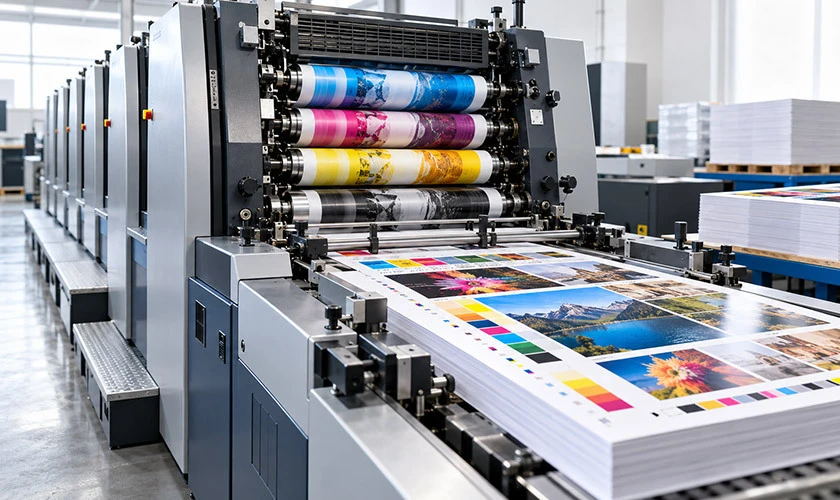
The offset printing process relies on the principle that oil and water do not mix. Oil-based ink adheres only to the image areas on the plate, while water-dampened non-image areas repel it. This allows for the precise application of ink to specific areas. Unlike digital printing, which uses toner or inkjet heads and requires no plates, offset printing uses physical printing plates for each color and is ideal for high-volume commercial printing.
-
High volume efficiency: Cost per unit drops significantly as quantities increase, making it cost-effective for large print runs.
-
Exceptional quality: Produces high-quality prints with sharp details, vibrant colors, and smooth tonal transitions.
-
Consistency: Once the press is dialed in, it delivers consistent prints across thousands or millions of copies.
-
Substrate versatility: Offset printing can work on a diverse range of materials and finishes, including textured papers and card stock.
-
Special inks and coatings: Supports spot colors, metallics, varnishes, and UV coatings for premium printed materials.
How Offset Printing Works: Step-by-Step Offset Printing Process
Understanding how offset printing works starts with seeing it as a chain of precise steps, from a digital file on a designer's screen to a finished sheet rolling off the press. The entire job flows through pre-press preparation, plate making, press setup, inking, dampening, image transfer, and finishing.
Modern offset presses usually print in CMYK, with one printing unit and one plate per process color. Each color in offset printing requires a separate plate. Here is how each stage breaks down.
Preparing the Printing Plate and Pre-Press
Pre-press is where every detail gets locked down before ink ever touches paper. The offset printing process begins with preparing the printing plate, and errors caught here save significant time and money later.
-
Digital files (typically PDFs) are checked for resolution (300 dpi minimum for images), embedded fonts, and correct color mode. RGB files are converted to CMYK for the printing process.
-
Computer-to-plate (CTP) technology images aluminum printing plates directly from the digital file, eliminating older film-based workflows in most modern printing works.
-
Imposition arranges multiple pages onto a single press sheet to minimize paper waste and streamline finishing.
-
Each process color - cyan, magenta, yellow, and black - gets its own plate and its own printing unit on the press.
-
Proofing is a crucial step: both soft proofs (on-screen) and physical contract proofs help verify color and layout before plates are made. Errors in offset printing setup can lead to costly mistakes, since remaking plates adds time and expense.
The Dampening and Inking Systems
The dampening and inking systems work together on the plate to separate what prints from what stays blank.
-
The dampening system applies water (fountain solution with buffering agents) to the non-printing areas of the plate, keeping them moist so they repel the oily ink.
-
The inking system uses a series of ink rollers to meter and distribute ink evenly before it reaches the image areas on the plate. The inking system controls the amount of ink applied to the plate.
-
Maintaining a stable ink-water balance is critical. Too much water washes out detail; too little causes scumming, where ink contaminates non-image areas. Operators monitor pH, conductivity, and roller pressure throughout the run.
Transferring the Image: Plate, Blanket, and Impression
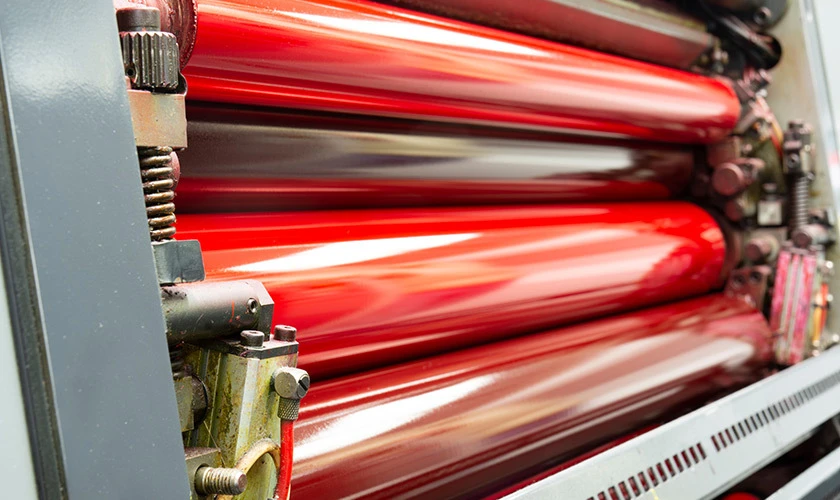
Three cylinders do the heavy lifting in every printing unit: the plate cylinder, the blanket cylinder, and the impression cylinder.
-
The inked image is transferred first from the plate cylinder to the rubber blanket - this is the "offset" step that gives the method its name. Because the plate never touches the paper directly, it lasts longer and delivers cleaner results.
-
The rubber blanket is flexible enough to conform to slightly textured or uneven printing surfaces, producing clean images on both coated and uncoated stocks.
-
The substrate (paper, board, or other material) passes between the blanket cylinder and the impression cylinder. Controlled pressure ensures the ink transferred from the blanket produces high-quality images on the final product.
The Offset Printing Press: Sheet Fed vs. Web Fed
Offset printing includes sheet-fed and web-fed processes, and choosing the right one depends on run length, budget, and the type of final product you need.
-
Sheet-fed offset printing: Sheet-fed presses print on individual sheets of paper fed one at a time. Sheet-fed printing can produce up to 24,000 sheets per hour on modern commercial presses. Common applications include brochures, business cards, folding cartons, and books. Setup costs are lower, and waste during makeready is minimal, making sheet-fed ideal for runs from a few hundred to tens of thousands.
-
Web-fed presses: Web-fed presses print on large rolls of paper in a continuous feed. Web offset printing can produce over 3,000 papers per minute, and overall, offset printing can produce up to 80,000 sheets per hour on high-speed web configurations. This makes web presses the standard for newspapers, magazines, catalogs, and direct mail. Web presses use either heatset drying (for coated stocks) or coldset drying (for uncoated stocks like newsprint). Quick-set printing allows for faster drying of printed materials in many configurations.
-
Key trade-offs: Sheet-fed offset printing offers lower makeready waste and faster job changeovers. Web-fed presses require more startup waste but deliver unmatched throughput for large volumes. Inline finishing (folding, cutting, perforating) is common on web presses.
Key Components of an Offset Printing Press
Every offset press, whether sheet-fed or web-fed, shares a core set of components:
-
Feeder or reel stand: Feeds individual sheets or unwinds large rolls of paper into the press.
-
Printing units: One per ink color (typically four for CMYK), each containing its own plate cylinder, blanket cylinder, impression cylinder, and sets of ink rollers and dampening rollers.
-
Delivery section: Collects printed sheets or routes the web through folders, cutters, and stackers.
-
Control console: Operators monitor registration, color density, and ink-water balance in real time. Modern offset presses often include automatic plate changers, in-line spectrophotometers, and closed-loop color control systems that adjust ink keys automatically.
Offset Lithography vs. Digital Printing
Offset lithography and digital printing are complementary printing methods - each excels in different industries and job types. The right choice depends on quantity, turnaround time, and the type of printed materials you need.
-
How they work: Offset printing works through plates, indirect transfer via a rubber blanket, and wet ink. Digital printing sends digital files directly to toner or inkjet heads with no plates required.
-
Cost: Offset printing is cost-effective for large-volume print jobs where the setup costs are spread across thousands of units. Setup costs for offset printing can be high for small runs. Digital printing wins for smaller quantities where per-unit cost matters less than avoiding plate charges.
-
Quality: Offset delivers extremely fine detail and consistent color across large quantities, making it the standard for producing high-quality prints in commercial printing. Digital quality has improved dramatically, but offset still leads for premium work with spot colors and specialty finishes.
-
Turnaround: Offset printing requires longer preparation times compared to digital printing. Digital can go from file to output in minutes; offset needs plate imaging, makeready, and drying time.
-
Variable data: Digital printing supports variable data printing - personalizing each piece with unique names, addresses, or codes. Offset prints the same image across every sheet in the entire job.
-
Substrates and finishing: Offset can accommodate various printing surfaces like cardboard and metal, and supports other printing methods like foil stamping. Digital presses have narrower substrate ranges depending on the technology.
Read the following to learn more about the differences of digital vs offset printing.
Applications of Offset Printing in Commercial Printing
Offset printing is the backbone of high-volume commercial printing across different industries worldwide.
-
Publishing: It produces high-quality prints for newspapers and magazines, as well as books and catalogs, where consistent color and sharp text across large print runs are non-negotiable.
-
Marketing materials: Offset printing is commonly used for printing brochures and marketing materials, including flyers, product sheets, presentation folders, posters, and direct mail pieces.
-
Corporate identity: Letterheads, envelopes, and business cards benefit from offset's precise color matching and professional feel, which plays a significant role in branding.
-
Packaging: Offset printing is used for packaging materials like boxes and labels, particularly high-graphic folding cartons that demand high-quality output with detailed images and accurate brand colors.

Color in Offset Printing: CMYK, Pantone, and Color Management
CMYK is the color model used in most offset printing, consisting of cyan, magenta, yellow, and black. Each color is laid down by its own plate and printing unit, creating tiny halftone dots that visually blend into full-color, high-quality images.
-
CMYK process color: Four plates produce the full spectrum of printable color. Dot gain - how much dots spread on the substrate - must be calibrated using industry standards like GRACoL or SWOP to ensure predictable results.
-
Spot colors (Pantone): Pantone colors can be used in offset printing for precise color matching. Pre-mixed Pantone inks handle brand-critical hues, metallics, and fluorescents that fall outside the CMYK gamut. Each spot color adds a plate and unit.
-
Color management: Calibrated monitors, ICC profiles, and on-press measurement with densitometers and spectrophotometers keep color accurate from graphic design file to final product. This is a crucial role that pre-press and press operators share.
-
Practical decision: Use CMYK-only for general full-color work. Add Pantone spot colors when a logo or brand element demands exact color fidelity - the extra cost is justified when brand consistency across marketing materials is critical.
Advantages and Limitations of Offset Printing
Offset printing remains a leading printing technique because its strengths align with the demands of most medium-to-large commercial print jobs.
Advantages:
-
Offset printing produces high-quality images with sharp details and smooth tonal gradations, especially on coated papers.
-
Delivers vibrant colors and consistent results across thousands or millions of copies.
-
Very low cost per unit for high volume printing, with strong cost effectiveness as quantities increase.
-
Works across a wide range of substrates, including paper, board, plastics, and specialty stocks.
-
Supports special inks and post-press finishes: metallic inks, varnish, spot UV, embossing.
Limitations:
-
Higher setup costs and makeready time compared to digital printing, making it less economical for small print runs.
-
Longer turnaround time when plate production, press calibration, and drying are factored in, which can be time-consuming for rush jobs.
-
Design changes after plate creation are expensive - careful proofing during the pre-press stage is essential.
-
The printing process requires skilled operators to manage ink-water balance, registration, and quality control.
From File to Finished Piece: Pre-Press, Printing, and Post-Press
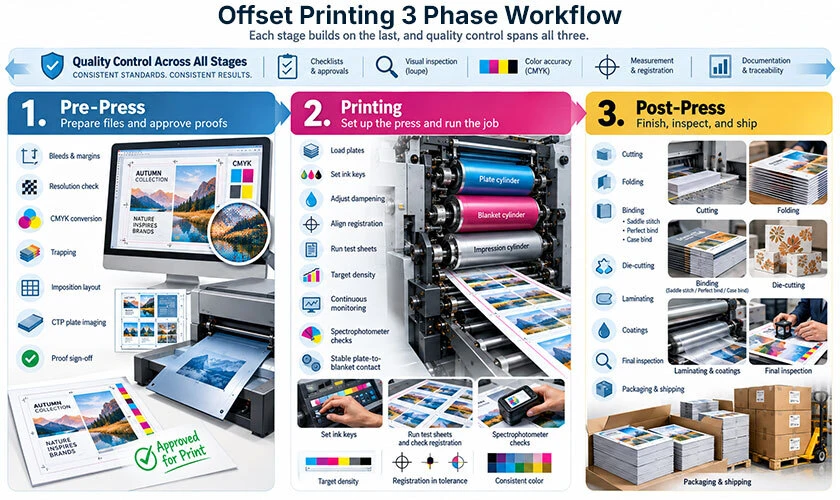
Successful offset printing follows a three-stage workflow. Each stage builds on the last, and quality control spans all three.
-
Pre-press: File preparation includes checking bleeds, margins, resolution, and color conversion to CMYK. Trapping prevents white gaps between colors. Imposition layouts and plate imaging via CTP complete this stage. Every proof sign-off here prevents costly reruns.
-
Printing: Plates are loaded, ink keys and dampening levels set, and registration aligned. Test sheets are run until color and registration hit target density. The entire job is then printed with continuous monitoring - operators sample sheets and use spectrophotometers to catch drift. The image carrier (plate) must remain in stable contact with the blanket throughout.
-
Post-press: Post-press includes cutting and finishing the printed materials. This final step also involves folding, binding (saddle stitch, perfect bind, case bind), die-cutting, laminating, and applying coatings. The final product is inspected for trim accuracy, fold alignment, and color consistency before packaging and shipping.
Environmental Impact and Modern Developments in Offset Printing
Traditional offset printing consumes paper, ink, chemicals, and energy. However, modern printing companies actively work to reduce their environmental footprint through better technology and responsible practices.
-
Sustainable substrates and inks: FSC- and PEFC-certified papers, recycled stocks, and vegetable-based or low-VOC inks are increasingly standard. Some ink manufacturers now offer bio-based heatset inks that significantly cut emissions.
-
Press efficiency gains: Faster makeready, automated color control, and closed-loop systems reduce paper spoilage. Alcohol-free dampening solutions eliminate a major source of VOC emissions.
-
Waste handling: Used aluminum printing plates are recyclable. Paper offcuts, blankets, and processing chemicals are managed under environmental regulations.
-
Emerging technology: LED-UV curing systems dry ink faster with lower energy consumption and reduced heat impact on substrates. Waterless offset printing eliminates fountain solution entirely, producing sharper prints with less chemical waste.
-
Looking ahead: Ongoing innovations in automation, hybrid printing workflows (combining offset with digital for variable data printing), and greener chemistry keep offset printing competitive alongside digital printing in both quality and sustainability. For printing companies evaluating their options, offset remains a proven, evolving method that continues to deliver high-quality output at scale.
(678) 235-3464
To view the original version on Clash Graphics, visit: https://www.clashgraphics.com/printing-tips/what-is-offset-printing/

No comments:
Post a Comment