Showing posts with label Branding. Show all posts

Wednesday, August 19, 2026

How to Increase Brand Awareness

If your target audience doesn't know your brand exists, they can't buy from you. It's exactly that simple, and exactly that difficult to fix. Whether you're launching a new product, entering a fresh market, or trying to stand out in a crowded category, learning how to increase brand awareness is one of the highest-leverage investments you can make. This guide walks you through the foundations of a brand awareness strategy, proven strategies across content, social, search, and offline channels, plus a practical framework for measuring what's working.
how to increase brand awareness

Key Takeaways

Brand awareness directly impacts revenue. Businesses with consistent brand presentation experience revenue lifts of 10–20% on average, and brands with high awareness are likely to generate more sales because products become more recognizable to consumers. These aren't abstract gains. They translate into lower customer acquisition costs, stronger pricing power, and resilience during economic downturns.

Building awareness starts before the first campaign. You need a clear brand strategy (values, positioning, visual identity) executed consistently across content marketing, social media channels, search engines, and offline touchpoints. Color alone can boost brand recognition by up to 80%, and companies with strong branding see 50% more job applicants. That's the breadth of what awareness touches.

Measurement is non-negotiable. Surveys, branded search volume, social share of voice, and direct traffic tell you whether your marketing efforts are translating into real awareness or just noise. Without data, you can't defend budgets or improve campaigns.

This article covers everything from defining brand awareness and clarifying your brand values, through actionable channel-by-channel tactics, to a measurement framework you can implement this quarter.

What Is Brand Awareness and Why Brand Awareness Matters

Brand awareness refers to how easily your target audience recognizes and recalls your brand-its name, logo, values, and products-in real buying situations. There are two dimensions here. Recognition means a consumer can identify your brand when they see it. Brand recall goes further: it's when people can name your brand unprompted in a product category. If someone thinks "running shoes" and immediately thinks of Nike, that's recall.

But brand awareness goes beyond just a logo. It includes understanding what the brand does and what it stands for. Patagonia is synonymous with environmental sustainability. Tesla means electric innovation. These associations matter because 58% of consumers buy brands based on shared values.

Why does brand awareness matter at the top of the funnel? People rarely consider brands they've never heard of, especially in crowded B2C and B2B categories. If your brand isn't in the consideration set, your conversion rate on everything downstream-ads, landing pages, sales calls-suffers.

The tangible outcomes are significant. Strong brand awareness leads to improved conversion rates, reduced customer acquisition cost, and the ability to charge premium prices. Brands with consistent presentation can charge roughly 22% price premiums over less consistent competitors. Brand loyalty leads consumers to pay more for trusted brands, and that loyalty creates a buffer during downturns.

Brand awareness is one component of brand equity, alongside perceived quality, brand image, and customer loyalty. It's distinct from brand identity (how you want to present yourself) or brand image (how others actually perceive you). For startups and scale-ups, early investment in building awareness lays the foundation for later performance marketing and sales efficiency. Your paid campaigns will simply work better when people already know who you are.

How Brand Awareness Gives You a Competitive Edge

Consider two scenarios. You're choosing a new project management tool for your team: you've heard of Asana and Monday.com, but a startup called "TaskFlowPro" also appears. Most people default to the familiar names, even if feature sets are comparable. Or imagine buying running shoes: Nike, OnCloud, or Hoka come to mind instantly. A smaller brand with equivalent specs struggles to get considered. Brands with high awareness are likely to generate more sales simply because they're top-of-mind.

This is mental availability. Coca-Cola in soft drinks, Adobe in creative software-these iconic brands occupy category-defining positions in consumer minds. That mental real estate is a moat. When new entrants or copycats appear, strong brand awareness cushions the blow because consumers default to what they know. Competitors must spend disproportionately to displace you.

Brand awareness also shapes employer branding. Companies with strong branding can see 50% more job applicants, and 75% of job applicants consider the brand before applying. In tight talent markets (tech, biotech, AI), that's a tangible advantage.

Finally, high brand awareness interacts with performance channels. Search ads for recognized brands have higher click-through rates. Social ads featuring familiar visuals produce better recall. Brand awareness increases sales by making products more recognizable, which shortens the customer journey and improves overall marketing ROI.

Clarifying Your Brand Strategy and Brand Values Before You Scale Awareness

team brainstorming around a whiteboard filled with colorful sticky notes, outlining brand strategy concepts to increase brand awareness.

Successful brand awareness campaigns start with a clear brand strategy, not just a logo and a color palette. Before you spend a dollar on advertising or create a single social media post, you need to establish a unique value proposition to stand out from competitors.

Start by defining your target market segments and their needs. Who are you serving? What problems do you solve that competitors don't? This is your positioning. It should be specific enough that when someone in your target audience hears your brand messaging, they immediately understand why you're relevant to them.

Next, articulate 3–5 core brand values, like transparency, innovation, or sustainability, that guide both your external communications and internal decisions. These values become the backbone of your brand voice and shape every piece of content, every customer interaction, and every hiring decision. A strong brand identity can increase customer loyalty because people gravitate toward brands whose principles match their own.

Then build your visual identity system:

  • Logo: Primary and secondary lockups for different contexts

  • Typography: Headline and body fonts

  • Color palette: Primary and secondary colors (remember, consumers are 81% more likely to remember company colors)

  • Imagery style: Photography approach, illustration guidelines

  • Tone of voice: How you speak-formal, conversational, playful, authoritative

Document all of this in a simple brand guidelines document before investing heavily in campaigns. Consistent messaging helps customers quickly recognize a brand, and that recognition is what makes every subsequent marketing effort more effective.

While branding and marketing are related and often overlap, each has a specific function, but together they form the backbone of your brand strategy.

Creating a Consistent and Memorable Brand Presence

Consistency across channels can increase brand recognition by up to 80%. That number isn't surprising when you consider how memory works. Every time someone encounters your brand-same colors, same tone, same logo placement-you're reinforcing a neural pathway. Fragmented branding forces the brain to start over each time.

What does consistency look like in practice? It means the same logo usage, color scheme, and tone across emails, social media channels, packaging, presentations, and offline collateral. Apple's minimalist design language is identical whether you're unboxing a product, browsing their website, or watching a keynote. Nike's bold typography and athlete-driven imagery are instantly recognizable, whether on a billboard or an Instagram story.

Consider how Eternal Water maintained a unified wellness tone across its influencer campaigns on TikTok and Instagram, hitting 45.9 million views while keeping CPMs under $10. That consistency of aesthetic and message is what made the brand feel cohesive to new audiences.

The risk of fragmentation is real. When different teams or agencies improvise visuals or messaging, the brand dilutes. Combat this with brand templates, asset libraries, and simple QA checklists.

Quick consistency checklist:

  • Logo lockups (horizontal, stacked, icon-only)

  • Approved fonts for headlines and body

  • Color codes (HEX, RGB, CMYK)

  • Photography style rules

  • CTA button styles

  • Social media response tone

Building Brand Awareness Through Content Marketing and Storytelling

Content marketing is one of the most cost-effective long-term marketing strategies for creating brand awareness. Unlike paid ads that stop working when the budget runs out, content compounds. A well-written blog post can rank in search engines for years, continuously introducing potential customers to your brand. Content marketing enhances visibility and trust in a crowded market, and high-quality content positions a brand as an industry leader.
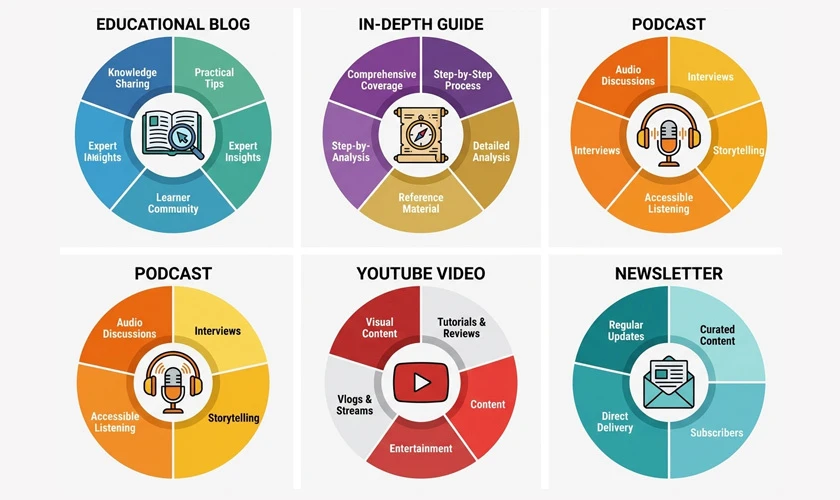
core content models

Core content formats that support awareness include:

  • Educational blog posts that cover industry insights and problem-solving tips

  • In-depth guides and downloadable resources

  • Podcasts and webinars for deeper engagement

  • YouTube videos and short-form clips

  • Newsletters that keep your brand in inboxes consistently

Storytelling in content marketing enhances emotional connections with audiences. Tell your origin story, share your mission, highlight challenges you've overcome, and publish customer success stories that communicate brand values without heavy selling. Content that helps audiences build familiarity and trust over time, and consistent content creation fuels SEO efforts and keeps websites relevant.

Content marketing builds trust with potential customers and helps establish authority and drive organic traffic. For instance, a telecom brand working with iCrossing built SEO content hubs that captured non-branded demand, driving an 800%+ non-branded traffic surge and a 17% increase in total order volume. Huntress, a cybersecurity firm, shifted from 97% branded traffic to about 74% non-branded via a content strategy, dramatically expanding discovery among new audiences.

Publish high-value content consistently to position your brand as an authority, and repurpose across channels: a webinar becomes clips, a blog post, email snippets, and social media posts.

Leveraging Social Media Channels and Social Media Contests

Social media remains central to brand awareness because of massive daily usage, algorithmic discovery, and low production barriers. Social media users spend over two hours daily as of 2024, which makes these platforms prime territory for getting your brand noticed.

Selecting specific social media platforms can optimize resource allocation. Here's a rough guide:

Platform

Best For

Content Style

TikTok

Gen Z, younger millennials

Short-form video, trends

Instagram

Lifestyle, DTC, visual brands

Reels, Stories, UGC

LinkedIn

B2B, thought leadership

Articles, carousels, commentary

YouTube

Tutorials, long-form education

How-to videos, brand documentaries

Build a recognizable social presence with consistent profile images, bios that reflect brand values, and a balanced content mix: education, entertainment, behind-the-scenes, and user-generated content. Community-driven social media content enhances brand visibility.

Social media contests and giveaways are a simple way to spread awareness. Tag-a-friend contests, branded hashtag challenges, and UGC campaigns encourage sharing and expand reach to new audiences. Brands should run polls and Q&A sessions to enhance engagement, and responding to comments fosters community and increases engagement.

Maintain an optimized presence across key social media platforms and use native analytics tools (Meta Business Suite, TikTok Analytics, LinkedIn analytics) to monitor reach, social media engagement, and follower growth. Engaging with followers increases brand loyalty and trust, turning casual viewers into advocates. Interactive storytelling boosts engagement by involving audiences directly in the brand narrative.

Boosting Brand Visibility with Search Engines and SEO

Search engine optimization drives both direct traffic and indirect brand awareness. Even when users don't click your result, appearing prominently in search engines like Google and Bing puts your brand name in front of potential customers repeatedly.

Basic SEO steps to improve brand awareness:

  1. Keyword research: Identify relevant keywords-both informational queries your audience searches and branded terms

  2. On-page optimization: Titles, meta descriptions, H1 headings, and internal links

  3. Technical hygiene: Site speed, mobile-friendliness, crawlability

  4. Content creation: Answer specific questions your audience types into search engines

Create content that positions your brand as a helpful expert. When someone searches "how to choose a CRM" and your guide ranks first, you've earned a mental association between your brand and that category. Over time, this lifts branded search volume, a key indicator that brand awareness is growing.

Local SEO is critical for physical or service-area businesses wanting neighborhood brand visibility. Local SEO entails using local keywords and accurate listings. Claim and optimize your Google Business Profile, gather reviews on relevant platforms, and maintain consistent NAP (name, address, phone) across directories. Local visibility can significantly help businesses attract nearby customers, and encouraging reviews fosters customer advocacy and increases brand recognition.

Using Paid Advertising and Google Ads to Accelerate Awareness

While organic tactics compound over time, paid advertising can quickly boost brand awareness, especially when entering competitive categories or launching in new markets. Targeted advertising can capture high-intent traffic effectively, and it gives you control over exactly who sees your brand.

Key paid channels for awareness include:

  • Display ads: Visual placements across websites

  • YouTube pre-roll: Video ads before content

  • Social ads: Meta, TikTok, LinkedIn, with reach or impression-focused bidding

  • Google Ads: Search campaigns using broad match and impression-based bidding for visibility

The difference between performance campaigns and brand awareness campaigns matters. Performance campaigns optimize for clicks and conversions. Brand awareness campaigns optimize for recall and impressions. Top-of-funnel creative should prioritize memorable brand messaging, logo, tagline, and emotional resonance, not just features or discount codes. Targeted ad campaigns should be based on performance data to maximize efficiency.

A/B test ad creative (visuals, headlines, CTAs) and use analytics tools to track impressions, video completion rates, and ad recall metrics.

H&M's 2025 "Find Your Beach" campaign demonstrates this well. Working with creators and prioritizing authenticity over polish to reach young females – the target market, with 1.35 million consumers newly considering H&M in their top-3.

Influencer Collaborations, Thought Leadership Programs, and Partnerships

Borrowing other people's audiences is one of the fastest ways to raise brand awareness and build credibility simultaneously. Influencer marketing builds trust more than traditional ads because influencers can create authentic content featuring products in contexts their followers already trust.

Brands partnering with influencers can reach new audiences quickly. The key is choosing creators whose audiences match your target audience and whose values align with yours. Micro-influencers often have higher engagement rates than mega-celebrities, and longer-term collaborations (brand ambassadors) outperform one-off posts because they build narrative continuity. Influencer partnerships can enhance brand visibility significantly.

For B2B or high-expertise brands, a thought leadership program is the equivalent of influencer marketing. This leadership program might include publishing opinion pieces, speaking at industry events, regular LinkedIn posts, or hosting webinars and podcasts. It builds authority and keeps your brand in front of online audiences who make purchasing decisions.

Cultivate partnerships to cross-promote and expand audiences. Co-marketing with complementary businesses-joint events, product bundles, guest content-lets both brands access each other's customer base. Collaborative promotions can extend reach to new audiences without the full cost of acquiring them independently. Laneige rose from rank #33 to top-5 in U.S. skincare creator impact metrics by 2024 through data-driven influencer marketing-proof that systematic partnership strategies deliver measurable awareness gains.

Track referral traffic, branded mentions, and social media mentions to measure impact from these efforts.

content creator filming product review in a home studio, ring light and camera equipment to boost brand awareness via social media and brand strategy.

Offline Tactics: Events, Sponsorships, and Community Involvement

In-person experiences still play a powerful role in building awareness and emotional connection, especially for local, retail, and B2B brands. Digital channels are efficient, but nothing replaces the memorability of a live interaction.

Practical offline tactics include:

  • Sponsoring events like local sports teams, festivals, or charity runs

  • Exhibiting at trade shows

  • Hosting workshops or educational sessions

  • Speaking at industry conferences

Sponsoring local events can significantly boost brand visibility, and sponsorships can generate a 6X return on investment. Hyper-local sponsorships can build deep community roots that digital marketing alone can't replicate.

Integration matters. Tie offline and online together with event hashtags, QR codes linking to social media or landing pages, and live-streamed sessions. This extends the reach of physical events to your online audiences.

Community involvement fosters real-world recognition and relationships. Companies engaging in community initiatives see a 10-point increase in brand recognition, and brands that contribute to their communities see increased customer engagement. Engaging in community service enhances brand loyalty and trust. Engage in community building to connect with customers emotionally, but make sure your involvement is authentic and aligned with your brand values to avoid perceptions of "cause-washing." Brands that engage in community initiatives boost awareness significantly when the cause feels genuine.

Harnessing User-Generated Content, Referrals, and Employee Advocacy

Word-of-mouth remains one of the most trusted forms of raising awareness. User-generated content increases brand trust and awareness because it comes from real people, not polished marketing departments. It's social proof at scale.

Tactics to encourage UGC:

  • Create branded hashtags and feature the best submissions

  • Ask for reviews post-purchase (encouraging reviews fosters customer advocacy and increases brand recognition)

  • Run photo contests tied to product use

  • Feature customer stories on your website and social media channels

Referral programs can incentivize word-of-mouth marketing effectively. Design simple programs-discounts, credits, loyalty points-that motivate existing customers to introduce new customers to your brand. Customer referrals provide powerful trust-driven marketing and cost a fraction of paid acquisition.

Turn employees into brand ambassadors by equipping them with shareable content, clear social media guidelines, and recognition for advocacy. When your team genuinely promotes the brand, it amplifies your brand presence across networks you couldn't reach through official channels alone.

Email marketing keeps brands familiar to customers over time. Don't neglect it as a retention and awareness tool for existing customers.

Track these efforts using referral codes, UTM links, and monitoring increases in branded mentions across various platforms. The compound effect of UGC, referrals, and employee advocacy can rival the reach of paid strategies over time.

Measuring Brand Awareness with Analytics Tools and Surveys

You can't improve brand awareness if you don't measure brand awareness. Monitoring brand metrics can refine marketing efforts and justify continued investment. Without measurement, awareness budgets are the first to get cut during tight quarters.

data visualization charts related to brand awareness metrics for increasing brand visibility

Key quantitative indicators:

Metric

What It Tells You

Tool

Branded search volume

Are more people searching for you by name?

Google Search Console, Google Trends

Direct traffic

Are people typing your URL directly?

Google Analytics

Social reach/impressions

How many people see your content?

Platform-native analytics

Follower growth

Is your audience expanding?

Social analytics

Share of voice

How much your brand is mentioned compared to competitors

Brand tracking software like Brandwatch, Sprout Social

Press/blog mentions

Are others talking about you?

Media monitoring tools

Social media mentions track how often people talk about your brand online, which is a useful proxy for awareness momentum.

Qualitative methods matter too. Surveys can help measure brand awareness through aided and unaided recall. Brand recall measures if people can name your brand without prompts, while brand recognition assesses if people know your brand when they see it. Customer interviews reveal how people perceive your brand values and message, adding depth that numbers alone can't capture.

Set up a simple reporting cadence, monthly or quarterly dashboards, and connect brand awareness metrics to downstream outcomes like leads, sales, and customer acquisition cost. This linkage is what transforms brand health reporting from a "nice-to-have" into a strategic asset that informs where you invest next.

Optimizing and Evolving Your Brand Awareness Strategy

Brand building is not a one-time project. It's an ongoing process of testing, learning, and refining. The brands that maintain good brand awareness over the years are the ones that treat it as a living system, not a set-and-forget campaign.

Review performance across channels regularly. Identify which messages and formats resonate with your target audience. Reallocate budget toward the highest-impact activities. If short-form video is outperforming static posts by 3x in reach, shift resources accordingly.

Experiment deliberately. Build simple quarterly experiments:

  • Test a new social media contest format

  • Refresh Google Ads creatives with updated messaging

  • Launch a fresh thought leadership series on LinkedIn

  • Try a co-marketing campaign with complementary businesses

Define success metrics upfront for each experiment so you know what "working" looks like before results come in.

Boosting brand awareness relies on consistency, community engagement, and smart targeting. Effective brand awareness strategies focus on visibility and community engagement, delivered through channels where your audience actually spends time. Stay true to core brand values while evolving your tactics. Coherence is what maintains recognition over time, even as platforms and consumer behavior shift.

The brands that win aren't the ones with the biggest budgets. They're the ones that show up consistently, measure relentlessly, and adapt quickly. Start with your brand strategy, pick one or two channels, track what matters, and iterate every quarter.

FAQ: Increasing Brand Awareness

These questions address practical concerns that go beyond the channel-by-channel tactics covered above. If you're planning your first brand awareness efforts or trying to establish brand awareness in a new market, these answers should help set realistic expectations.

How long does it take to see results from a brand awareness campaign?

Timelines vary significantly by channel. Paid advertising and influencer campaigns can show a measurable lift in awareness within 2–4 weeks. Impressions, reach, and ad recall metrics respond quickly. SEO and content marketing take longer, typically 3–6 months, before you see meaningful increases in organic traffic and branded search volume. For sustained, noticeable improvement in overall brand visibility and consumer behavior, plan on 6–12 months of consistent effort.

Several factors influence speed: your existing brand equity (starting from zero is slower), budget level, competitive intensity, and channel mix. A combined approach, paid strategies for quick reach, plus organic for compounding, tends to produce the fastest combined results.

Set realistic milestones by quarter rather than expecting immediate transformation. Month one might focus on baseline measurement. Quarter one targets reach and impression growth. Quarter two looks for branded search increases. Quarter three connects awareness to downstream metrics.

What is the difference between brand awareness and brand recognition?

Brand recognition usually refers to identifying a brand's visual or verbal cues-its logo, colors, slogan, or packaging-when presented with them. It's a "yes, I've seen that before" response. Brand awareness is broader: it encompasses both recognition and recall, plus a basic understanding of what the brand offers and when to consider it.

Brand recall measures if people can name your brand without prompts (unaided). Brand recognition assesses if people know your brand when they see it among options (aided). Both matter, but recall is generally harder to achieve and indicates deeper awareness.

Measure both using surveys (aided vs. unaided recall questions) and analytics (branded search volume as a proxy for recall, social recognition through engagement patterns).

How much budget should I allocate to brand awareness versus performance marketing?

A common rule of thumb: many growing brands allocate 40–60% of spend to brand awareness and 40–60% to direct response, adjusting by lifecycle stage and cash flow needs. Earlier-stage companies with immediate revenue pressure may skew 70% performance / 30% brand, but should still reserve a meaningful portion for long-term brand building because it reduces acquisition costs over time.

The right split depends on your category, competitive landscape, and existing awareness levels. A brand with already successful brand awareness may invest more in performance to capitalize on it. A new entrant needs heavier brand investment to get into the consideration set.

Test different splits over quarters and monitor changes in CAC, branded search, and organic traffic. If increasing brand spend from 30% to 45% correlates with a 15% drop in CAC two quarters later, you've found your proof point.

Which single channel should I prioritize first to increase brand awareness?

There's no universal "best" channel. The right starting point depends entirely on where your target audience already spends time. A B2B SaaS company might find LinkedIn and search engine optimization deliver the highest awareness per dollar. A DTC beauty brand might see dramatically better results on TikTok or Instagram.

Start with one or two primary channels, commonly a social media platform plus either SEO or email, to avoid spreading marketing efforts too thin. Go deep on those before adding more.

Validate your choice with small experiments. Run a 4-week test, measure reach and engagement, and compare cost-per-impression across channels. If early data shows low engagement or reach relative to spend, shift focus. The goal is to find where your brand gets noticed most efficiently, then double down.

Clash Graphics Print Shop Atlanta Flyer Printing
2233 Peachtree Rd NE Ste 202 Atlanta, GA 30309
(678) 235-3464

To view the original version on Clash Graphics, visit: https://www.clashgraphics.com/printing-tips/how-to-increase-brand-awareness/

Thursday, May 23, 2024

Mastering Brand Typography and Fonts

Selecting the ideal brand typography is about more than good looks; it’s a key player in how your customers see and connect with your brand. Through proper font choices, a brand can tell its story, convey its values, and leave a lasting impression. This piece dives into the various font styles, demonstrating how to apply them to your brand’s narrative and offering strategies for consistent, effective use.

brand typography styles

Key Takeaways

  • Brand typography is essential for conveying a brand’s unique identity and personality, affecting brand recognition, and establishing a visual symphony that engages consumers.
  • Understanding different font categories (serif, sans serif, script, display / decorative) and selecting the suitable typeface is crucial for matching a brand’s personality and message, ensuring brand fonts resonate with target audiences.
  • Consistency, readability, and a well-established typographic hierarchy are vital in typography to maintain user engagement and enhance brand recognition across various platforms and mediums.

The Power of Brand Typography

Typography is a visual component of a brand’s style guide, a tool that paints the brand’s personality with the brush of written language. Its power lies in its ability to express a brand’s unique identity and personality across various media channels, from web pages and advertisements to product packaging. Through techniques like font selection and styling, typography transforms the brand message into a visual symphony, sparking consumer interest and interaction.

But that’s not all. The consistent use of the same fonts establishes brand recognition, creating a sense of reliability. Think about it: when you see a particular sans-serif font, don’t you instantly think of a brand associated with modernity, simplicity, and innovation? Or, when you see a serif font, don’t you immediately associate it with elegance, tradition, and trust? That’s the power of brand typography – it makes brands memorable.

Understanding Different Font Styles

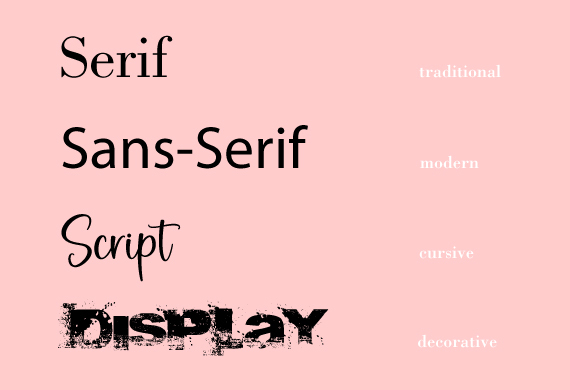
serif, sans serif, script, and decorative font styles

Consider standard graphic design principles when selecting fonts for your brand's typography design. Before we delve into the art of choosing the right fonts, let’s understand the different font styles that define the landscape of typography. There are four primary categories:

  1. Serif
  2. Sans Serif
  3. Script
  4. Display / Decorative

Each has its distinctive characteristics and emotional appeals. With these styles, the typographic universe expands into sub-classifications like slab serif, Monotype, humanist sans-serifs, and more.

Serif Fonts

Serif fonts, with their ‘hooks’ or ‘little feet’ at the ends of letters, exude elegance, trustworthiness, and a sense of establishment. They’re like the classic black dress in a wardrobe: timeless and trustworthy. That’s why traditional brands such as law firms, wineries, or newspaper companies often choose serif fonts. Their design aids reading flow in long printed texts, reducing eye strain. Baskerville, Times New Roman, and Garamond are all examples of well-known serif typefaces. These typefaces are widely used in print and digital media.

But what if you’re a modern, forward-thinking brand that wants to break tradition? Well, that’s where sans-serif fonts come in.

Sans Serif Fonts

Sans serif fonts, also known as sans serif typeface, are the modern rebels in the typography world. With clean lines and an absence of decorative flourishes, they shout simplicity and legibility. Their straightforwardness and clean aesthetic make them a favorite in contemporary design. They’re like the sleek, minimalistic furniture of a modern loft – bold, clear, and uncomplicated. Examples like Helvetica, Arial, and Futura have set the stage for the widespread use of sans serif fonts in digital media. With the availability of free fonts, designers have even more options to choose from [2.2_5].

But what if you fancy a bit of elegance and creativity in your fonts? Enter script fonts and display fonts.

Script Fonts

Script fonts are the artists in the world of typography. With their handwriting-like calligraphy, they bring a touch of elegance and a personal feel to your designs. They’re like handwritten love letters in a world of emails—personal, beautiful, and full of character. Brands aiming to portray an image of elegance or creativity often choose script fonts.

However, their beauty comes at a cost. Script fonts are often avoided in body text due to readability concerns. However, their aesthetic appeal makes them perfect for use where readability is not the primary concern, such as logos or headlines.

Display / Decorative Fonts

Last but not least, let’s talk about the wild cards of typography—decorative fonts. These fonts are all about creativity and originality, helping brands connect emotionally with their audience. They’re like unique accessories that add a touch of personal style to an outfit. Decorative fonts are great for specific branding applications, such as logos, where their unique characteristics can shine. Their adaptability and distinctiveness make them an excellent tool for expressing a brand’s individuality.

Now that we’ve explored the different font styles let’s choose the ones that best represent your brand’s personality.

Creating Your Brand's Typeface Personality

Your brand’s personality is like its soul. It’s what sets your brand apart and resonates with your audience. Therefore, it’s crucial to establish your brand personality, as it directs the choice of typography and influences the overall visual identity of the brand.

Say you’re a no-nonsense, forward-thinking brand. You’d probably opt for sans-serif fonts that reflect your straightforward vibe. Or, if you’re a friendly, approachable brand, you might go for rounded letter shapes. The key is to choose a good brand font that echoes your brand’s personality, creating a cohesive and resonant brand identity.

But it’s not just about the aesthetics; your font choices should also consider flexibility and timelessness, ensuring they can be scaled to different sizes and mediums and remain visually appealing across various platforms, from printed materials to digital content.

Choosing the Right Fonts for Your Brand

font selection process choosing the right fonts

Choosing the right fonts for your brand involves more than just picking the ones you like. It’s about understanding your brand’s personality, analyzing competitors’ typography, and ensuring readability and consistency across various platforms.

It’s like choosing the right ingredients for a dish – each one should complement the other, and together, they should create a delightful experience.

Analyzing Competitors' Typography

In the world of branding, understanding your competitors is as important as understanding yourself. Analyzing your competitors’ typography can reveal their strengths and weaknesses, contributing to a more informed design strategy. Studying their visual design, including typography, helps you understand effective ways to communicate your own brand message.

Moreover, assessing your competitors’ typography helps your brand stand out in the market. By identifying usability issues in their user interfaces, you can enhance your own typographic readability and the overall user experience.

Selecting Fonts that Reflect Your Brand Message

Your brand’s message is its voice, and your typography is the tone in which that voice speaks. Therefore, it is critical to select fonts that reflect your brand message.

For instance, a brand centered around innovation and technology might use Monospace fonts, underscoring its focus on precision and technicality. Similarly, a brand aiming to portray an image of elegance might opt for elegant script fonts, while a brand aiming for a more modern and minimalistic vibe might go for sans serif fonts. The proper typeface selection evokes specific feelings and associations that resonate with your brand’s intended message.

Ensuring Readability and Consistency

Beyond choosing the right fonts, ensuring readability and consistency in your typography is crucial. Imagine reading a book with a different font on every page – confusing, right? That’s why selecting simple and easy-to-read fonts is crucial for maintaining user engagement, especially in larger blocks of text.

Consistency, on the other hand, enhances visual hierarchy and brand recognition. Whether it’s maintaining consistent sizing in headers and sub-headers or using the same font type across all platforms, consistency in typography is key. But remember, readability and consistency should not come at the cost of creativity. Your typography should be a balance of all three.

The Art of Mixing and Matching Fonts

mixing and matching fonts

Typography is not just about choosing the right fonts but also how you use them together. The art of mixing and matching fonts can add depth and variety to your typography, enhancing your brand’s visual communication. The key to effective font mixing is attention to the following:

  • Mood
  • Contrast
  • X-heights
  • Kerning
  • Character shapes

Combining fonts that are too similar can lead to poor hierarchy and visual confusion, while using different weights from the same font family can create a subtle yet effective contrast.

Experimentation and creativity play significant roles in discovering intriguing font combinations beyond conventional pairings, like matching ‘introverted’ with ‘extroverted’ typefaces.

Establishing a Typographic Hierarchy

Just as a well-structured article guides readers through its content, a well-planned typographic hierarchy guides the viewer’s focus, indicating levels of importance. This hierarchy is achieved through the following:

  • size
  • weight
  • color
  • contrast
  • case
  • position
  • style
  • alignment of typefaces

along with strategic use of spacing, guides the viewer’s attention.

Contrast plays a crucial role in establishing a visual hierarchy, as it creates visual interest and distinguishes different levels of text within your brand’s typography. Whether it’s using varying font sizes for headings, subheadings, and body text or using colors to differentiate sections of text, a well-established typographic hierarchy can significantly enhance the readability and visual appeal of your text.

Customizing Fonts and Treatments

Customizing fonts and treatments is like adding seasoning to a dish – it enhances the flavor, making it more interesting and appealing. Companies like Southwest Airlines, the Financial Times, and Raiffeisen Bank have leveraged custom typefaces to align typography with their brand identity and values.

From freeform serif fonts that break traditional typography rules to the use of unique type families for expressing inclusivity and celebration, strategic custom typography can enhance your brand’s visual identity and create a signature brand identity typography style that resonates with your audience.

Creating a Comprehensive Brand Style Guide

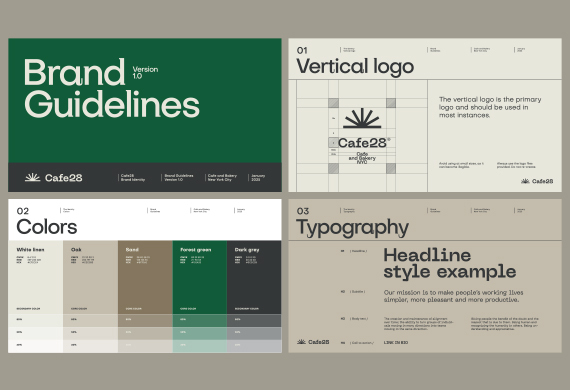
brand style guide with typography examples

Once you’ve chosen your fonts, established your typographic hierarchy, and customized your treatments, the next step is to document all these decisions in a comprehensive brand style guide. This guide ensures that all content creation is consistent with the brand’s identity and serves as a reference for designers, writers, and developers.

Whether you’re a global company with teams spread worldwide or a small startup, having a style guide accessible online ensures all teams can refer to it, regardless of location. This is particularly crucial when undergoing a brand redesign, as a new style guide ensures everyone is on the same page (quite literally!).

Case Studies: Successful Brand Typography Examples

Nothing elucidates the power of brand typography better than real-life examples. Brands like Netflix, Airbnb, Apple, and Coca-Cola have harnessed the power of custom fonts to create strong visual identities.

For example:

  • Netflix uses the typeface Gotham to convey a modern and sleek image.
  • Airbnb uses the typeface Circular to support its message of hospitality and warmth in unique places.
  • Apple uses the typeface San Francisco to create a clean and minimalist aesthetic.
  • Coca-Cola uses the typeface Spencerian Script to evoke a sense of tradition and nostalgia.

Partnerships like Monotype with D8 for Pride Amsterdam and Monotype with Lippincott for NYC Pride resulted in unique type families and identities that express inclusivity and celebration. M&M introduced the ‘All Together’ typeface, reflecting its brand's support in playfulness, inclusivity, and belonging values.

In the realm of timeless fonts, Baskerville and Caslon convey tradition and elegance, while Bauhaus expresses a trendsetting, retro vibe. Other brands, like Evian, Bodoni, and the University of Michigan, use simple typefaces, sophisticated identities, and educational typography to project their unique brand messages.

Brand Typography Summary

Typography is a powerful tool in branding that shapes a brand's visual identity, setting it apart from the crowd. It’s much more than just selecting the right fonts; it’s about understanding font styles, aligning them with your brand’s personality, analyzing your competitors’ typography, ensuring readability and consistency, mixing and matching fonts effectively, establishing a typographic hierarchy, and customizing fonts and treatments. By mastering these elements, you can create a unique brand personality that resonates with your audience and stands out in the market.

Typography Frequently Asked Questions

These are the more common questions Clash Graphics customers ask about typography:

What is the importance of typography in branding?

Typography is essential in branding because it communicates a brand's identity and personality, leading to better consumer engagement and brand recognition.

How do I choose the right fonts for my brand?

To choose the right fonts for your brand, consider your brand's personality, analyze competitors' typography, and prioritize readability and consistency across platforms.

What is typographic hierarchy?

Typographic hierarchy is a method of organizing text in design to emphasize levels of importance and direct the reader's attention. It helps guide the viewer's focus, especially in branding and design systems.

How can I customize fonts for my brand?

To customize fonts for your brand, add unique treatments and modifications to align them with your brand identity and values.

What is a brand style guide?

A brand style guide is a document that sets out design standards for a brand, ensuring consistency in all content creation. It helps maintain the brand's identity and visual cohesion.

Clash Graphics Print Shop Atlanta Flyer Printing
2233 Peachtree Rd NE Ste 202 Atlanta, GA 30309
(678) 235-3464

To view the original version on Clash Graphics, visit: https://www.clashgraphics.com/printing-tips/mastering-brand-typography-and-fonts/

Tuesday, October 31, 2017

Real Estate Marketing - Secrets Shared at a Private Event

Sitting in on a real estate marketing meeting was never on my list of things to do. Until one day, I was shamed by my best friend Shawn into going.

Looking back on the experience, I can say that it was truly an eye opener. The people were friendly, the food was excellent and the drinks were killer! Most impressive were the topics and ideas presented to the 30 men and women that day.

Following are the enlightening real estate marketing tips that were presented by Don and Pat (husband and wife real estate wizards).

Build a Website That is Capable of Generating Leads

Don began by explaining how the methods of marketing had dramatically changed over the past decade. People’s attention span was about 2 seconds and if your website content couldn’t deliver a clear benefit quick enough, it would fail.

He then showed us the differences between successful websites and poorly managed one’s. The successful sites were well structured with pertinent information, high-quality and captivating photos of all properties, video walk-throughs, and other features that enhanced the process for a buyer or seller. Take a look at this video walk through virtual tour example:

After delivering valuable information and rich content, the website left you asking for more but required your email address or phone number. This turned visitors into leads, and made the website more than a digital brochure.

After Don’s presentation, it became obvious how certain elements could greatly impact the effectiveness and value a website delivered.The two core principles Don presented that stood out were;

Navigation through successful sites was obvious and always simple. Even the novice users could get the information they needed without getting “lost” or having to search. Visitors come to a website for their own benefit; make what they are looking for easy to find and they will reward you with their attention. In the web design industry, intuitive design and ease of use is known as “user experience”. Ensure your web development company is proficient in this department, or little else will matter.

Branding and curated content that spoke to a specific segment of the market. We can’t be all things to all people. A real estate website is no different, and must clearly indicate the market and people it serves. A first time homebuyer has vastly different needs than someone looking for a luxury home. Or consider parents buying a home in a great school district and the things that would be important to them. Knowing and displaying this information on your website speaks volumes, and subconsciously lets the customer know you understand them and their specific needs. Feeling understood is an intangible that makes your customer comfortable. When setup properly, your website can help earn the goodwill and trust of a potential client.

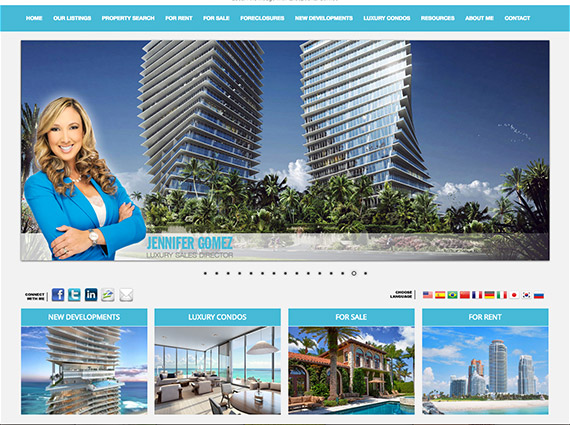
Take a look at this well branded website that is catering to luxury condo owners:

Real estate agent branded website

Establish a Referral Program

Pat took over at this point and provided an interesting and shocking statistic. She said, “On average, out of every 100 people that call you, only 18 will come from your marketing efforts. The other 82 will be referrals from past or current clients.”

This made perfect sense to me. All my adult life, I have understood the building power of “word of mouth” and how important it is in any business to keep your clients buzzing about your products and services.

Real estate meeting and referral program

Thus this staggering statistic cannot be overlooked, or you will fail. Put into perspective, 8 out of 10 calls are a function of your network and six degrees of separation amongst people you know, or people that know you.

With this in mind, a large part of your marketing efforts must be to encourage and facilitate said referrals from this group. In essence, your job in marketing is to create visibility and awareness while fostering deeper relationships within your existing network.

She went on to explain how simple “rewards for referrals” would entice people to spread your name. Be creative she said, “rewards can be in the form of any number of fun things, like concerts, dinners, or money.” People want to be acknowledged and appreciated for their efforts.

However, Pat warned us, “Your service and product must contain superior quality in all of its aspects. Without quality, there will be no referrals to worry about.”

Remaining Relevant With Social Media Profiles

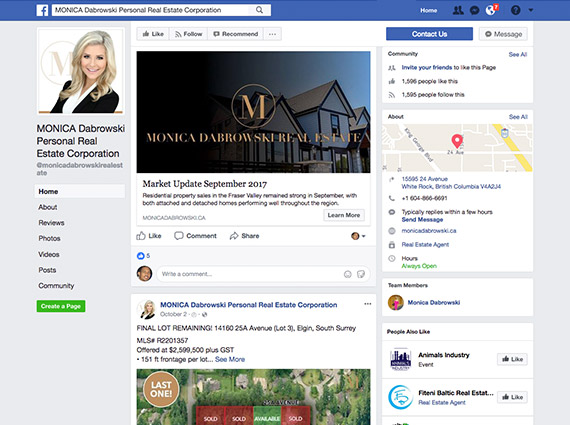
Don picked up seamlessly where Pat left off and asked the room for a show of hands, “How many of you have a Facebook profile?” Everyone had a hand in the air. He then went on to explain that social media is the new-age dominant word-of-mouth marketing medium.

Real estate agent social media facebook profile

“Everyone in some way is connected by social media, Facebook alone has over 2 billion users.” and that “Anyone shying away from building and asserting their brand and value on social media is losing out on potential clients and revenue in a big way.”

After taking us on a quick tour of Facebook, Instagram, Twitter, and Snapchat, Don said this: “Quality and engaging engaging content is your #1 goal. Not sales! If you can’t focus on quality content that’s relevant to your customer, don’t waste your time.”

Home buyers and sellers are interested in a wide variety of things. Use your social media platform to call attention to the important ones that are directly affecting your clients. Some examples are: pricing trends, housing inventory levels, interest rate hikes, a new home coming available in a highly sought after area, or highlighting the schools and local amenities within a neighborhood.

Relevant facts and statistics are critical in getting people to pay attention. Stop and think, how many of us randomly post images, phrases, and comments without giving much thought to them. What if we were (as Don put it) focusing first on the end-user and their needs.

The majority of the time you should focus on their interests, but being entertaining also has its benefits. Watch how this young realtor uses her YouTube channel to be personal and showcase a day in her life:

Sponsorship of Local Teams, Charities, and Events

At this point, we all expected Pat to pick up the microphone. She did not and Don sat down. They toasted each other with their martinis as Brad came from the back of the room (microphone in hand) talking about sponsorship.

“Sponsorship of local events, charities, and athletes is one of the fastest ways to create visibility, awareness, and build trust in a community. With banners, flyers, hand-outs, and signs, you are able to personally engage and show the people your investment in their well-being and the local community.” He went on to explain, “For your yard signs to be effective, there must be a level of trust behind the brand. Only then will the SOLD sign be attached.”

Real estate community charity sponsorship

Turns out that Brad is Don and Pat’s son. Also a very successful real estate agent (and great bartender too). His message ended with an emphasis on the quality of all printed material and again, “Your content on everything printed must contain the highest quality customer-focused information, otherwise it will not convey your message and simply be tossed in the trash.”

This is part one in a two part series. For the rest of these real estate marketing tips, check back here: www.clashgraphics.com/printing-tips/

Clash Graphics Print Shop Atlanta Flyer Printing

2233 Peachtree Rd NE Ste 202 Atlanta, GA 30309

(678) 235-3464

To view the original version on Clash Graphics, visit: www.clashgraphics.com/printing-tips/real-estate-marketing-secrets-shared/

Tuesday, July 18, 2017

Political Campaign Marketing - Identifying & Developing a Narrative

printed vinyl banner behind Ronald Reagan 1984 campaignEach and every candidate puts forward a set of policies and values which represent their intentions if elected. The voters are seemingly voting based upon these policies and values.

Skillfully optimized political campaigns target and influence the votes we cast. Policies and values are great to have, but alone, will not win an election.

Marketing is the arrow while public opinion is the target. Everything from coffee mugs, t-shirts,
yard signs, bumper stickers, campaign rallies, and talk shows are used to impact that opinion on a candidate or an entire political party. For high quality campaign printing products visit www.clashgraphics.com/campaign-printing.

In this article, we address the identification and development of a narrative, which is required to run and win a political campaign.

Political Narrative Explained

“Narrative-building is essential for almost every complicated argument because it’s the only way to get our pattern-seeking brains to discount contradictory facts and data.”, as described by Jonah Goldberg for National Review. A narrative is a communication mechanism that must be strategically created.

Identifying the Narrative

For a political campaign, there is no other aspect as important as the narrative. Look no further than the candidate. It is the candidate’s set of beliefs, character, personality, and history which mold the narrative. Considering, representing, and exemplifying the wants and needs of one’s constituents is largely what makes a candidate worth voting for.

Presidential Campaign Narrative Example

2008 - Presidential Election John McCain vs. Barack Obama - With John McCain, the narrative was wrapped in a blanket of long term experience, having made serious sacrifices for the country as a wartime veteran. “Country First” and “The Original Maverick” were slogans based on his life and history.

Professionally printed campaign signs and banner McCain 2008

Barack Obama’s narrative was focused on his being a junior Senator and a political outsider. “Change We Can Believe In” and “Yes We Can” became the focus as the campaign developed while inspiring the hope for real change and political reform.

printed banner and campaign signs Obama campaign speech 2008

At the time of the 2008 election, there were several factors which led to Barack Obama’s victory. Many argue fatigue over the Republican party and a desire for radical change in Washington D.C. were the deciding factors. It is undeniable however, that Obama’s “Yes We Can” and “Change” narratives were suited and appealed to the majority of voters in 2008 and 2012.

Developing the Narrative

Over the course of a campaign, the primary narrative does not alter. The details of it are exalted to attain a desired reaction from a specific voting demographic. A candidate must consider their hometown, age, ethnicity, wealth, education, and gender. Then careful research and a deep understanding of the opinions and emotions of voters, allows one to succinctly summarize and verbalize a core purpose and aim of the campaign. The following five steps will assist in the formulation of a political narrative:

Interview the Candidate - Learn about the candidates past experiences, how he/she was influenced in life. Gather stories or anecdotes which can be used throughout the campaign.

Create Compelling Ads from the Narrative - Using current events and demographics as a guide, create ads which speak to voters and the issues they are dealing with.

Use the Candidate’s Personal Stories - Voters typically cast their votes for someone they can relate to. In this case, it isn’t as much about party affiliation or even politics. The most effective hooks are sometimes derived from the candidate’s personal stories, allowing voters to get a glimpse of and relate to the person.

Current Events and the Message - As a campaign progresses, the narrative and message should be able to absorb current events at the local, national, and international level. Voters will learn about breaking news and wait to see what the candidate has to say.

Target Narrative Keywords and Phrases - Once the campaign has developed the narrative and its message, the keywords and phrases should then be turned into campaign marketing materials, such as: coffee mugs, t-shirts, yard signs, bumper stickers, hats and banners for rallies, town hall meetings and conventions.

Narratives are Branding Strategies

Similar to how large companies employ branding tactics, creating a narrative makes a political party or a candidate the favorable brand. It is through the narrative that people are able to relate to the candidate.

As with any marketing strategy, this sort of branding must be masterfully employed. Even the most well-tuned narrative can backfire. However, when implemented correctly, a narrative and its slogans can be remembered for generations. “Prouder, Stronger, Better” and “Morning In America” were campaign gems that made their way to bumper stickers, yard signs, t-shirts, and flyers from coast to coast as Ronald Reagan swept the 1984 presidential election. 

Source: http://www.nationalreview.com/article/440469/political-narratives-make-facts-serve-larger-storyline

Photos: https://upload.wikimedia.org/wikipedia/commons/b/bf/President_Reagan_giving_Campaign_speech_in_Austin%2C_Texas_1984.jpg
https://upload.wikimedia.org/wikipedia/en/6/64/CountryFirstMcCain.jpg
https://www.flickr.com/photos/tonythemisfit/2263437899

Clash Graphics Print Shop Atlanta Flyer Printing

2233 Peachtree Rd NE Ste 202 Atlanta, GA 30309

(678) 235-3464

To view the original version on Clash Graphics, visit: http://www.clashgraphics.com/printing-tips/political-campaign-marketing-identifying-developing-narrative/

Monday, June 26, 2017

Advantages of Using Printed Postcards in Marketing

direct mail postcards in the mailboxSome of the most effective means of marketing your products to customers, even in today’s digital world, are direct mail solutions. The opportunity to create a lasting impression can be made if you deliver a strategic mailing that has a benefit or valuable offer.

Email is cheap to deploy, and just as easy for your customer to ignore. However, your brand’s postcards can be customized, and crafted in a way that a potential customer may be compelled to engage your services. Doing this can be accomplished with customized printing, or integrating personality and humor in your branded direct mail campaign.

Clash can help create and print your postcard mailer, but first here are five benefits to note of using a postcard as a marketing strategy:

It Costs Very Little to Use Postcard Marketing

Postcards cost very little to nothing to use. In the US, it costs just about a dollar to print and send by First Class Mail.

Direct mail costs vary based on size, but postcard mailings under 4 ¼ x 6 inches are eligible for a reduced postage rate.

Postcards Present a Huge Opportunity for Building Your Brand

One particular purpose of building a brand is that you try to stamp your business as a household name in your field. When you add a touch of Technology in all your marketing strategies, like adding a QR code inviting the receivers of the postcard to see more of your goods and services, you are not just seen as an authority but one who is influential in the ever changing technology industry. You can even include a value-added offer such as a discount or coupon which can draw more and more people to your business thereby building your brand. Take a look at these
QR code examples for more ideas that may spark your creativity.

Postcards Can Help You Diversify Your Marketing Strategy

You can get to offer business deals to your regular customers, or get more offers from new prospects in just one mailing. Postcards are more than just sending a mailer, they can be used as an oversized business card or mini-information sheets.

They Give Instant Results

Because of the ease of printing and its small size, and also since you can create a sales note quickly on them, you can get sales from them 2-3 days after releasing them to be mailed.

Postcards Foster Increased Friendship Among Relationships

Custom printed postcards for branding and marketing strategies
Postcards strengthen relationships among businesses because of the friendly note which they carry along. You can personalize the note on them to give your business a friendly look which will attract customers to your brand. Some ways to personalize your postcard include but are not limited to showing off your customers on the card by means of testimonies or pictures, displaying the customer’s name on the card etc.

Postcards Are Still a Reliable Means of Business Marketing

The advantages are much more than the few mentioned here, but they should be enough to provoke your thoughts towards including them in your strategy. I recommend you test run them if you have never tried it before, and you will be amazed at how effective they can be even in this present technological age.

Clash Graphics Print Shop Atlanta Flyer Printing

2233 Peachtree Rd NE Ste 202 Atlanta, GA 30309

(678) 235-3464

To view the original version on Clash Graphics, visit: http://www.clashgraphics.com/printing-tips/advantages-of-using-printed-postcards-in-marketing/

Monday, April 24, 2017

Marketing With Custom Printed Banners

Custom printed banner for marketing eventPeople usually associate marketing of business with only online means like email marketing and blogging. However, there are equally effective ways of marketing businesses with the aid of tangible items such as printed banners. It is a perfect means of advertising if there is a large gathering. In this article, you will learn how to use a banner as a means of advertising in a festival, conference or trade show. Then contact www.clashgraphics.com to print this custom banner.
Define your target audience

Knowing everything about your ideal customer is the first thing you should be aware of before you create a banner. Determine the specific location where your target audience would be. It is also important to know that everyone is distinct in their own way. Therefore, you should cater for every individual difference.

For instance, people with different personalities attend a sporting event. Therefore, you must find the particular thing that would appeal to all of them. The banner should communicate this appealing thing, and it should be concise enough to pass along the message as quick as possible.

Branding with a Custom Banner

People learning about your brand should feel emotionally connected to it. They should feel happy and excited whenever they see your brand. You need to ensure that your banner triggers an emotional reaction.

Custom vinyl banners for event messaging and marketingEnsure that your banner has its uniqueness so that it could catch the attention of the people. Since you have only a few seconds or minutes to catch the attention of the audience, it is important that the banner has a strong image and personality. In order to design an amazing banner, these are some of the questions you need to answer:

  • Can your audience relate to your brand’s value by merely looking at your banner? Is the banner simplified enough so they wouldn’t have to look for long before they understand the message?
  • What should be their next step or action after seeing your banner?
  • Is the uniqueness of your brand properly represented in the banner?

These considerations will ensure the proper messaging and design of your banner. Remember your goal is to capture attention, communicate a message, then create an action.

What’s Next After I Capture the Attention of the Audience?

It is necessary for you to determine the next cause of action you want your target audience to take after gaining their attention through the banner. Do you want them to visit a website, call a number, visit your office location, attend a seminar you are putting in place, etc.? Ensure the banner complete its advertising purpose it is intended for, and it should lead the audience to what they are to do to move one step closer to your business.

An Efficient Event Advertising Product

It is highly important for you to note that you would have only a few seconds to catch the attention of your target audience. Therefore, it should be concise but meaningful enough to pass along your intended message as quick as possible. In other to do this, you need to think the way your target audience would.

Check if the vinyl banner is attractive enough to draw the attention of the people at the gathering. Your banner should be unique and distinctive since there would be other banners at the event that would be competing with yours for attention. This is a big moment to let everyone know about your business; you need to make it count.

Employ the services of the best graphic designer to help you design your banner to pass along the intended message in an effective way. Your banner is a very powerful marketing tool, and you should make use of it to advertise your business to a large and visible audience.

Clash Graphics Print Shop Atlanta Flyer Printing

2233 Peachtree Rd NE Ste 202 Atlanta, GA 30309

(678) 235-3464

To view the original version on Clash Graphics, visit: http://www.clashgraphics.com/printing-tips/marketing-with-custom-printed-banners/