Showing posts with label Advertising. Show all posts

Tuesday, August 20, 2024

How to Get More Reviews

Are you struggling with how to get more reviews? This Clash article will provide actionable strategies to increase your review count effectively. From directly asking customers to leveraging social media and optimizing your Google Business Profile, we cover proven methods to encourage more reviews and improve your online reputation.

how to get more reviews - online reviews for businesses

Key Takeaways

  • Online reviews are essential for building a business reputation and can significantly influence consumer trust.

  • Directly asking customers for reviews at the right time, whether in-person or through emails and SMS text messages, can enhance response rates by up to 60%.

  • A dedicated reviews page and active engagement on social media can streamline the review collection process while showcasing customer feedback to attract new clients.

The Importance of Online Reviews

Online reviews are not just a digital age phenomenon; they're vital to your business's reputation and visibility. Positive reviews can be leveraged in marketing efforts to attract new customers and enhance a business's visibility. When potential customers see glowing testimonials, it provides reassurance and social proof, making them more likely to trust and choose your business. Approximately 70% of consumers say positive reviews boost their trust in a business.

Conversely, one negative review might result in losing potential customers. This underscores the importance of addressing negative reviews promptly and effectively. Engaging with negative feedback helps businesses manage their online reputation and demonstrate that they value customer opinions.

Consistent engagement with reviews boosts visibility in search engines due to active customer interaction. Online reviews also contribute significantly to SEO by incorporating relevant keywords, aiding in higher search rankings. Google considers the quantity and quality of customer reviews in its ranking algorithm. Therefore, a strong presence on review sites like Google and Yelp is vital for enhancing your business's credibility and attracting more reviews, customers, and new business.

Ask Customers Directly for Reviews

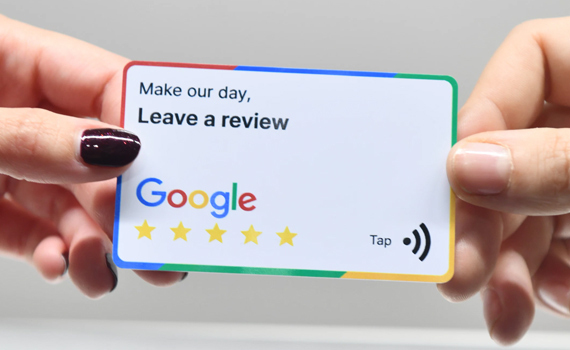
asking customers directly for reviews

Directly asking customers for reviews is a straightforward and effective method to boost your review count. Timing is everything—asking for reviews at the right moment when the customer's positive experience is fresh significantly increases the chances of receiving them. Customers are significantly more likely to leave a review when asked directly.

Verbal requests made during in-person interactions or follow-ups are often perceived as more genuine. Phone calls also add a personal touch and can effectively request reviews from satisfied customers. Employees should use scripts to ask for reviews at suitable times, ensuring every customer has the chance to give feedback.

Don't leave review opportunities on the table—every interaction is a chance to generate valuable feedback. Whether it's through a casual conversation, a prompt during a transaction, or a follow-up call, directly asking customers can significantly boost your review numbers. Remember, most positive reviews result from direct requests, so don't hesitate to ask your satisfied customers to share their experiences.

Utilize Email Marketing for Review Requests

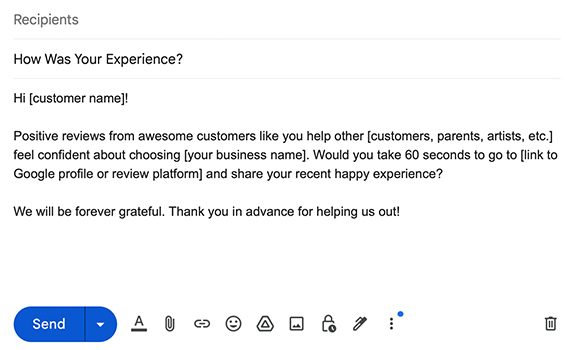
Email marketing remains a powerful tool for collecting reviews. Incorporating review requests into post-purchase emails markedly increases response rates. Review request emails account for a large portion of all collected review content, underscoring their vital role in generating positive feedback. The timing of these emails should match when customers are likely to reflect on their purchase, from immediately to a week or two post-purchase.

email marketing review requests

Follow-up emails after the initial request can increase review responses by an additional 50%. Personalized emails will genereally further enhance effectiveness, due to their tailored approach. Phrases like 'Write a review for 20% off your next purchase' and attention-grabbing subject lines can significantly improve open and engagement rates.

Leverage SMS/Text Messages

SMS/text messages provide a direct and immediate method for requesting reviews in the age of instant communication. Text messages have a significantly higher response rate compared to emails. Most text messages are read within 30 minutes, making SMS a timely method for review requests.

Using SMS for review requests enables businesses to reach 97% of Americans who own cell phones. Write concise SMS messages that cater to short attention spans, ensuring customers read and respond to requests.

Automating the SMS review generation process can efficiently manage text requests, ensuring consistency, compliance, and maximizing reach.

Create a Dedicated Reviews Page

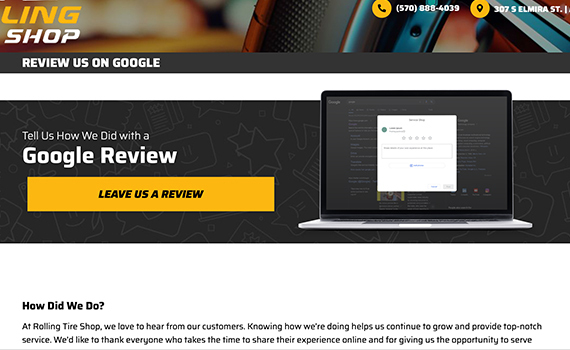
A dedicated reviews page on your website can significantly enhance review collection efforts. A centralized, easily accessible page can facilitate this process as customers often look to a business's website to leave a review. Building an effective reviews page involves substantial effort in design, content creation, and integration, but the benefits are worth it.

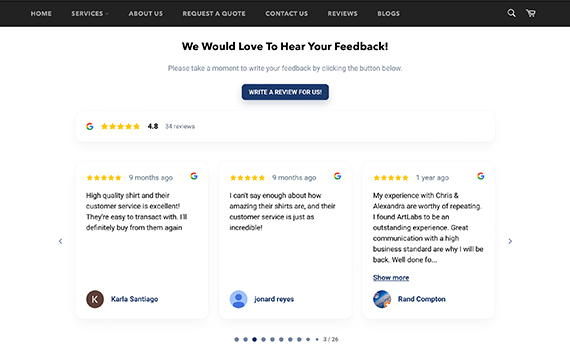
dedicated reviews page on a website

A well-structured reviews page boosts click-through rates and enhances product discovery. Positive testimonials act as social proof, increasing visibility and influencing potential customers. Incorporating testimonials within various sections of your website and using visuals like customer images or videos can further enhance credibility and engagement.

Use Social Media to Show and Encourage Reviews

Social media is a powerful tool for engaging with customers and encouraging them to leave reviews. Posting customer reviews on social media channels and providing direct links for easy feedback can significantly increase review submissions. Remind followers that leaving a review benefits others and allows them to share their experiences.

Promoting customer testimonials on social media can inspire others to share their thoughts, leading to increased review submissions. Sharing positive feedback on social media establishes trust and can humanize your business, encouraging more customers to leave reviews.

Video testimonials, in particular, can create stronger emotional connections, prompting additional customers to share their feedback.

Incentivize Customer Reviews

Incentives, such as coupons, discounts, rewards, loyalty points, and contest entries, can effectively motivate customers to leave reviews.

To maintain trust and authenticity, avoid rewarding only positive reviews. Engaging with all feedback shows a commitment to customer satisfaction and enhances brand reputation.

Incentivizing reviews can enhance engagement and increase feedback, ultimately building more reviews and a more robust online presence and brand.

Optimize Your Google Business Profile

A well-optimized Google Business Profile is crucial for attracting more reviews and improving local business search rankings. Accuracy in your Google Business Profile, including business name, address, phone number, and hours of operation, is vital for online visibility. Responding to Google reviews can encourage more customers to share their experiences.

High-quality images on your profile make it appear more trustworthy and attractive to potential customers. Regular updates to your Google Business Profile keep it active, which is favored by the search algorithm.

A Q&A section on your profile proactively addresses customer inquiries, enhancing its effectiveness.

Respond to All Reviews

business responding to customer reviews

Responding to all reviews is key to improving your business's reputation and engaging with customers. Reviews are a valuable feedback tool that helps businesses identify areas for improvement. Responding to reviews shows appreciation and encourages others to share their feedback. Consumers read businesses' responses to reviews, underscoring the importance of engagement and a professional response.

Addressing negative reviews instead of ignoring them is crucial. Here are some key points to consider:

  1. Openly acknowledging and addressing customer issues fosters trust and helps mitigate negative impressions.

  2. After resolving a negative review, ask the customer to write a new review to reflect their updated experience.

  3. Quick and professional responses to all reviews reflect positively on the business.

Potential customers are mostly realistic and expect some unfavorable reviews. However, the manner in which the unhappy customer is responded and dealt says much more about your business often than the unhappy customer review. Thus, it is important to be mindful and intentional when responding, as the entire online community will see how the situation is handled.

Display Reviews Prominently

Prominently displaying reviews on your website can enhance trust with potential customers. Most consumers read at least ten reviews before forming an opinion about a business. Regularly updating testimonials on your website demonstrates ongoing customer satisfaction and engagement.

display reviews prominently

Showcasing testimonials from recognizable or credible figures can enhance your brand's perceived authority.

Simplify the Review Process

Simplifying the review process can significantly boost the number of reviews you receive. Direct links allow quicker access to review pages, reducing barriers for customers. Include direct links in SMS and emails to make it easier for customers to submit feedback.

Clear, concise instructions on how to leave a review minimize customer confusion. Visual aids like flowcharts or an instruction video can be helpful resources.

Automated reminders for reviews streamline the process and encourage more participation. A good review management platform creates a seamless process for sending invitations and leaving reviews.

Monitor and Manage Your Online Reputation

Monitoring and managing your online reputation is crucial in today's digital landscape. Reputation management tools help businesses monitor their brand across platforms and manage feedback effectively. Reputation management software often includes sentiment analysis features, assisting companies in gauging public perception.

Tools like Brand24 track mentions across many online sources, including social media and review sites, allowing quick responses. Timely responses to negative reviews can prevent potential crises facilitated by reputation management tools.

Tools like ReviewTrackers analyze trends in customer feedback using natural language processing to identify areas for improvement. Effectively using these tools ensures businesses maintain a positive online presence by promptly engaging with customer feedback.

Summary on How to Get More Reviews

In summary, online reviews are vital for any brand looking to thrive in the digital age. Businesses can significantly increase their review count by asking customers directly, leveraging email marketing and SMS text messages, creating a dedicated reviews page, and using social media. Offering incentives, optimizing your Google Business Profile, and responding to all reviews are also crucial strategies.

Monitoring and managing your online reputation ensures you stay on top of customer feedback and maintain a positive brand image. Implementing these strategies will help you collect more reviews, build a loyal customer base, and enhance your business's credibility. Remember, every review is an opportunity to improve and grow.

Frequently Asked Questions

Why are online reviews important for my business?

Online reviews are crucial because they boost your business's visibility, build trust with potential customers, and help improve your search engine rankings. They serve as social proof, making it easier to attract new customers.

How can I ask customers for reviews effectively?

The best way to ask customers for reviews is to directly request them at the right moment, preferably in person or through a personalized follow-up email or call. This personal touch can really boost your chances of getting that valuable feedback!

What incentives can I offer to encourage reviews?

Offering coupons, discounts, or loyalty points can effectively encourage customers to leave reviews. Just make sure to provide these incentives for all reviews, not just the glowing ones, to keep things genuine.

How can I simplify the review process for customers?

To simplify the review process for customers, provide direct links to review pages and clear instructions, possibly using visual aids. Automating reminders can also make it easier for them to share their feedback.

Why is it important to respond to all reviews?

Responding to all reviews is crucial because it shows you value customer feedback, encourages more reviews, and helps you manage your business reputation. Plus, it gives you a chance to turn negative experiences into positive outcomes.

Clash Graphics Print Shop Atlanta Flyer Printing
2233 Peachtree Rd NE Ste 202 AtlantaGA 30309
(678) 235-3464

To view the original version on Clash Graphics, visit: https://www.clashgraphics.com/printing-tips/how-to-get-more-reviews/

Thursday, July 18, 2024

Creating a Small Business Marketing Plan

Developing a small business marketing plan is essential for achieving your growth goals. This article provides a step-by-step approach to help you succeed. You will assess your business environment, set SMART marketing objectives, identify your target audience, choose the most effective channels, and continuously optimize your strategies. By following these steps, you will create a targeted, effective marketing plan that drives results.

small business marketing plan

Key Marketing Plan Takeaways

  • Conduct a comprehensive 'SWOT' analysis to understand internal and external factors impacting your business, and study competitor strategies to identify your unique competitive advantages.

  • Set clear, 'SMART' (Specific, Measurable, Achievable, Relevant, Time-bound) marketing objectives to effectively focus your efforts and track performance.

  • Identify your target audience through detailed analysis and create buyer personas to tailor your marketing messages, select appropriate channels, and maximize campaign impact.

Assess Your Business Environment

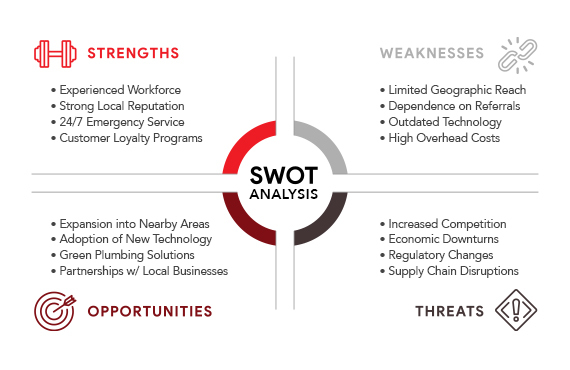
Before delving into the details of your small business marketing strategy, take a moment to assess your current market position. This assessment begins with a powerful tool known as the SWOT analysis. SWOT, which stands for Strengths, Weaknesses, Opportunities, and Threats, provides a comprehensive framework for small business owners to examine their company's internal and external factors objectively.

A comprehensive SWOT analysis provides valuable insights into your business's:

  • Strengths

  • Weaknesses

  • Opportunities

  • Threats

This analysis reveals areas for improvement and uncovers untapped growth opportunities.

Once you've completed your SWOT analysis, it's time to focus on your competition. Analyzing your competitors' marketing strategies is critical in developing your business marketing plan. Take a close look at what your top competitors are doing well and where they might be falling short. This competitive analysis will help you identify your unique competitive advantage and inform your strategic direction. Pay particular attention to the types of marketing campaigns they're running, the channels they're using, and how they're positioning themselves in the market.

SWOT analysis process for small business marketing plan

Armed with insights from your SWOT analysis and competitive research, you'll be well-equipped to make informed decisions about your small business marketing strategy. This initial assessment forms the bedrock of your future marketing endeavors, grounding your plans in a robust understanding of your business's strengths, weaknesses, and market position. Remember, the goal here is not just to gather information but to use it strategically to set your business apart and create marketing initiatives that truly resonate with your target audience.

Set Clear Marketing Objectives

With a comprehensive grasp of your business environment, your next step in crafting a successful marketing plan involves setting distinct, actionable objectives. This is where SMART goals come into play. SMART is an acronym that stands for:

  • Specific

  • Measurable

  • Achievable

  • Relevant

  • Time-bound

Setting SMART objectives ensures that your marketing efforts are focused, trackable, and aligned with your overall business strategy.

When formulating your marketing objectives, it's vital to concentrate on individual goals instead of attempting to achieve everything simultaneously. This approach allows you to concentrate your resources and efforts on the areas that will have the most significant impact on your business. For each SMART objective you set, ask yourself questions about its:

  • Specificity

  • Measurability

  • Actionability

  • Relevance

  • Time-bound nature

This process will help you refine your goals and ensure they're truly SMART.

Remember, your marketing objectives should be more than just words on paper. They should serve as a roadmap for your marketing initiatives and a benchmark for measuring success. Consider setting up marketing dashboards to track your actual performance against your targets. This real-time monitoring will allow you to make data-driven decisions and adjust your strategies as needed.

Establishing distinct SMART marketing objectives paves the way for a targeted, effective, and triumphant marketing plan.

Examples of SMART Goals

Let's look at some concrete examples to better understand how to create SMART goals for your small business marketing plan. For instance, a digital traffic-related SMART objective could be "to achieve 10% more traffic from a key channel or country within two years." This goal is specific (10% increase), measurable (through traffic analytics), achievable (with focused effort), relevant (to business growth), and time-bound (within two years).

Another example could be an acquisition-focused objective: "to acquire 10,000 new online customers in a financial year at an average cost per acquisition of $30". You can also set SMART goals for different aspects of your marketing strategy. For conversion, you might aim "to increase the average order value of online sales to $89 per customer".

An engagement-focused objective could be "to increase active customers purchasing at least once a quarter to 300,000 in a market". These examples demonstrate how SMART goals can be tailored to various marketing initiatives, providing clear direction and measurable targets for your efforts.

Identify Your Target Audience

target audience identification for small business marketing

Having established clear objectives, turn your focus to a pivotal element of your small business marketing strategy: pinpointing your target audience. Your target audience is the specific group of consumers most likely to want your product or service based on factors such as:

  • age

  • gender

  • income

  • location

  • interests

Understanding who your target audience is and what they need is fundamental to crafting compelling marketing messages and choosing the proper channels to reach them.

To begin identifying your target audience, start by analyzing your current customer base. Look at demographics such as age, gender, and income bracket, but don't stop there. Dive deeper into their interests, behaviors, and pain points. Conduct client interviews to gain valuable insights into why they chose your product or service and what needs it fulfills for them. This information will help you create a more accurate picture of your ideal customer.

Start by conducting market research to spot industry trends and potential service gaps that your product can address. This research can take various forms, such as surveys, focus groups, or analysis of your competition. As you gather this information, start creating buyer personas—detailed profiles of your potential customers- including their demographics, interests, challenges, and buying behaviors. These personas will be invaluable in guiding your marketing efforts and ensuring your messages resonate with your target audience.

Remember, understanding your target audience is not just about knowing who they are but also about knowing where to find them and how to reach them effectively. This knowledge will inform every aspect of your marketing plan, from the channels you choose to the content you create. Investing time in meticulously identifying and understanding your target audience enables you to craft more targeted, effective marketing campaigns, leading to a higher return on investment.

After all, the more precisely you can define and segment your target audience, the more personalized and impactful your marketing efforts will be.

Choose Effective Marketing Channels

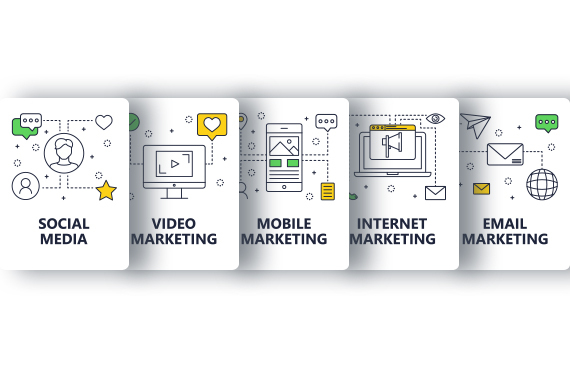
effective marketing channels selection for small business

Having comprehensively grasped your target audience, the subsequent step in your small business marketing strategy involves choosing the most effective channels to connect with them. The key is to choose promotional channels based on your budget and where your target audience spends their time. This method guarantees that your marketing endeavors are both economical and influential.

In the current digital era, social media marketing has emerged as a potent instrument for establishing brand presence and driving sales. Platforms like Instagram, Pinterest, and Twitter offer affordable advertising options and are particularly recommended for small businesses. Each platform has its unique strengths – for instance, Instagram offers the Shoppable tool for promoting brands, while Pinterest is known for driving higher conversion rates with shopping ads. However, don't limit yourself to just social media. Email marketing remains a highly effective method for developing relationships with current and prospective customers.

Online advertising is another crucial component of a comprehensive marketing strategy. This can include methods like display ads, search engine marketing (SEM), and paid social ads. In fact, 80% of brands use some form of paid advertisement to target buyers with high intent. Google Ads, for example, can be particularly effective when your target audience is actively searching for your product or solution. However, if your audience isn't actively searching, social media ads might be a better bet.

While digital marketing is crucial, don't overlook the potential of offline marketing channels. Traditional advertising methods like business cards, direct mail, and even radio or print ads can still be effective, especially if your target audience includes demographics that aren't as active online. Additionally, consider incorporating strategies like influencer marketing, which leverages individuals with dedicated social media followings to promote your products, or partnership marketing, where you collaborate with other brands on mutually beneficial campaigns. By carefully selecting a mix of marketing channels that align with your budget and target audience preferences, you'll be able to create a well-rounded marketing strategy that maximizes your reach and impact.

Develop Your Unique Selling Proposition

Having identified your target audience and selected your marketing channels, shift your focus to what distinguishes your business from the competition. This is where your Unique Selling Proposition (USP) comes into play. Your USP is a clear and concise statement that explains why customers should choose your business over competitors. It's the secret sauce that makes your small business marketing strategy truly effective, differentiating you in a crowded marketplace.

Developing a strong USP involves several key steps:

  1. Define your target market

  2. Identify the unique features of your product or service

  3. Position your USP to highlight the specific benefits these features offer to your customers

  4. Keep in mind potent USPs emphasize delivering clear and specific benefits catering to your target market's needs

For example, if you're a local bakery, your USP might be "Handcrafted, organic pastries made fresh daily with locally sourced ingredients."

Once you've crafted your USP, it's crucial to ensure it's believable and supported by proof. This builds customer trust and credibility for your brand. Consistency is key – your USP should be integrated across all your digital marketing communications and business branding. From your website and social media profiles to your email signatures and packaging, your USP should be clearly and consistently communicated.

Remember, your USP isn't set in stone. As your business evolves and market conditions change, don't be afraid to test and revise your USP to ensure it remains relevant and effective in resonating with your target audience. By developing a strong, clear USP and consistently delivering on it, you'll create a powerful foundation for your small business marketing efforts.

Create a Content Marketing Strategy

content marketing strategy for small business

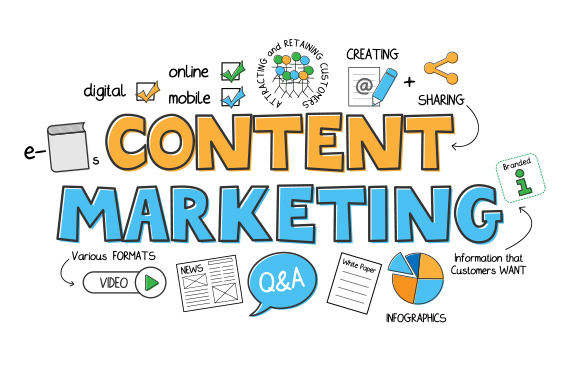
With your Unique Selling Proposition established, delve into one of the most influential tools in your small business marketing toolkit: content marketing. Content marketing focuses on creating and distributing valuable, relevant content to attract and engage a specific market segment. It's not just about promoting your products or services; it's about providing genuine value to your audience and establishing your brand as a trusted authority in your field.

Before initiating content creation, it is essential to define a distinct goal for your content marketing endeavors. This could be increasing brand awareness, driving customer engagement, or boosting conversions. Your content strategy should serve as a roadmap for developing and distributing various media assets like blog posts, videos, and podcasts. To ensure consistency and maintain a comprehensive view of your content strategy, consider using a content calendar.

When it comes to the types of content you create, remember that diversity is key. More than 50% of consumers want to see brand videos, and engagement-rich content like videos and interactive elements tends to have a lower bounce rate. However, don't neglect other forms of content. Some examples include:

  • Well-written blog posts can help build your website's authority and attract the right customers through search engine optimization (SEO)

  • Infographics, which can present information in a visually appealing and easily digestible format

  • Podcasts, which allow you to reach an audience that prefers audio content

  • Case studies, which showcase your expertise and success stories

  • Ebooks, which can be used as lead magnets to capture email addresses and provide valuable information to your audience

Speaking of SEO, make sure to include both inbound and outbound links in your content, as this can positively influence your search engine rankings and build credibility.

Finally, remember that your content strategy should be data-driven and adaptable. Use tools like Google Analytics to gain insights into the preferences and behaviors of your audience, and let this data guide your content creation. Set key performance indicators (KPIs) to measure the success of your content, and be prepared to adjust your strategy based on these metrics and audience feedback. By creating a dynamic, audience-focused content marketing strategy, you'll be able to engage your target market more effectively, build brand loyalty, and drive sustainable growth for your small business.

Budgeting for Your Marketing Plan

Having outlined the vital components of your small business marketing strategy, it's time to address an essential aspect: budgeting. Establishing a realistic marketing budget is essential to understand your marketing plan from a cost perspective and to guide the remainder of your planning process. It's about striking the right balance between your financial capabilities and your marketing ambitions.

When calculating your marketing budget, consider factors like your business size, industry, and growth stage. Here are some general guidelines for different types of businesses:

  • Established businesses typically allocate 6-12% of their gross revenue for marketing.

  • New business owners might want to consider allocating a higher percentage to increase brand awareness.

  • B2B companies generally allocate between 2-5% of their revenue to marketing.

  • B2C companies often dedicate a higher percentage, between 5-10%.

Remember, these are guidelines, and your specific allocation should be based on your unique business needs and financial situation.

small business owner budgeting for their marketing

Once you've determined your overall budget, it's time to allocate funds to different marketing components. This might include:

  • Website development

  • Social media marketing

  • Content creation

  • Online advertising

For example, a minimum $1,000-a-month investment is often recommended for effective search engine advertising. Don't forget to factor in tool costs, staff training, and potentially hiring external expertise. As you implement your marketing plan, regularly review your web analytics and adjust your budget accordingly. This ongoing optimization will help you generate more accurate future budgets and ensure you get the best return on your marketing investment.

Implement Your Marketing Campaigns

With your strategy outlined and budget assigned, it's time to actualize your small business marketing plan through meticulously executed campaigns. Every marketing campaign should have a specific desired outcome, a budget, and a set start and end date. Before launching, it's crucial to define clear and quantifiable objectives for your campaign, such as promoting a new product or increasing sales.

The content of your campaign should convey a clear message and contain a specific call to action (CTA). This is where your Unique Selling Proposition comes into play, helping to differentiate your brand in the marketplace. Ensure that your campaign maintains a unified brand image across all channels, including consistent use of:

  • your logo

  • color scheme

  • font set

  • slogan

  • product descriptions

This consistency helps reinforce your brand identity and makes your marketing efforts more recognizable and impactful.

Don't forget about the power of your existing customer base when implementing your campaigns. Continue marketing to these customers to encourage repeat purchases, upselling, and cross-selling. Engage them by encouraging reviews or sharing user-generated content on social media. For social media campaigns, use a content calendar to maintain a regular posting schedule and ensure you're sharing content at optimal times.

Lastly, consider using a promotional plan template to map out the process of converting prospects into customers. By carefully planning and executing your marketing campaigns, you'll be able to reach your target audience and achieve your marketing objectives effectively.

Track and Measure Results

Initiating your marketing campaigns marks the start. To guarantee the success of your small business marketing endeavors, careful monitoring and analysis of your results is essential. This ongoing process of tracking and measuring allows you to gauge the effectiveness of your campaigns, determine if they're meeting your original goals, and gather valuable insights for future marketing initiatives.

Start by identifying and monitoring key performance indicators (KPIs) that align with your marketing objectives. These might include:

  • Website Traffic

  • Session durations

  • Bounce rates

  • Engagement metrics (like likes, shares, and comments)

  • Email open and click-through rates

  • Conversion rates

Utilize website analytics tools like StatCounter or Google Analytics, which not only tracks these metrics but also integrates with Google Ads and Data Studio for deeper insights. Social media platforms typically offer their own analytics tools, which can provide valuable data on the performance of your social media marketing efforts.

Remember, the goal of tracking these metrics isn't just to collect data—it's to gain actionable insights that can inform your marketing decisions. Regularly review your data to identify what's working well and areas needing improvement. This continual monitoring allows you to make data-driven adjustments to your marketing strategies based on your audience's behavior, media consumption habits, and spending patterns. By paying close attention to your marketing data and using it to optimize your efforts, you can maximize the return on your marketing investment and drive sustainable growth for your small business.

track and measure business analytics

Adjust and Optimize Your Strategies

In the constantly changing world of marketing, the capacity to adjust and enhance your strategies is key for sustained success. This is where the data you've collected from tracking your results becomes invaluable. Regularly reviewing your performance data allows you to identify successful strategies you can double down on and areas that need improvement or a complete overhaul.

Use the insights gained from your data analysis to refine and adjust your marketing strategies continually. This might involve:

  • reallocating budget from underperforming channels to those showing better results

  • tweaking your messaging to better resonate with your audience

  • exploring new marketing tactics that align with emerging trends

Remember, optimization is an ongoing process. By consistently analyzing your data, making informed adjustments, and testing new approaches, you'll be able to continuously improve the effectiveness of your small business marketing efforts, ensuring that your strategies remain relevant and impactful in a dynamic marketplace.

Marketing Plan Summary

Creating a small business marketing plan is a journey that requires careful thought, strategic planning, and continuous optimization. We've walked through the essential steps: assessing your business environment, setting clear objectives, identifying your target audience, choosing effective marketing channels, developing your unique selling proposition, creating a content strategy, budgeting, implementing campaigns, tracking results, and optimizing your efforts. Each step plays a crucial role in crafting a comprehensive marketing plan that can drive your business forward. Remember, the key to success lies not just in creating the plan but in consistently executing, measuring, and refining your strategies. So, apply what you've learned to your unique business situation, and don't be afraid to adapt as you go. With dedication and a data-driven approach, you can create a marketing plan that not only meets your current business needs but also paves the way for future growth and success. Your small business has unlimited potential – now it's time to unlock it through strategic, effective marketing!

Small Business Marketing Frequently Asked Questions

These are some of the common business marketing questions Clash Atlanta gets:

How often should I review and update my small business marketing plan?

You should review and make major updates to your small business marketing plan annually and make minor adjustments quarterly based on campaign performance and market changes. Regular monitoring and adjustments will help keep your plan effective.

What's the most important element of a small business marketing plan?

The most important element of a small business marketing plan is identifying your target audience. Understanding your customers and their needs is crucial for making effective marketing decisions.

How much should I budget for marketing as a small business?

It's recommended that small businesses budget 6-12% of their gross revenue for marketing. New businesses may need to allocate more to establish brand awareness.

Is it necessary to use all marketing channels for my small business?

No, it's not necessary to use all marketing channels for your small business. Focus on the channels where your target audience is most active and that align with your budget and resources. Quality over quantity is key in channel selection.

How can I measure the success of my marketing efforts?

You can measure the success of your marketing efforts by tracking key performance indicators (KPIs) like website traffic, conversion rates, customer acquisition cost, and return on investment (ROI). These metrics will vary based on your marketing objectives.

Clash Graphics Print Shop Atlanta Flyer Printing
2233 Peachtree Rd NE Ste 202 AtlantaGA 30309
(678) 235-3464

To view the original version on Clash Graphics, visit: https://www.clashgraphics.com/printing-tips/creating-a-small-business-marketing-plan/

Tuesday, July 20, 2021

How To Create a Product Launch Plan

Prevent your product launch from being a costly, mismanaged embarrassment. Putting a product launch plan in place will help you smoothly take your product to market.

Calendar with launch milestone plan

clashgraphics.com gathered the following information about what a launch plan is, what one consists of, its importance to your launch, and how to use a product launch plan to your advantage.

What Is a Product Launch Plan?

While a product launch is a concerted group effort to bring a product to market, a product launch plan helps you order necessary events leading up to and potentially past a product launch date. The objective should be to make sure everyone involved in the product’s development and marketing, business partners, and customers are knowledgeable about your new product, how it solves their problem, and when it arrives on the market.

How Do You Plan New Product Launch?

Your product launch plan should clearly establish what needs to be done, by when, and by whom. It not only outlines a pathway for task execution but also provides a snapshot of the product and its launch. A well-written product launch plan should include or address the following:

Executive Summary

Writing and planning for a product launch plan

This is where you summarize information about the product, the launch plan, project finances, and how success will eventually be measured. Your executive summary should address the following more in-depth:

  • Summarize your campaign goals
  • Company messages
  • Goals for this launch
  • What metrics will be used to measure the launch success
  • Identify product features, functions, and system requirements

Tip: While the executive summary appears first in your presentation, it is more easily composed after the rest of your plan has been outlined and written.

Product Description

Write a brief (2 to 3 paragraph) product description including:

  • What the product is
  • Benefits
  • What customer problem it solves

Target Audience

  • Define your targeted customer
  • Define the product persona
  • Define your targeted market segment(s)
  • Define your targeted business segment(s)

Responsibilities

  • Who within the organization is assigned to what portion, phase, or segment of the product launch?

Important Dates & Milestones

All critical dates and milestone targets should be chronologically listed and include events like:

  • Product Finalization
  • Product Naming
  • Budget Allocation
  • Product Positioning
  • Press Releases/Activity

Results Metrics

Include which metrics will be used to determine whether or not the launch was a success like:

  • Revenue targets
  • Number of associates/partners carrying the product
  • Online traffic/conversions

Tip: Establish attainable goals and celebrate them with your team.

Marketing Strategy

Marketing and strategy for product launch plan

Given the budget and target audience for this product launch, what marketing vehicles will best work for you?

Tip: When applicable, use or modify your company’s successful marketing assets implemented under previous product launches.

“Must Meet” Milestones

Include a timeline of all activities within your launch plan that must happen and their expected dates.

Launch Budget

What is your launch plan’s budget? Develop and include a pie chart showing how the launch budget will be allocated, accompanied by a detailed table.

While you could create a spreadsheet to manually recreate all of this, there are online resources you can use like this template in Asana: asana.com/templates/for/marketing/product-marketing-launch

Why Is a Product Launch Plan Important?

Within even the most organized and experienced companies, mistakes can and do happen. A product launch plan helps reduce the potential for errors as well as:

  • Helping you remember and keep track of each critical step and crucial asset during your product release process.
  • Being better prepared to navigate undesired results and/or situations.
  • Since all team members have access to the same document, they can perform more cohesively, avoiding duplicate efforts and confusion of responsibilities.

Meeting to organize a product launch plan

Note: A product launch plan allows you to make larger tasks more manageable by breaking them into smaller tasks that can be distributed among team members.

Tip: Besides the organizational benefits a product launch plan brings to the table, a well-structured plan can help you secure greater project funding from your business partners and associates.

Planning for a Product Launch

In this article, you discovered what a product launch plan is, what can be found in a launch plan, and why they are essential.

Creating a product launch plan or employing a pre-established template will help you organize, assign, and follow project tasks from concept to completion and eventual launch.

Neglecting to use a product launch plan can leave your team and launch vulnerable to forgotten deadlines, misunderstood tasks, botched assignments, duplicated work, missed opportunities, and embarrassing setbacks.

Sources:
web.uri.edu/risbdc/
faculty.fuqua.duke.edu/~mela/marketing460/
faculty.fuqua.duke.edu/~mela/marketing460/AtAGlance_2004/Launch_Plan_Template_fin.pdf
home.ubalt.edu/ntsbpitt/SpreeMPE.htm
web.uri.edu/risbdc/files/How-to-Launch-Like-a-Pro-for-More-Sales.pdf

Clash Graphics Print Shop Atlanta Flyer Printing

2233 Peachtree Rd NE Ste 202 AtlantaGA 30309

(678) 235-3464

To view the original version on Clash Graphics, visit: https://www.clashgraphics.com/printing-tips/how-to-create-a-product-launch-plan/

Tuesday, February 18, 2020

Looking for Yards To Mow to Grow Your Lawn Care Business

Are you trying to grow your lawn care business with little to no results? By knowing how to market your lawn care business, you can find more yards to mow and turn them into loyal customers.

Professional lawn care results help when looking for yards to mow

clashgraphics.com gathered the following information on marketing your lawn care business to attract new customers, and how to keep them.

How To Find Yards To Mow

Whether you are just beginning or you’ve been in the lawn care business for a while, you can always benefit from new customers and the revenue they bring with them. The following tips are designed to help you grow your lawn care business:

Printed Marketing Material - Until you meet a customer face-to-face, it’s likely going to be the printed marketing material that represents you and your business. The following will help you get the word out about your business:

• Business Cards (clashgraphics.com/printing-tips/tips-to-design-the-best-business-card/)
• Brochures
• Flyers (clashgraphics.com/printing-tips/marketing-with-flyers-use-size-design-and-flyer-printing/)
• Yard Signs
• Door Hangers
• Magnets

Avoid using stock images and overly wordy presentations on your printed material. Take the following into consideration:

• Your printed material needs to create immediate interest with your potential customer. Use images of yourself doing the work, and in their neighborhood if possible.
• Keep your presentation concise and informative.
• Don’t put services or claims in print that you may not be able to perform or keep.
• Use vibrant lawn and garden colors throughout your material (create a color theme).

Work with a print shop that has an internal graphic design department. They can likely help you go from concept to design, and finally to print.


Build A Website - Create a space that your existing and potential customers can visit. Include the following to lend credibility to your business:

• Use photos of your work
• Share your contact information and location
• Include a map of your service area
• Share your prices**
• Include monthly and annual packages
• Describe off-season services you provide
• Include your web address on all printed media and advertising

Get help when building your web site. It is essential to optimize as much as possible, from accessibility across multiple devices to the intentional use of keywords and key phrases. Your website should help your visitor (by providing a solution to the problem they are there for), and be optimized (so your website can be found in searches relevant to your business).

**According to HomeAdvisor, the prices for mowing and lawn maintenance can range from $49 - $219. Although the following number varies based on types of treatments and services, homeowners are spending an average of $133 on lawn services.

Word of Mouth - Perhaps the most effective way to gain new customers is to spread the word and create a level of customer satisfaction that compels them to do the same.

Use word of mouth advertising when looking for yards to mow

For new and existing lawn services, get the word out to everyone you know. This may include:

• Family members
• Neighbors
• Friends
• Coworkers

Canvas the areas where you provide services. Try to meet your potential customer face-to-face and give them your business card, flyer, or brochure. Invite them to visit your website and allow them to make an informed decision about hiring you for their lawn care needs.

Again, in this type of business, you, combined with the quality of your service and your customer interaction, will determine whether or not your business succeeds or not.

Referrals and Rewards - Reward your loyal customers when they refer you to a new customer that uses your services. You can do this in many ways:

• Gift Cards
• Discounted Services
• A free lawn mowing
• Service Upgrade

While these make great incentives, always remember that the quality and integrity of your services will ultimately be the reason your customers refer you.

Social Media - We live in an age where everyone is using some form of social media. They are doing this to keep up with friends, look for services, and offer feedback or comments on just about anything. In addition to your website, consider creating business pages on the following platforms:

• Facebook
• Twitter
• Instagram
• YouTube
• Pinterest
• Tumblr
• Get Pocket
• Scoop.it
• LinkedIn
• WhatsApp

You can write about your business, take videos of your work, give lawn care tips, and tricks of the trade, and post them on multiple platforms. Invite your customers, friends, and family to follow your pages, like, and comment on your posts.

The more quality information you post (relevant to your business), the more momentum you will gain with your followers and search engine rankings.

Non-Competing Partner Companies - Approach companies that provide home services that you are not in competition with, and exchange referrals. For example, a tree service company will likely have residential customers that need lawn care. Likewise, you may have customers that need their trees inspected or pruned.

In this type of relationship, both companies can get new business by referring their existing customers to each other. It’s a win-win.

How To Keep Your Lawn Care Customers

Keeping your existing and new lawn care customers relies mostly on how well you provide the services they have asked of you. Just as important though, is customer service.

Customer satisfaction and referrals help when looking for yards to mow

Always listen to your customers. Respond to criticism and praise with humility, authenticity, and honesty.

When your customer has a problem, give that problem your full attention and solve it efficiently. When the problem is solved, followup with your customer and thank them for the opportunity to fix whatever was wrong.

How To Get Lawn Care Customers

In this article, you discovered how to attract more lawn care customers to your business through marketing, service quality, and customer service.

By knowing how to market your lawn care company efficiently, you can build on your loyal customer base, and grow your business.

When you neglect your company’s marketing needs or fail to attend your customer’s needs, your business will likely lose revenue and struggle to survive.

Sources:
turfmagazine.com/business-management/9-marketing-tips-prepare-lawn-care-business-spring/
lawncare.org/lawn-care-business/

Clash Graphics Print Shop Atlanta Flyer Printing

2233 Peachtree Rd NE Ste 202 AtlantaGA 30309

(678) 235-3464

To view the original version on Clash Graphics, visit: https://www.clashgraphics.com/printing-tips/looking-for-yards-to-mow-grow-your-lawn-care-business/

Friday, July 19, 2019

6 Ways Graphic Design Helps Grow Your Business

Are you ready to create, update, or completely change your brand’s appearance or visual identity? Graphic designers use graphic design to convey an idea or solve a problem. Knowing the differences between the types of graphic design will help you find the right services to fulfill your vision.

Graphic designer working on environmental advertising layout and colors

clashgraphics.com gathered information on six ways graphic design applications are used to solve problems and communicate ideas.

What is Graphic Design?

Graphic design is a process using typography, photography, illustration, color, and form to communicate visually.

Graphic design plays a role in everything we eat, drink, and consume. Every product, packaging, and business wants to communicate something to you and graphic designers are who deliver this.

Visual Identity (Brand Identity) Graphic Design

Visual identity graphic design is the use of images, shapes, and color to create the face of a brand. Brand identity is used to communicate an organization’s personality, purpose, tone, and experience that becomes the relationship between an organization and its audience.

Graphic design for brand visual identity

To create a brand identity, graphic designers collaborate with an organization’s stakeholders to create and develop the following:

• Logos
• Typography
• Color palettes
• Image libraries
• Style guides (to ensure brand consistency)

These are used to guide the formation of an organization’s:

• Business cards
• Stationary
• Advertising
• Publications
• Signage

A successful brand identity campaign is recognizable across all media types.

Marketing and Advertising Graphic Design

Successful marketing aids a company in guiding their audience’s decision-making process. This is accomplished by engaging the audience based on their wants, needs, awareness, satisfaction, and perceived problem that a company’s product, assets, or services can solve.

Graphic design for posters signs and wayfinding

Designers work with an organization’s owners, directors, management team, and marketing team to create assets within a marketing strategy. Those assets may include:

• Brochures (print and digital)
• Vehicle wraps
• Trade show displays
• Postcards
• Flyers
• Magazine and newspaper ads
• Signage
• Posters
• Banners
• Billboards
• Infographics
• Email marketing templates
• Digital presentations
• Menus
• Social media ads, banners, and graphics
• Images for websites and blogs

Until the recent past, marketing and advertising were almost exclusively print-centered. Presently, with technological advances and broad access to social media, there is a need for an online presence, and businesses are investing in digital assets such as those used in content marketing.

Environmental Graphic Design

Environmental graphic design (EGD) serves to enhance one’s experience by visually connecting them to or guiding them through a location. It involves disciplines such as graphic, architectural, interior, landscape, and industrial design which communicate identity and information.

Graphic design for environmental advertising and branding

The following are examples of where environmental graphic design is used:

• Office spaces and buildings
• Event spaces
• Conference spaces
• Store interiors
• Exhibitions
• Murals
• Airports
• Stadiums
• Fairs
• Markets
• Restaurants
• Public transportation navigation

A specific type of environmental graphic design called wayfinding consists of using well-placed signage and landmarks to help or suggest to people where they need to go.

Environmental graphic design is intended to improve one’s experience by making locations more engaging, informative, and navigable.

Publication Graphic Design

Publications, until recently, have been printed long-form pieces involving layout and graphic design, intended to communicate with a targeted audience by way of physical distribution.

Graphic design for newspaper book and magazine

The following are examples of publications:

• Books
• Newspapers
• Newsletters
• Employee handbooks
• Directories
• Comics
• Annual reports
• Financial reports
• Magazines
• Instruction booklets
• Catalogs

Publication graphic design is also used for e-publishing or electronic publishing and is a fast-growing market. For those of you buying and reading books, magazines, or manuals online on your electronic devices, those are all e-publishing. Because of its ease of use, distribution, and cost-effectiveness e-publishing is becoming the replacement of printed publications, but still requires layout and graphic design.

E-publishing isn't limited to electronic versions of books, newspapers, or magazines. Anyone can e-publish just about anything using blogs and publication platforms.

Art and Illustration Graphic Design

It could be said that graphic design serves the purpose of commercialization in the world of branding, logos, and business. Art and Illustration, on the other hand, is more of an art form serving as decoration or drawings in a book or magazine.

Graphic design for book comic and magazine illustration

The following are examples of art and illustration for graphic design:

• T-shirt design
• Video games
• Websites
• Comic books
• Album art
• Book covers
• Picture books
• Children’s books
• Coloring books
• Motion graphics
• Stock images
• Graphic novels
• Infographics
• Technical illustration
• Concept art

A graphic artist may use any combination of techniques and media to produce their work.

Packaging Graphic Design

The graphic design of packaging is a complex assembly process involving choices of shape, color palette, typography, and material to make packaging highly visible and attractive to consumers. The shape and color alert consumers and attract their attention, while the lettering and font create its identity and brand.

Graphic design for product packaging and messaging

Packaging serves to protect and prepare products for storage, distribution, display, and sale. Packaging design can also communicate directly to consumers, making it a valuable marketing tool. Each box, bottle, bag, can, container, or canister is an opportunity to tell the story of a brand.

Now that we’ve addressed the many applications of graphic design, if you are a potential graphic designer or a designer looking to advance your career, read clashgraphics.com/printing-tips/graphic-designer-salary-software-portfolio-tips/

Finding the Right Type of Graphic Design

When it’s time to create or update your brand identity, knowing which type of graphic designer to seek will aid you in finding the right designer and services to fulfill your vision.

In this article, you discovered six types of graphic design, their differences, and their applications used to solve problems and communicate ideas.

When searching for a designer to take on your job, knowing how the types of design differ from each other will help you determine which designer possesses the right skillsets for the job.

Sources:
https://segd.org/article/what-environmental-graphic-design-egd
https://www.sophia.org/tutorials/publication-design
https://wp.nyu.edu/fogdv2/2018/10/29/graphic-design-vs-illustration/
https://www.alimentarium.org/en/knowledge/packaging-%E2%80%93-graphic-design
https://oakland.edu/bals/interdisciplinary-careers/advertising-and-graphic-design/

Clash Graphics Print Shop Atlanta Flyer Printing

2233 Peachtree Rd NE Ste 202 AtlantaGA 30309

(678) 235-3464

To view the original version on Clash Graphics, visit: https://www.clashgraphics.com/printing-tips/6-ways-graphic-design-helps-grow-your-business/

Friday, December 21, 2018

4 Strategies Guaranteed to Increase Your Company’s Revenue

What if you could simplify growing your business and profits by focusing on 4 easy to understand principles?

Marketing is the mechanism and driver of new business, but you can simplify increasing your company's revenue by focusing on 4 strategic and very narrow metrics.

Printing Atlanta marketing advertising grow business

In this clashgraphics.com article, presented are marketing strategies and the four ways to increase revenue and customer engagement.

Marketing Strategies to Increase Revenue

Strategies to increase revenue can be guided by four distinct business growth principles; customer count, average transaction, transaction frequency, and price.

Whether the marketing or advertising strategy is a buy-one-get-one, door hanger promotion, email, direct mail campaign, flyer, holiday special, or social media campaign, its underlying goal or purpose is one or a combination of the categories mentioned above.

One of the most important and fundamental aspects of a marketing strategy is a clear understanding of its intended purpose and how it will accomplish this.

1 - Increase Your Customer Count

Attracting more customers to your business is typically one of your core business goals. Right?

Sure... As long as you have the staff or the means to maintain excellent customer service and the product inventory to satisfy your new sales volume.

Printing Atlanta growing business marketing strategies

In relation to revenue growth and increased profitability, growing the customer base is most often a business owners first thought.

If your business was not first to market and doesn't own 75%+ market share, then increasing your businesses number of customers is a solid revenue growth strategy.

The following strategies are very effective when the focus is on increasing your business’ customer count:

• Search Engine Optimization
• Radio Ads
• TV Ads
• Newspaper Ads
• Online/Social Media Ads
• Community Event Participation
• Grand Re-Opening Event
• Billboards
• Flyer Distribution
• Door Hanger Campaign
• Direct Mail Campaign

By adding a discount coupon or promo code to your marketing material, you give potential and returning customers a reason to pay your store or site a visit again. This leads us to the next category to grow your business.

2 - Increase Customer’s Average Transaction Amount

Building on your current customer base is smart business. This is where customer service becomes personalized service, and knowing the needs of your customers helps you put the right products in their hands.

The more products you carry which offer solutions to the needs of your customer, the more they are likely to purchase.

If your business has 200 customers per week that spend an average of $50 per week, that’s $10,000 in weekly revenue. Now, if through a promotion, demonstration, or sale, you can get half of your customers to spend an extra $5 per week, you’ve increased your weekly revenue to $11,000 or a gain of 10%.

Merchandising also plays a massive roll in increasing the average transaction. End caps or displays can be used to suggest a combination of products, while popup suggestions and instant discounts can be very effective for online stores.

Atlanta printing company merchandising increase business revenue

The following strategies when coupled with customer engagement, smart merchandising, discount coupons, BOGO, buy x amount get y% in savings, etc. can be used to increase your customer’s average transaction:

• Email Advertising Campaign
• Instant Online Savings
• Social Media Ads with Coupon Codes
• Direct Mail Coupons, Flyers, and Newsletters
• In-Store Coupons, Flyers, and Newsletters
• Free Samples (when possible)

Note: Anyone who ever shopped at Kmart probably remembers the random (over the p.a. system) “Blue Light Specials.” This is a classic example of how to entice your customers to get something extra in their basket.

3 - Increase Frequency of Customer’s Transactions

How do you get your customers to visit and buy more frequently? In this category, your strategies must be focused on two specific targets:

Customer Experience - What keeps your customers coming back? Whether online or in-store, it’s the experience they have and value they derive from interacting with your business.

Value and experience can be expressed and appreciated in different ways. For some, speed and price represent value, while others see personalization as a more compelling value proposition.

Print shop Atlanta increase business revenue

The better the service and seamless checkout is, the easier customers can shop, and more likely they are to do so more frequently.

Engage Your Customer Base - The very same strategies used to increase the average transaction size can be modified to increase your customer’s transaction frequency.

Take yourself for example. Why do you keep going back to specific locations?

• Is it the customer service?
• Could it be the convenience of the location?
• Is it an irresistible offer or monthly promotion?

More than likely, it is a combination of all these and a few more reasons.

To help strengthen your customer’s loyalty and get them to your location or website more often, make them feel that they have a say! You can encourage and invite their input and feedback through satisfaction surveys using the following:

• Email
• Pop-Up in the Online Store
• Direct Mail
• In-Store

When changes are made that result from customer feedback, you have another opportunity to build on customer loyalty. By letting them know (individually by thank you cards or collectively by banners and signs) that they were the catalyst for improvements, they will be more likely to patronize and frequent your store.

Printing Atlanta increase business revenue customer satisfaction

Note: It is not wise to ask for customer comments, feedback, or suggestions if you are unwilling to accommodate and make changes.

4 - Increase Product or Service Prices

This is undoubtedly the least popular of the four categories, and the easiest to backfire if not handled properly.

If the time comes that you must raise your prices to increase revenue, or compensate for rising costs, the following strategies can help prepare your customers and avoid significant decreases in your number of customers and average transaction:

Run a Promotion - Before prices go up, run a promotion on the affected items and advise your customers of the coming price changes.

Atlanta printing company marketing campaign

Be Forthcoming - Explain why the prices are going up. Consumers, in general, will absorb reasonable price increases for items they see as essential. Especially when they understand why the price went up.

Show Results - If the prices are going up for an expansion project, give your customers periodic updates. If it is to hire more employees to serve your customers better, make sure it happens.

You could simply raise your prices and “cross your fingers” that no one notices. Besides having potential complaints and bad online reviews, you will have lost an opportunity to display your empathy and commitment to customer’s feelings and experience.

Growing Your Business Through Customer Engagement

The four ways to increase a business’ revenue all boil down to customer engagement. With honest and consistent communication, you can naturally boost your revenue, even if it means having to raise your prices.

In this article, you discovered the top four ways to increase revenue, the strategies that help you achieve it, and the importance of customer engagement throughout the process.

With a well-structured marketing strategy, guided by exceptional customer engagement, increasing the customer count, average transaction, transaction frequency, or even increasing prices can translate to increased revenue, profitability, and customer satisfaction and satisfied customers.

Sources:

http://web.stanford.edu/group/instr_design/cgi-bin/case_study/strategicthinking/module3.html
https://www.middlemarketcenter.org/expert-perspectives/top-3-ways-to-increase-revenue-with-existing-customers/

Clash Graphics Print Shop Atlanta Flyer Printing

2233 Peachtree Rd NE Ste 202 AtlantaGA 30309

(678) 235-3464

To view the original version on Clash Graphics, visit: https://www.clashgraphics.com/printing-tips/4-strategies-guaranteed-increase-your-companys-revenue/

Tuesday, March 27, 2018

3 Best 2018 Super Bowl Commercial Ads

When I say the words, Super Bowl, what probably comes to mind is a momentous football battle and equally entertaining night of commercials. After 52 championship games, it is not only the competitive football, but also the entertaining commercials that viewers across the nation continue to be excited to watch.

Super bowl 2018 commercial ads

From a branding and marketing perspective, there is a lot at stake, and varied rewards for the best produced ads. Long after the game is in the history books, the commercials will be searched for, seen millions of times, and shared or talked about amongst friends and co-workers.

This year there were three runaway winners that exploited the Super Bowl platform, and displayed an exceptional level of marketing brilliance. These brands obtained massive visibility, and as of the date of this article, their commercials collectively have accumulated an astounding 65.5 million views on YouTube alone.

The Clash Graphics team reviewed, categorized, and voted on the best commercials from the 2018 Super Bowl. The three motifs these ads fit were: “Product Humor”, “Humanitarian Effort”, and “Marketing Genius”. Not only will you be entertained, but in their analysis we will offer ways to transform these concepts from a national stage and apply it to your regional or local business.

Product Humor with Amazon’s Alexa

Amazon combined star power with humor and used its clever voice-assistant to entertain, generate buzz, and inspire potential buyers to question whether they are missing out and should consider one of their latest Echo products.

This self-deprecating commercial of their Alexa voice-assistant losing its voice and being replaced with the likes of Chef Gordon Ramsay, Musician Cardi B, Actor Anthony Hopkins, and others illustrates how using humor to display a product’s utility can elevate and create an iconic Super Bowl ad.

In maximizing their branding potential, Jeff Bezos, founder and CEO of Amazon, was placed in the beginning of the commercial. This seemingly insignificant cameo was enough to gain significant media coverage, in addition to making him more familiar, likable, and personable to the public and all Amazon supporters.

“Thanks guys. But I’ll take it from here.” coupled with “Nobody does it better” ends this ad with a very clear message as Amazon flaunts their hot product and well orchestrated hit Super Bowl ad.


Humanitarian Effort from Budweiser

For the second consecutive year, Budweiser has not used its iconic clydesdale horses in its Super Bowl ad. This year’s ad showcased the humanitarian efforts the company led, and their commitment to help the American people whenever and wherever disaster strikes.

The commercial relies less on tradition and more on its a recent response to disaster and action. The mentioning of Florida, California, Texas, and Puerto Rico at the end shows viewers across America the massive relief effort the company is engaged in and committed to. Many were oblivious that over the past thirty years, Budweiser has “bottled” tens of millions of cans of water which are sent for disaster relief worldwide.

What makes this ad so impactful is that few viewers knew this was taking place behind the scenes. With little to no media coverage of their involvement, it appears Budweiser is a good spirited company that stands for more than just beer. That in and of itself tells us so much about the company’s values and their commitment to the American people.

As you can imagine, this will earn them the goodwill and support of more American consumers that share their values and find their actions commendable.

Marketing Genius from Tide

All things equal, no other Super Bowl ads were as brilliant as the Tide ads from Saatchi & Saatchi (New York ad firm). With a cleverly orchestrated idea that felt fresh and familiar, yet unexpected, not only did they promote Tide, they cleverly incorporated the iconic Old Spice Guy and Mr. Clean character (all are P&G products - under the same parent company) to reenforce it.

The marketing genius came in two parts:

Using Parodies - The use of parodies allowed the viewers to believe they were watching an ad for something else (Old Spice, Mr. Clean, Budweiser, insurance, pain relief, etc.) until the reveal - by David Harbour from Stranger Things - where it humorously exposed that it was actually a Tide ad all along.

Creating an Experience - With the principle ad aired and the parodies randomly popping up, Tide was able to capture a piece of every other commercial by exploiting the viewers cynicism.

The experience was the expectation of non-Tide ads to be Tide ads, and even when they weren’t, Tide was still on everyone’s mind. For the duration of the Super Bowl, every viewer was psychologically hacked - literally - to try and avoid being “tricked again”, thus always found thinking about Tide during many other commercials.

Tide’s creative brilliance garnered massive attention, publicity, and Ad-Weeks top advertising award for the Best Ad of the 2018 Super Bowl!

Applying National Stage Marketing to a Local Level

While your marketing budget may not afford an ad spot during the Super Bowl, you can use these basic marketing concepts to generate heightened awareness, likability, and increased earnings.

Humanitarian Activities - If your company regularly donates time, product or services to those in need or those aspiring to a greater education, make it public knowledge.

Your local marketing campaign should include the way(s) in which your business supports the community. By doing so, a sense of trust is developed between your business and both current and prospective customers.

While you may consider this wasteful or counterintuitive, people will often more readily do business with those who support and are actively involved in their communities. A secondary benefit can occur as the people in your community become aware of and support the cause that you were supporting, which in turn is a massive win-win.

Product Humor - Whether your product is brand new or well established, a dose of humor is a fun and entertaining way to introduce or reenergize a product within the market.

At a local level, find out what issues are at the top of discussion, what part(s) of local history are popular among your target audience, the music they listen to, and the clothes they are wearing. Gather as much information as possible and find ways to bring out some humor, keeping it classy of course.

In the Amazon commercial, Alexa loses her voice and is hilariously replaced with several celebrities responding with absurdities. A similar approach can be taken by finding local celebrities to participate in your product’s marketing campaign. Communicate and welcome ideas from the celebrities, as they may be able to offer clever angles and pitches from their own life or noteworthy topics surrounding their likeness.

Marketing Genius - Ads like the 2018 Tide Super Bowl ones are rare. Being able to captivate an audience in that way for that amount of time is an amazing feat. At the local level, it is creating the experience that will serve to strengthen your brand and product.

Creating expectation through simple misdirection and other products (from your brand) is an effective way to generate interest, curiosity, and anticipation.

Task your marketing team or ad agency to weave together an ad campaign that includes print, televised, and social media ads to keep your customers curiously engaged and coming back for more.

The larger your brand and product recognition becomes, the more impactful your ad campaign can be. Steal a page from the Super Bowl advertisers playbook, and make an impact with your next sales and advertising campaign.

Clash Graphics Print Shop Atlanta Flyer Printing

2233 Peachtree Rd NE Ste 202 AtlantaGA 30309

(678) 235-3464

To view the original version on Clash Graphics, visit: www.clashgraphics.com/printing-tips/3-best-2018-super-bowl-commercial-ads/