Showing posts with label Small Business. Show all posts

Wednesday, October 15, 2025

Avoid These 10 Common Small Business Mistakes

Starting and running a small business is challenging. Many entrepreneurs fail because they overlook common small business mistakes. This article highlights the most common pitfalls, such as poor planning, insufficient market research, and poor financial management. By identifying these mistakes, you can better navigate the complexities of running a business.

common small business mistakes

Key Takeaways

  • A clear business plan is vital for guiding decisions, attracting investment, and ensuring successful operations.

  • Inadequate market research leads to poor customer targeting and misguided decisions, underscoring the importance of understanding the market landscape.

  • Effective financial management, including budgeting and securing proper financing, is crucial to prevent cash flow issues that can jeopardize business sustainability.

1. Lack of a Clear Business Plan

One of the most common business mistakes small business owners make is neglecting to develop a clear business model. Without a comprehensive business plan, it's like trying to navigate uncharted waters without a map. This crucial document not only guides your decisions and attracts investors but also outlines your business's goals and strategies.

Many business owners make the mistake of diving into their business ideas without this foundational step, which can lead to planning that fails rather than setting a course for success. Regularly referring to and updating your business plan ensures your business stays on track towards its goals and allows for necessary adjustments.

Importance of Business Planning

A business plan is essential for evaluating milestones and making informed decisions. It acts as a GPS for your business journey, helping you stay on track and reach your goals. While writing a business plan may seem time-consuming, it’s a crucial step that lays the foundation for lasting success. Setting specific goals and maintaining ambition helps business owners navigate challenges and steer their businesses forward.

Presenting your business idea effectively, highlighting a problem, and demonstrating how your startup will solve it is crucial for attracting interest and support.

Elements of an Effective Business Plan

An effective business plan should outline the costs of operation, anticipated sales, and target customers. For those seeking financing from banks or private equity firms, a well-prepared business plan will be required.

Additionally, studying competitors is essential for identifying market gaps and refining your unique selling proposition, ensuring your business stands out in a crowded market. This comprehensive competitor analysis helps you understand your strengths and weaknesses relative to others in the market, guiding your business strategies.

2. Inadequate Market Research

market research analysis with charts and graphs

Another common pitfall for small businesses is inadequate market research. Many entrepreneurs dive into their new business ventures with unrealistic expectations because they haven't thoroughly analyzed the market. This lack of research can lead to targeting the wrong customers and making poor business decisions —a common startup mistake that can result in pitfalls for new business owners.

It's crucial to build resilience and adaptability to navigate economic challenges and changing consumer preferences. A well-rounded business plan should encompass projected operational costs, expected sales, and the intended target audience to avoid these issues.

Understanding Your Target Audience

Understanding your target audience is vital for any marketing strategy. Many startups neglect this aspect, leading to misguided decisions and business failures. The misconception that a great product will automatically lead to success can be detrimental.

Gathering regular customer feedback ensures your business stays on the right track. Launching a beta version for select clients and engaging with customers on social media are effective ways to gather valuable feedback.

Analyzing Competitors

Analyzing competitors is crucial for understanding the market landscape and enhancing your competitive edge. By studying how competitors price their products or services, you can make informed decisions about your own pricing strategies. This thorough analysis not only aids in pricing but also helps differentiate your business from others in a crowded market.

It's a key aspect of your business strategies and marketing plan to gain market share.

3. Poor Financial Management

small business owner poorly managing finances

Poor financial management is one of the most common business mistakes that can cripple a small business. A large portion of small businesses fail due to cash flow difficulties. Cash flow is essential for paying bills and employees, and for covering unexpected costs, as it helps ensure that businesses can make a profit.

Good bookkeeping practices help prevent issues with tax and insurance payments, which can otherwise lead to severe financial problems. Regularly monitoring your financial health allows you to make smarter business decisions and spot opportunities early.

Budgeting and Expense Tracking

Having a budget is critical for small businesses to manage their finances effectively. Without a structured budget, overspending and financial mismanagement can easily occur. It's essential to track monthly expenses and cash flow to maintain financial health. Monitoring costs, expenses, and revenue is key to effectively managing your cash flow.

Neglecting the budgeting process can lead to unforeseen financial troubles and jeopardize business sustainability.

Securing Proper Financing

Securing proper financing is another critical aspect of financial management. Small business owners commonly consider various financing options such as business loans, personal financing, and venture capitalists. Researching these options is crucial for effectively managing cash flow.

Large purchases might necessitate a business loan or line of credit. When borrowing, a well-prepared approach can help persuade banks to provide the necessary funds.

4. Neglecting Legal Requirements
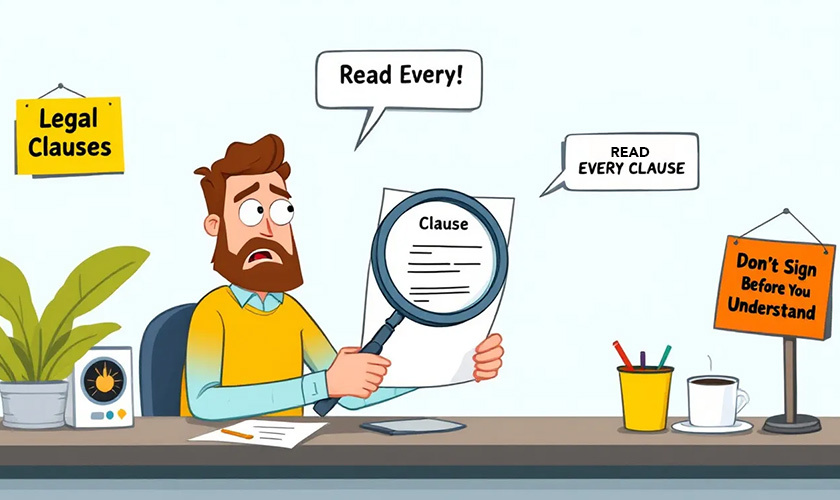
legal document being reviewed by a business owner

Neglecting legal requirements can lead to severe penalties and business disruptions. Failing to adhere to local, state, and federal regulations can also result in significant legal problems. Compliance with legal requirements is essential for the success and sustainability of small businesses.

Ensuring your business meets all legal obligations protects you from potential legal issues and helps maintain smooth operations.

Choosing the Right Business Structure

Selecting the appropriate business structure is crucial for tax obligations and liability protections. The type of business structure you choose affects taxation, liability, and operational requirements. For example, a Limited Liability Company (LLC) provides personal asset protection while allowing profits to be reported on individual tax returns, which is part of establishing a proper legal structure.

On the other hand, sole proprietorships are simple to set up but expose owners to unlimited personal liability. Choosing the right business structure can optimize taxes and provide crucial liability protections for business owners.

Intellectual Property Protection

Protecting intellectual property is essential to avoid legal risks and disputes. Consulting with an IP attorney ensures that your intellectual property is adequately protected, and seeking their professional advice can be beneficial.

If a violation occurs, working with an attorney to address the issue is crucial for resolving disputes and safeguarding your business interests.

5. Skipping Contracts

business contracts

Skipping contracts can lead to misunderstandings and jeopardize business relationships. Many startups make the mistake of relying on verbal or handshake agreements instead of formal contracts. Contracts help protect all parties involved and provide clarity in business relationships.

Without written agreements, good relationships can deteriorate as a result of ambiguity.

Essential Contract Elements

A valid contract must include:

  • Offer

  • Acceptance

  • Awareness

  • Consideration

  • Capacity

  • Legality

It's crucial to clearly define the scope of work to avoid ambiguity. Identifying all parties with their full legal names is essential in contracts.

Additionally, specifying payment terms and deadlines ensures that all parties are on the same page regarding financial obligations.

Consulting Legal Professionals

Engaging an attorney can help ensure that contracts are both enforceable and compliant with the law. Legal advisors can assist in drafting standard form contracts that streamline future agreements. Consulting a legal professional also ensures that contracts are properly structured and enforceable, which can prevent potential legal problems.

6. Ineffective Marketing Strategies

marketing team brainstorming strategies

Many small business owners overlook the necessity of having a clear marketing strategy. Without a marketing plan, businesses risk losing potential customers and revenue. Common mistakes include becoming too reliant on a single customer and seeking immediate results from marketing efforts.

A comprehensive marketing strategy should incorporate a variety of tactics. This includes email, website, social media, referrals, and events.

Creating a Marketing Plan

Successful businesses prioritize understanding their customers' purchasing behavior to enhance their sales strategies. Engaging with potential customers for feedback on product ideas can validate market needs and improve designs for a successful business.

A marketing plan should align with overall business objectives and define a clear plan of tactics to achieve smart goals.

Leveraging Social Media

Effective use of social media can enhance customer engagement and promote brand visibility at low costs. By engaging with customers on social media, businesses can gather valuable feedback and build a loyal customer base.

Leveraging these platforms allows businesses to reach a broader audience and gain market share. Social media is a powerful tool in any marketing strategy, helping to drive business forward.

7. Underpricing Products or Services

product prices

One of the biggest pricing mistakes small business owners make is undercharging for their products or services. Entrepreneurs often price too low to gain market share, which can lead customers to perceive their offerings as having lower value. Setting prices too low limits a business's ability to cover costs, break even, make a profit, and grow.

More than 90% of business owners are reported to be undercharging, which poses a financial risk to the company.

Conducting Market Research for Pricing

Conducting thorough market research is crucial for setting competitive and profitable prices. Entrepreneurs should:

  • Refer to their business plan, financial predictions, and marketing strategy to guide their pricing decisions.

  • Review market research findings.

  • Compare findings to competitors to determine if products are undervalued.

Additionally, calculating the increased revenue from pricing improvements can evaluate the impact of these changes. When adjusting prices, it is essential to monitor:

  • Actual costs

  • Sales volume

  • Competing products

  • Customer feedback. This ensures that prices remain competitive and sustainable.

Value-Based Pricing Strategy

Value-based pricing is a pricing method that reflects the true value of products or services based on their perceived value to customers. This strategy requires understanding how much customers are willing to pay for a product, rather than just considering its cost.

By focusing on the value delivered to customers, businesses can set prices that reflect the benefits and quality of their service offerings, leading to greater customer satisfaction and profitability.

8. Hiring Mistakes

business owner hiring

Hiring mistakes can significantly impact the growth and success of a small business. Overcoming weaknesses in a startup can be achieved by delegating tasks and hiring skilled individuals. Startups should consider hiring part-time employees or subcontractors as alternatives to full-time positions to manage costs and maintain flexibility.

Additionally, utilizing technology can enhance the efficiency and effectiveness of the hiring process, ensuring that the right candidates are selected for the right roles.

Identifying Key Roles

Recognizing specific roles critical to business growth is essential for effective hiring. It's important not to hire a generalist when a specialist is needed. As the business grows, specialized hires should be made to address specific needs and challenges.

Involving team members in the hiring process can provide diverse insights and improve candidate selection, leading to better hiring decisions.

Onboarding and Training

A structured onboarding process is vital for integrating new hires and ensuring they understand their roles and responsibilities. Fostering a culture of innovation encourages employees to share ideas and take calculated risks for business growth.

Continuous learning among employees enhances their ability to contribute to ongoing innovation and development, keeping the business forward-focused and adaptable.

9. Failing to Adapt

In today's rapidly changing market, businesses must adapt to stay competitive and relevant. When facing difficulties, seeking support from a business coach can be crucial for recovery and allow for necessary adjustments. Being too busy with urgent tasks can prevent business owners from learning new skills, which is essential for adaptation.

Effective leaders must remain open to feedback and change to inspire their teams and drive successful adaptation.

Embracing Innovation

Adopting new technologies can significantly enhance operational efficiency and improve customer experiences. Ongoing training helps new employees align their skills with the company's evolving needs, fostering a more efficient and customer-focused business. Both adopting innovative technologies and providing continuous training can create a competitive edge and drive business success.

Responding to Market Changes

Inflexibility and resistance to change can hinder a business's ability to stay competitive and relevant. Businesses that do not adapt to market trends risk losing their customer base and potential growth opportunities, which can lead to bad news for their future.

Adopting new technologies and innovative practices can improve efficiency and customer satisfaction. Staying attuned to customer feedback is essential for adjusting business strategies to meet evolving needs and gain market share.

10. Overextending Resources

business owner excessive spending

Overextending resources is a common mistake that can lead to financial strain and operational inefficiency. Many entrepreneurs underestimate their capital needs and plan for best-case scenarios, which can result in overextending resources. Losing focus on core business activities can hinder success and contribute to resource overextension.

Expanding too quickly can lead to financial strain and excess staffing without sufficient work. Overstretching oneself can result in failing to meet targets due to an increased workload.

Gradual Expansion

Gradual growth allows businesses to adapt to changes and manage risks more effectively. A calculated approach to growth helps prevent a business from becoming overextended by ensuring that it can sustain growth effectively.

A phased approach to expansion can help maintain quality while serving an increasing customer base. Gradual growth allows businesses to maintain better control over financial resources.

Resource Allocation

Resource allocation involves prioritizing time, money, and people towards areas that maximize business growth and efficiency. Overextending resources without proper planning can lead to operational strain and financial instability, jeopardizing valuable time and business investment sustainability.

A gradual expansion strategy allows businesses to grow at a manageable pace, ensuring they can support new demands without overwhelming existing resources. Focusing resources on activities and areas that deliver the most value can significantly enhance overall business performance and competitive advantage.

Small Business Mistakes Summary

Navigating the world of small business ownership is fraught with potential pitfalls, but by being aware of and avoiding these common mistakes, you can significantly increase your chances of success. From developing a comprehensive business plan and conducting thorough market research to managing finances wisely and staying adaptable, each step is crucial to building a sustainable, thriving business. Implement these insights to avoid the most common business mistakes and ensure your business stays on the path to success.

Business Frequently Asked Questions

Why is a clear business plan essential for small business success?

A clear business plan is essential for small business success as it guides decision-making, attracts potential investors, and defines goals and strategies for sustainable growth. Without it, businesses may struggle to stay focused and measure their progress effectively.

How can inadequate market research impact a new business?

Inadequate market research can severely hinder a new business by leading to unrealistic expectations, misidentifying target customers, and ultimately poor decision-making. This could jeopardize the business's chances of success right from the start.

What are the risks of poor financial management for small businesses?

Poor financial management can result in cash flow problems, delayed payments to vendors and employees, and overall financial instability, jeopardizing the business's health. It is crucial for small businesses to maintain effective financial practices to ensure long-term sustainability.

Why is it important to choose the right business structure?

Choosing the right business structure is essential as it directly influences your tax obligations, personal liability, and operational complexity, ultimately impacting your business's financial health and legal safety. Making an informed choice can lead to significant benefits in both taxation and liability protection.

How can businesses ensure their contracts are enforceable and compliant?

To ensure contracts are enforceable and compliant, businesses should engage legal professionals to draft and review their agreements meticulously, guaranteeing clarity in terms and alignment with legal standards. This proactive approach minimizes misunderstandings and enhances legal protection.

Clash Graphics Print Shop Atlanta Flyer Printing
2233 Peachtree Rd NE Ste 202 AtlantaGA 30309
(678) 235-3464

To view the original version on Clash Graphics, visit: https://www.clashgraphics.com/printing-tips/avoid-these-10-common-small-business-mistakes/


Tuesday, August 20, 2024

How to Get More Reviews

Are you struggling with how to get more reviews? This Clash article will provide actionable strategies to increase your review count effectively. From directly asking customers to leveraging social media and optimizing your Google Business Profile, we cover proven methods to encourage more reviews and improve your online reputation.

how to get more reviews - online reviews for businesses

Key Takeaways

  • Online reviews are essential for building a business reputation and can significantly influence consumer trust.

  • Directly asking customers for reviews at the right time, whether in-person or through emails and SMS text messages, can enhance response rates by up to 60%.

  • A dedicated reviews page and active engagement on social media can streamline the review collection process while showcasing customer feedback to attract new clients.

The Importance of Online Reviews

Online reviews are not just a digital age phenomenon; they're vital to your business's reputation and visibility. Positive reviews can be leveraged in marketing efforts to attract new customers and enhance a business's visibility. When potential customers see glowing testimonials, it provides reassurance and social proof, making them more likely to trust and choose your business. Approximately 70% of consumers say positive reviews boost their trust in a business.

Conversely, one negative review might result in losing potential customers. This underscores the importance of addressing negative reviews promptly and effectively. Engaging with negative feedback helps businesses manage their online reputation and demonstrate that they value customer opinions.

Consistent engagement with reviews boosts visibility in search engines due to active customer interaction. Online reviews also contribute significantly to SEO by incorporating relevant keywords, aiding in higher search rankings. Google considers the quantity and quality of customer reviews in its ranking algorithm. Therefore, a strong presence on review sites like Google and Yelp is vital for enhancing your business's credibility and attracting more reviews, customers, and new business.

Ask Customers Directly for Reviews

asking customers directly for reviews

Directly asking customers for reviews is a straightforward and effective method to boost your review count. Timing is everything—asking for reviews at the right moment when the customer's positive experience is fresh significantly increases the chances of receiving them. Customers are significantly more likely to leave a review when asked directly.

Verbal requests made during in-person interactions or follow-ups are often perceived as more genuine. Phone calls also add a personal touch and can effectively request reviews from satisfied customers. Employees should use scripts to ask for reviews at suitable times, ensuring every customer has the chance to give feedback.

Don't leave review opportunities on the table—every interaction is a chance to generate valuable feedback. Whether it's through a casual conversation, a prompt during a transaction, or a follow-up call, directly asking customers can significantly boost your review numbers. Remember, most positive reviews result from direct requests, so don't hesitate to ask your satisfied customers to share their experiences.

Utilize Email Marketing for Review Requests

Email marketing remains a powerful tool for collecting reviews. Incorporating review requests into post-purchase emails markedly increases response rates. Review request emails account for a large portion of all collected review content, underscoring their vital role in generating positive feedback. The timing of these emails should match when customers are likely to reflect on their purchase, from immediately to a week or two post-purchase.

email marketing review requests

Follow-up emails after the initial request can increase review responses by an additional 50%. Personalized emails will genereally further enhance effectiveness, due to their tailored approach. Phrases like 'Write a review for 20% off your next purchase' and attention-grabbing subject lines can significantly improve open and engagement rates.

Leverage SMS/Text Messages

SMS/text messages provide a direct and immediate method for requesting reviews in the age of instant communication. Text messages have a significantly higher response rate compared to emails. Most text messages are read within 30 minutes, making SMS a timely method for review requests.

Using SMS for review requests enables businesses to reach 97% of Americans who own cell phones. Write concise SMS messages that cater to short attention spans, ensuring customers read and respond to requests.

Automating the SMS review generation process can efficiently manage text requests, ensuring consistency, compliance, and maximizing reach.

Create a Dedicated Reviews Page

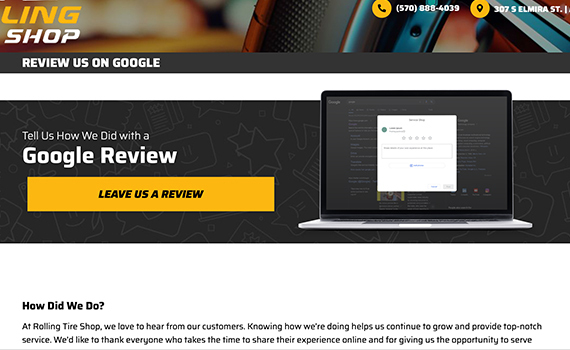
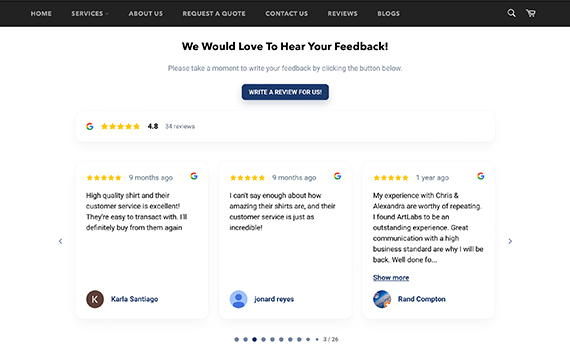
A dedicated reviews page on your website can significantly enhance review collection efforts. A centralized, easily accessible page can facilitate this process as customers often look to a business's website to leave a review. Building an effective reviews page involves substantial effort in design, content creation, and integration, but the benefits are worth it.

dedicated reviews page on a website

A well-structured reviews page boosts click-through rates and enhances product discovery. Positive testimonials act as social proof, increasing visibility and influencing potential customers. Incorporating testimonials within various sections of your website and using visuals like customer images or videos can further enhance credibility and engagement.

Use Social Media to Show and Encourage Reviews

Social media is a powerful tool for engaging with customers and encouraging them to leave reviews. Posting customer reviews on social media channels and providing direct links for easy feedback can significantly increase review submissions. Remind followers that leaving a review benefits others and allows them to share their experiences.

Promoting customer testimonials on social media can inspire others to share their thoughts, leading to increased review submissions. Sharing positive feedback on social media establishes trust and can humanize your business, encouraging more customers to leave reviews.

Video testimonials, in particular, can create stronger emotional connections, prompting additional customers to share their feedback.

Incentivize Customer Reviews

Incentives, such as coupons, discounts, rewards, loyalty points, and contest entries, can effectively motivate customers to leave reviews.

To maintain trust and authenticity, avoid rewarding only positive reviews. Engaging with all feedback shows a commitment to customer satisfaction and enhances brand reputation.

Incentivizing reviews can enhance engagement and increase feedback, ultimately building more reviews and a more robust online presence and brand.

Optimize Your Google Business Profile

A well-optimized Google Business Profile is crucial for attracting more reviews and improving local business search rankings. Accuracy in your Google Business Profile, including business name, address, phone number, and hours of operation, is vital for online visibility. Responding to Google reviews can encourage more customers to share their experiences.

High-quality images on your profile make it appear more trustworthy and attractive to potential customers. Regular updates to your Google Business Profile keep it active, which is favored by the search algorithm.

A Q&A section on your profile proactively addresses customer inquiries, enhancing its effectiveness.

Respond to All Reviews

business responding to customer reviews

Responding to all reviews is key to improving your business's reputation and engaging with customers. Reviews are a valuable feedback tool that helps businesses identify areas for improvement. Responding to reviews shows appreciation and encourages others to share their feedback. Consumers read businesses' responses to reviews, underscoring the importance of engagement and a professional response.

Addressing negative reviews instead of ignoring them is crucial. Here are some key points to consider:

  1. Openly acknowledging and addressing customer issues fosters trust and helps mitigate negative impressions.

  2. After resolving a negative review, ask the customer to write a new review to reflect their updated experience.

  3. Quick and professional responses to all reviews reflect positively on the business.

Potential customers are mostly realistic and expect some unfavorable reviews. However, the manner in which the unhappy customer is responded and dealt says much more about your business often than the unhappy customer review. Thus, it is important to be mindful and intentional when responding, as the entire online community will see how the situation is handled.

Display Reviews Prominently

Prominently displaying reviews on your website can enhance trust with potential customers. Most consumers read at least ten reviews before forming an opinion about a business. Regularly updating testimonials on your website demonstrates ongoing customer satisfaction and engagement.

display reviews prominently

Showcasing testimonials from recognizable or credible figures can enhance your brand's perceived authority.

Simplify the Review Process

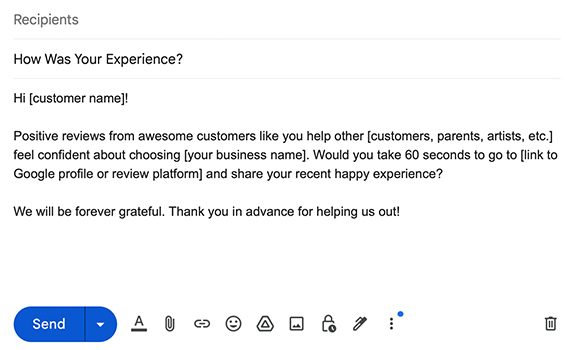
Simplifying the review process can significantly boost the number of reviews you receive. Direct links allow quicker access to review pages, reducing barriers for customers. Include direct links in SMS and emails to make it easier for customers to submit feedback.

Clear, concise instructions on how to leave a review minimize customer confusion. Visual aids like flowcharts or an instruction video can be helpful resources.

Automated reminders for reviews streamline the process and encourage more participation. A good review management platform creates a seamless process for sending invitations and leaving reviews.

Monitor and Manage Your Online Reputation

Monitoring and managing your online reputation is crucial in today's digital landscape. Reputation management tools help businesses monitor their brand across platforms and manage feedback effectively. Reputation management software often includes sentiment analysis features, assisting companies in gauging public perception.

Tools like Brand24 track mentions across many online sources, including social media and review sites, allowing quick responses. Timely responses to negative reviews can prevent potential crises facilitated by reputation management tools.

Tools like ReviewTrackers analyze trends in customer feedback using natural language processing to identify areas for improvement. Effectively using these tools ensures businesses maintain a positive online presence by promptly engaging with customer feedback.

Summary on How to Get More Reviews

In summary, online reviews are vital for any brand looking to thrive in the digital age. Businesses can significantly increase their review count by asking customers directly, leveraging email marketing and SMS text messages, creating a dedicated reviews page, and using social media. Offering incentives, optimizing your Google Business Profile, and responding to all reviews are also crucial strategies.

Monitoring and managing your online reputation ensures you stay on top of customer feedback and maintain a positive brand image. Implementing these strategies will help you collect more reviews, build a loyal customer base, and enhance your business's credibility. Remember, every review is an opportunity to improve and grow.

Frequently Asked Questions

Why are online reviews important for my business?

Online reviews are crucial because they boost your business's visibility, build trust with potential customers, and help improve your search engine rankings. They serve as social proof, making it easier to attract new customers.

How can I ask customers for reviews effectively?

The best way to ask customers for reviews is to directly request them at the right moment, preferably in person or through a personalized follow-up email or call. This personal touch can really boost your chances of getting that valuable feedback!

What incentives can I offer to encourage reviews?

Offering coupons, discounts, or loyalty points can effectively encourage customers to leave reviews. Just make sure to provide these incentives for all reviews, not just the glowing ones, to keep things genuine.

How can I simplify the review process for customers?

To simplify the review process for customers, provide direct links to review pages and clear instructions, possibly using visual aids. Automating reminders can also make it easier for them to share their feedback.

Why is it important to respond to all reviews?

Responding to all reviews is crucial because it shows you value customer feedback, encourages more reviews, and helps you manage your business reputation. Plus, it gives you a chance to turn negative experiences into positive outcomes.

Clash Graphics Print Shop Atlanta Flyer Printing
2233 Peachtree Rd NE Ste 202 AtlantaGA 30309
(678) 235-3464

To view the original version on Clash Graphics, visit: https://www.clashgraphics.com/printing-tips/how-to-get-more-reviews/

Thursday, July 18, 2024

Creating a Small Business Marketing Plan

Developing a small business marketing plan is essential for achieving your growth goals. This article provides a step-by-step approach to help you succeed. You will assess your business environment, set SMART marketing objectives, identify your target audience, choose the most effective channels, and continuously optimize your strategies. By following these steps, you will create a targeted, effective marketing plan that drives results.

small business marketing plan

Key Marketing Plan Takeaways

  • Conduct a comprehensive 'SWOT' analysis to understand internal and external factors impacting your business, and study competitor strategies to identify your unique competitive advantages.

  • Set clear, 'SMART' (Specific, Measurable, Achievable, Relevant, Time-bound) marketing objectives to effectively focus your efforts and track performance.

  • Identify your target audience through detailed analysis and create buyer personas to tailor your marketing messages, select appropriate channels, and maximize campaign impact.

Assess Your Business Environment

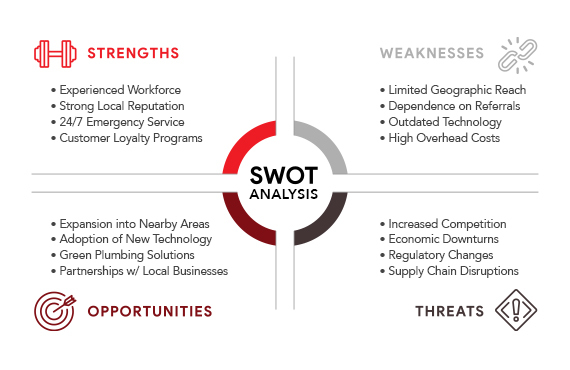
Before delving into the details of your small business marketing strategy, take a moment to assess your current market position. This assessment begins with a powerful tool known as the SWOT analysis. SWOT, which stands for Strengths, Weaknesses, Opportunities, and Threats, provides a comprehensive framework for small business owners to examine their company's internal and external factors objectively.

A comprehensive SWOT analysis provides valuable insights into your business's:

  • Strengths

  • Weaknesses

  • Opportunities

  • Threats

This analysis reveals areas for improvement and uncovers untapped growth opportunities.

Once you've completed your SWOT analysis, it's time to focus on your competition. Analyzing your competitors' marketing strategies is critical in developing your business marketing plan. Take a close look at what your top competitors are doing well and where they might be falling short. This competitive analysis will help you identify your unique competitive advantage and inform your strategic direction. Pay particular attention to the types of marketing campaigns they're running, the channels they're using, and how they're positioning themselves in the market.

SWOT analysis process for small business marketing plan

Armed with insights from your SWOT analysis and competitive research, you'll be well-equipped to make informed decisions about your small business marketing strategy. This initial assessment forms the bedrock of your future marketing endeavors, grounding your plans in a robust understanding of your business's strengths, weaknesses, and market position. Remember, the goal here is not just to gather information but to use it strategically to set your business apart and create marketing initiatives that truly resonate with your target audience.

Set Clear Marketing Objectives

With a comprehensive grasp of your business environment, your next step in crafting a successful marketing plan involves setting distinct, actionable objectives. This is where SMART goals come into play. SMART is an acronym that stands for:

  • Specific

  • Measurable

  • Achievable

  • Relevant

  • Time-bound

Setting SMART objectives ensures that your marketing efforts are focused, trackable, and aligned with your overall business strategy.

When formulating your marketing objectives, it's vital to concentrate on individual goals instead of attempting to achieve everything simultaneously. This approach allows you to concentrate your resources and efforts on the areas that will have the most significant impact on your business. For each SMART objective you set, ask yourself questions about its:

  • Specificity

  • Measurability

  • Actionability

  • Relevance

  • Time-bound nature

This process will help you refine your goals and ensure they're truly SMART.

Remember, your marketing objectives should be more than just words on paper. They should serve as a roadmap for your marketing initiatives and a benchmark for measuring success. Consider setting up marketing dashboards to track your actual performance against your targets. This real-time monitoring will allow you to make data-driven decisions and adjust your strategies as needed.

Establishing distinct SMART marketing objectives paves the way for a targeted, effective, and triumphant marketing plan.

Examples of SMART Goals

Let's look at some concrete examples to better understand how to create SMART goals for your small business marketing plan. For instance, a digital traffic-related SMART objective could be "to achieve 10% more traffic from a key channel or country within two years." This goal is specific (10% increase), measurable (through traffic analytics), achievable (with focused effort), relevant (to business growth), and time-bound (within two years).

Another example could be an acquisition-focused objective: "to acquire 10,000 new online customers in a financial year at an average cost per acquisition of $30". You can also set SMART goals for different aspects of your marketing strategy. For conversion, you might aim "to increase the average order value of online sales to $89 per customer".

An engagement-focused objective could be "to increase active customers purchasing at least once a quarter to 300,000 in a market". These examples demonstrate how SMART goals can be tailored to various marketing initiatives, providing clear direction and measurable targets for your efforts.

Identify Your Target Audience

target audience identification for small business marketing

Having established clear objectives, turn your focus to a pivotal element of your small business marketing strategy: pinpointing your target audience. Your target audience is the specific group of consumers most likely to want your product or service based on factors such as:

  • age

  • gender

  • income

  • location

  • interests

Understanding who your target audience is and what they need is fundamental to crafting compelling marketing messages and choosing the proper channels to reach them.

To begin identifying your target audience, start by analyzing your current customer base. Look at demographics such as age, gender, and income bracket, but don't stop there. Dive deeper into their interests, behaviors, and pain points. Conduct client interviews to gain valuable insights into why they chose your product or service and what needs it fulfills for them. This information will help you create a more accurate picture of your ideal customer.

Start by conducting market research to spot industry trends and potential service gaps that your product can address. This research can take various forms, such as surveys, focus groups, or analysis of your competition. As you gather this information, start creating buyer personas—detailed profiles of your potential customers- including their demographics, interests, challenges, and buying behaviors. These personas will be invaluable in guiding your marketing efforts and ensuring your messages resonate with your target audience.

Remember, understanding your target audience is not just about knowing who they are but also about knowing where to find them and how to reach them effectively. This knowledge will inform every aspect of your marketing plan, from the channels you choose to the content you create. Investing time in meticulously identifying and understanding your target audience enables you to craft more targeted, effective marketing campaigns, leading to a higher return on investment.

After all, the more precisely you can define and segment your target audience, the more personalized and impactful your marketing efforts will be.

Choose Effective Marketing Channels

effective marketing channels selection for small business

Having comprehensively grasped your target audience, the subsequent step in your small business marketing strategy involves choosing the most effective channels to connect with them. The key is to choose promotional channels based on your budget and where your target audience spends their time. This method guarantees that your marketing endeavors are both economical and influential.

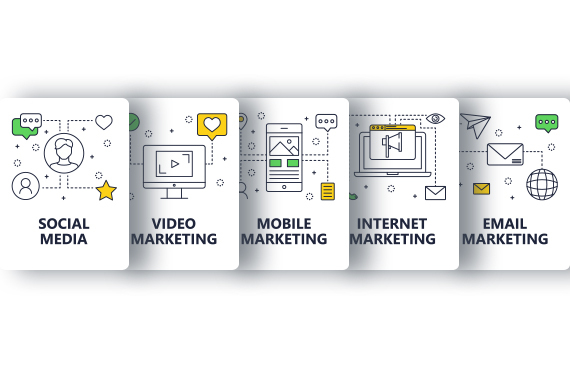
In the current digital era, social media marketing has emerged as a potent instrument for establishing brand presence and driving sales. Platforms like Instagram, Pinterest, and Twitter offer affordable advertising options and are particularly recommended for small businesses. Each platform has its unique strengths – for instance, Instagram offers the Shoppable tool for promoting brands, while Pinterest is known for driving higher conversion rates with shopping ads. However, don't limit yourself to just social media. Email marketing remains a highly effective method for developing relationships with current and prospective customers.

Online advertising is another crucial component of a comprehensive marketing strategy. This can include methods like display ads, search engine marketing (SEM), and paid social ads. In fact, 80% of brands use some form of paid advertisement to target buyers with high intent. Google Ads, for example, can be particularly effective when your target audience is actively searching for your product or solution. However, if your audience isn't actively searching, social media ads might be a better bet.

While digital marketing is crucial, don't overlook the potential of offline marketing channels. Traditional advertising methods like business cards, direct mail, and even radio or print ads can still be effective, especially if your target audience includes demographics that aren't as active online. Additionally, consider incorporating strategies like influencer marketing, which leverages individuals with dedicated social media followings to promote your products, or partnership marketing, where you collaborate with other brands on mutually beneficial campaigns. By carefully selecting a mix of marketing channels that align with your budget and target audience preferences, you'll be able to create a well-rounded marketing strategy that maximizes your reach and impact.

Develop Your Unique Selling Proposition

Having identified your target audience and selected your marketing channels, shift your focus to what distinguishes your business from the competition. This is where your Unique Selling Proposition (USP) comes into play. Your USP is a clear and concise statement that explains why customers should choose your business over competitors. It's the secret sauce that makes your small business marketing strategy truly effective, differentiating you in a crowded marketplace.

Developing a strong USP involves several key steps:

  1. Define your target market

  2. Identify the unique features of your product or service

  3. Position your USP to highlight the specific benefits these features offer to your customers

  4. Keep in mind potent USPs emphasize delivering clear and specific benefits catering to your target market's needs

For example, if you're a local bakery, your USP might be "Handcrafted, organic pastries made fresh daily with locally sourced ingredients."

Once you've crafted your USP, it's crucial to ensure it's believable and supported by proof. This builds customer trust and credibility for your brand. Consistency is key – your USP should be integrated across all your digital marketing communications and business branding. From your website and social media profiles to your email signatures and packaging, your USP should be clearly and consistently communicated.

Remember, your USP isn't set in stone. As your business evolves and market conditions change, don't be afraid to test and revise your USP to ensure it remains relevant and effective in resonating with your target audience. By developing a strong, clear USP and consistently delivering on it, you'll create a powerful foundation for your small business marketing efforts.

Create a Content Marketing Strategy

content marketing strategy for small business

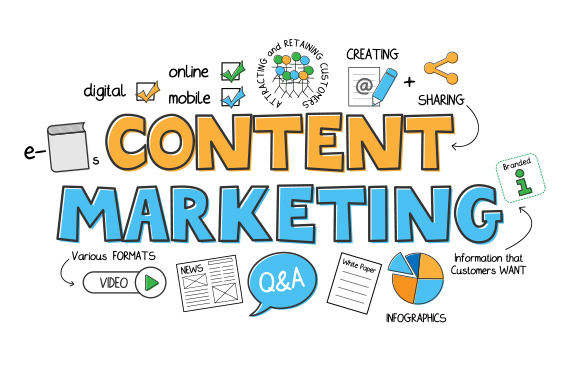
With your Unique Selling Proposition established, delve into one of the most influential tools in your small business marketing toolkit: content marketing. Content marketing focuses on creating and distributing valuable, relevant content to attract and engage a specific market segment. It's not just about promoting your products or services; it's about providing genuine value to your audience and establishing your brand as a trusted authority in your field.

Before initiating content creation, it is essential to define a distinct goal for your content marketing endeavors. This could be increasing brand awareness, driving customer engagement, or boosting conversions. Your content strategy should serve as a roadmap for developing and distributing various media assets like blog posts, videos, and podcasts. To ensure consistency and maintain a comprehensive view of your content strategy, consider using a content calendar.

When it comes to the types of content you create, remember that diversity is key. More than 50% of consumers want to see brand videos, and engagement-rich content like videos and interactive elements tends to have a lower bounce rate. However, don't neglect other forms of content. Some examples include:

  • Well-written blog posts can help build your website's authority and attract the right customers through search engine optimization (SEO)

  • Infographics, which can present information in a visually appealing and easily digestible format

  • Podcasts, which allow you to reach an audience that prefers audio content

  • Case studies, which showcase your expertise and success stories

  • Ebooks, which can be used as lead magnets to capture email addresses and provide valuable information to your audience

Speaking of SEO, make sure to include both inbound and outbound links in your content, as this can positively influence your search engine rankings and build credibility.

Finally, remember that your content strategy should be data-driven and adaptable. Use tools like Google Analytics to gain insights into the preferences and behaviors of your audience, and let this data guide your content creation. Set key performance indicators (KPIs) to measure the success of your content, and be prepared to adjust your strategy based on these metrics and audience feedback. By creating a dynamic, audience-focused content marketing strategy, you'll be able to engage your target market more effectively, build brand loyalty, and drive sustainable growth for your small business.

Budgeting for Your Marketing Plan

Having outlined the vital components of your small business marketing strategy, it's time to address an essential aspect: budgeting. Establishing a realistic marketing budget is essential to understand your marketing plan from a cost perspective and to guide the remainder of your planning process. It's about striking the right balance between your financial capabilities and your marketing ambitions.

When calculating your marketing budget, consider factors like your business size, industry, and growth stage. Here are some general guidelines for different types of businesses:

  • Established businesses typically allocate 6-12% of their gross revenue for marketing.

  • New business owners might want to consider allocating a higher percentage to increase brand awareness.

  • B2B companies generally allocate between 2-5% of their revenue to marketing.

  • B2C companies often dedicate a higher percentage, between 5-10%.

Remember, these are guidelines, and your specific allocation should be based on your unique business needs and financial situation.

small business owner budgeting for their marketing

Once you've determined your overall budget, it's time to allocate funds to different marketing components. This might include:

  • Website development

  • Social media marketing

  • Content creation

  • Online advertising

For example, a minimum $1,000-a-month investment is often recommended for effective search engine advertising. Don't forget to factor in tool costs, staff training, and potentially hiring external expertise. As you implement your marketing plan, regularly review your web analytics and adjust your budget accordingly. This ongoing optimization will help you generate more accurate future budgets and ensure you get the best return on your marketing investment.

Implement Your Marketing Campaigns

With your strategy outlined and budget assigned, it's time to actualize your small business marketing plan through meticulously executed campaigns. Every marketing campaign should have a specific desired outcome, a budget, and a set start and end date. Before launching, it's crucial to define clear and quantifiable objectives for your campaign, such as promoting a new product or increasing sales.

The content of your campaign should convey a clear message and contain a specific call to action (CTA). This is where your Unique Selling Proposition comes into play, helping to differentiate your brand in the marketplace. Ensure that your campaign maintains a unified brand image across all channels, including consistent use of:

  • your logo

  • color scheme

  • font set

  • slogan

  • product descriptions

This consistency helps reinforce your brand identity and makes your marketing efforts more recognizable and impactful.

Don't forget about the power of your existing customer base when implementing your campaigns. Continue marketing to these customers to encourage repeat purchases, upselling, and cross-selling. Engage them by encouraging reviews or sharing user-generated content on social media. For social media campaigns, use a content calendar to maintain a regular posting schedule and ensure you're sharing content at optimal times.

Lastly, consider using a promotional plan template to map out the process of converting prospects into customers. By carefully planning and executing your marketing campaigns, you'll be able to reach your target audience and achieve your marketing objectives effectively.

Track and Measure Results

Initiating your marketing campaigns marks the start. To guarantee the success of your small business marketing endeavors, careful monitoring and analysis of your results is essential. This ongoing process of tracking and measuring allows you to gauge the effectiveness of your campaigns, determine if they're meeting your original goals, and gather valuable insights for future marketing initiatives.

Start by identifying and monitoring key performance indicators (KPIs) that align with your marketing objectives. These might include:

  • Website Traffic

  • Session durations

  • Bounce rates

  • Engagement metrics (like likes, shares, and comments)

  • Email open and click-through rates

  • Conversion rates

Utilize website analytics tools like StatCounter or Google Analytics, which not only tracks these metrics but also integrates with Google Ads and Data Studio for deeper insights. Social media platforms typically offer their own analytics tools, which can provide valuable data on the performance of your social media marketing efforts.

Remember, the goal of tracking these metrics isn't just to collect data—it's to gain actionable insights that can inform your marketing decisions. Regularly review your data to identify what's working well and areas needing improvement. This continual monitoring allows you to make data-driven adjustments to your marketing strategies based on your audience's behavior, media consumption habits, and spending patterns. By paying close attention to your marketing data and using it to optimize your efforts, you can maximize the return on your marketing investment and drive sustainable growth for your small business.

track and measure business analytics

Adjust and Optimize Your Strategies

In the constantly changing world of marketing, the capacity to adjust and enhance your strategies is key for sustained success. This is where the data you've collected from tracking your results becomes invaluable. Regularly reviewing your performance data allows you to identify successful strategies you can double down on and areas that need improvement or a complete overhaul.

Use the insights gained from your data analysis to refine and adjust your marketing strategies continually. This might involve:

  • reallocating budget from underperforming channels to those showing better results

  • tweaking your messaging to better resonate with your audience

  • exploring new marketing tactics that align with emerging trends

Remember, optimization is an ongoing process. By consistently analyzing your data, making informed adjustments, and testing new approaches, you'll be able to continuously improve the effectiveness of your small business marketing efforts, ensuring that your strategies remain relevant and impactful in a dynamic marketplace.

Marketing Plan Summary

Creating a small business marketing plan is a journey that requires careful thought, strategic planning, and continuous optimization. We've walked through the essential steps: assessing your business environment, setting clear objectives, identifying your target audience, choosing effective marketing channels, developing your unique selling proposition, creating a content strategy, budgeting, implementing campaigns, tracking results, and optimizing your efforts. Each step plays a crucial role in crafting a comprehensive marketing plan that can drive your business forward. Remember, the key to success lies not just in creating the plan but in consistently executing, measuring, and refining your strategies. So, apply what you've learned to your unique business situation, and don't be afraid to adapt as you go. With dedication and a data-driven approach, you can create a marketing plan that not only meets your current business needs but also paves the way for future growth and success. Your small business has unlimited potential – now it's time to unlock it through strategic, effective marketing!

Small Business Marketing Frequently Asked Questions

These are some of the common business marketing questions Clash Atlanta gets:

How often should I review and update my small business marketing plan?

You should review and make major updates to your small business marketing plan annually and make minor adjustments quarterly based on campaign performance and market changes. Regular monitoring and adjustments will help keep your plan effective.

What's the most important element of a small business marketing plan?

The most important element of a small business marketing plan is identifying your target audience. Understanding your customers and their needs is crucial for making effective marketing decisions.

How much should I budget for marketing as a small business?

It's recommended that small businesses budget 6-12% of their gross revenue for marketing. New businesses may need to allocate more to establish brand awareness.

Is it necessary to use all marketing channels for my small business?

No, it's not necessary to use all marketing channels for your small business. Focus on the channels where your target audience is most active and that align with your budget and resources. Quality over quantity is key in channel selection.

How can I measure the success of my marketing efforts?

You can measure the success of your marketing efforts by tracking key performance indicators (KPIs) like website traffic, conversion rates, customer acquisition cost, and return on investment (ROI). These metrics will vary based on your marketing objectives.

Clash Graphics Print Shop Atlanta Flyer Printing
2233 Peachtree Rd NE Ste 202 AtlantaGA 30309
(678) 235-3464

To view the original version on Clash Graphics, visit: https://www.clashgraphics.com/printing-tips/creating-a-small-business-marketing-plan/