Tuesday, April 19, 2022

What is Sublimation Printing

Avoid being forced to use old printing styles to try and accomplish your marketing and advertising needs. Knowing what sublimation printing is and how it works will help you produce more attractive and marketable products.
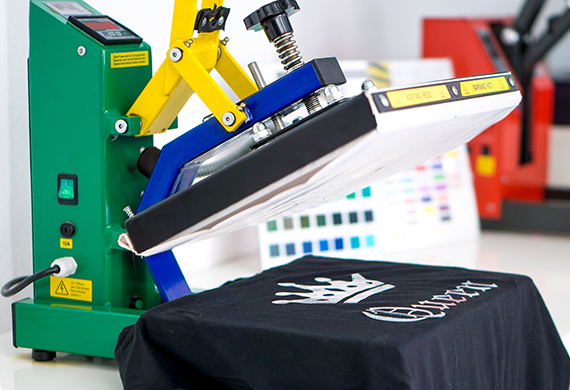
Sublimation printing a tshirt

clashgraphics.com gathered information about sublimation printing, how the process works, and answered some frequently asked questions.

Sublimation Printing Definition

Sublimation (dye sublimation) printing is a process that first prints text or images onto special transfer paper, then transfers that from the paper to another material (typically polyester or a polyester mix). The ink is then heated until it disintegrates (sublimates) into the fabric.

How Does Sublimation Printing Work

Sublimation printing uses heat and pressure to bring ink and fabric together as one.

First, a design or text is printed onto special transfer paper. These specialized inks turn into gas when brought under heat (sublimation), then combine with the fabric, permanently printing its content onto the fabric. The results are permanent and much less prone to fading, as the ink is embedded in the fabric or substrate rather than resting on it like a standard print.
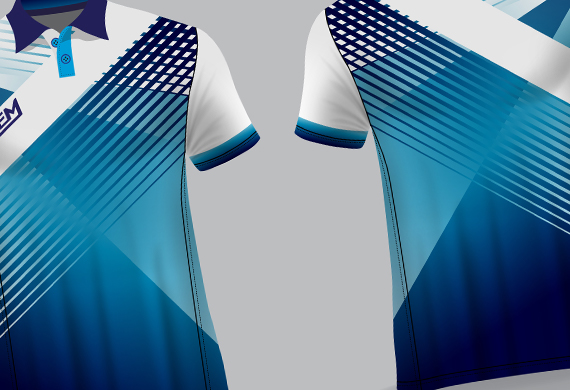
Sublimation printing is ideal for sportswear

This printing process is quite similar to getting a tattoo, but instead of skin, it’s for a chosen product. Heat opens the substrate’s pores, then with applied pressure, the ink cools and returns to a solid form.

The result is a permanent, full-color image that won’t crack, peel, fade, or wash away from the substrate. This process sees the ink go from a solid to a gas without turning into liquid. The conversion is initiated by heat, then controlled by pressure.

Pros of Sublimation Printing

The most exciting benefit of sublimation printing is the absolute freedom you have with your designs, which is not always the case with other printing methods.

You can go as design crazy as you like. You can print an entire t-shirt that looks like a stapler? Or a cow jumping over the moon with a galaxy background? You may choose to keep it classy with an outline or photo of a famous city skyline or landscape. The possibilities are truly limitless.

Design longevity is another pro, with a design that won’t crack, peel or fade. Even after being washed in the washing machine multiple times, your garment will likely fall to pieces before the printed design fades.

Sublimation printing is most suitable for smaller orders, seam-to-seam designs, and garments with a large number of design variations and applications.

Cons of Sublimation Printing

Sublimation printing cons are seen mostly with the selection of fabric materials. Sublimation printing is only suitable for garments that include polyester (100% polyester or a polyester blend). Although sublimation can be applied to other materials like cotton, the image will not be permanent.

If you are aiming for a vintage or distressed look, choosing a fabric or garment with a lower percentage of polyester content would certainly give you that finish.

Another potential challenge is white creasing. Sublimation works by printing a design into white fabric, and if there are spaces in the garment that are unreached by the sublimed design, they’ll remain white. This can occur from accidental folding or moisture accumulated on the transfer paper.

Frequently Asked Questions

Question: Is Sublimation Better Than Screen Printing?

Answer: If you have extra money to spend and plan on creating shirts with photo-realistic designs, or only plan on small printing runs, sublimation is your best option. However, if you are planning large runs or are trying to start doing garment customization on a restricted budget, screen printing may be your preferred option. Read more about sublimation and comparisons of print methods at 'Benefits of Screen Printing vs. Sublimation and Offset vs. Digital Printing'.

Question: What Items Can I Sublimate to?
Answer: Sublimation printing possibilities are practically endless. Consider the following:
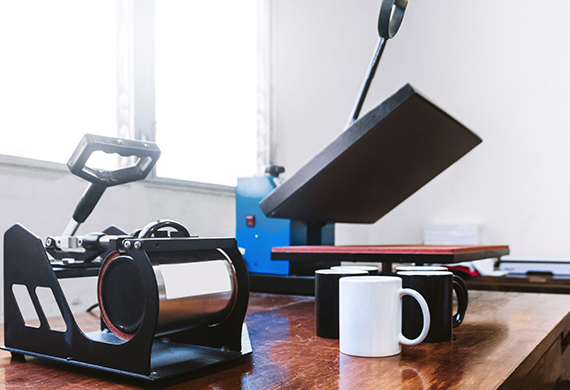
Sublimation printing can be applied to almost any object including coffee mugs

  • coffee mugs
  • travel cups
  • earrings
  • wallets
  • wine totes
  • purses
  • canteens
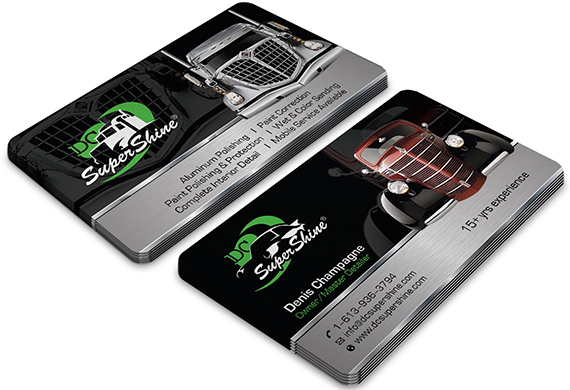
  • business cards
  • hats
  • wine tumblers
  • blankets
  • pillowcases
  • sheets
  • bags
  • shirts
  • socks
  • towels
  • dog collars
  • flags
  • bracelets
  • ornaments
  • keychains
  • phone cases
  • puzzles
  • totes
  • coasters

These items can be printed for use around your household or developed and produced in larger quantities and marketed to the public.

Question: Can you use a regular printer for sublimation?
Answer: Sometimes. Printers utilizing a Micro Piezo printing head can be used for sublimation printing. Before this transition can occur, the system must be completely flushed. The color and chemical makeup of the two ink types are not the same.

Question: Which is better, heat transfer or sublimation?
Answer: If your business or hobby focuses on white and light-colored polyester apparel, sublimation printing is a great option. Your prints will have the greatest durability and washability. However, if you want the flexibility to print on any color garment or material type, heat transfer will be a better option.

Question: What are other examples of sublimation?
Answer: Sublimation is when a solid substance bypasses its liquid form and goes directly to its gaseous state. Some examples include:

  • Dry Ice
  • Mothballs
  • Iodine at 100°C

Sublimation occurs all around us all the time. While this technology is relatively new in the printing industry, it is a common and ancient occurrence in nature.

Sublimation Printing

In this article, you discovered information about sublimation printing, how it works, some of its pros and cons, and answers to several frequently asked questions.

Sublimation printing will help you design, craft, and print more eclectic and desirable products that won’t fade, peel, or wash away.

Not using sublimation printing can severely limit the quality of your final products and cost you revenue from an unforgiving client base.

Sources:
makingcenter.parsons.edu/wp-content/uploads/2016/09/DyeSub_2021.pdf
chem.ucla.edu/~harding/IGOC/S/sublimation.html
citeseerx.ist.psu.edu/viewdoc/download?doi=10.1.1.378.2831&rep=rep1&type=pdf

Clash Graphics Print Shop Atlanta Flyer Printing

2233 Peachtree Rd NE Ste 202 AtlantaGA 30309
(678) 235-3464

To view the original version on Clash Graphics, visit: https://www.clashgraphics.com/printing-tips/what-is-sublimation-printing/


Tuesday, March 15, 2022

How To Increase Business Revenue

Prevent shrinking revenue from forcing you to reduce staff, cut benefits, or close locations. Knowing how to increase your business’s revenue will help you create a better work environment while growing your business.

Ways to increase business revenue include understanding your financial structure

clashgraphics.com gathered the following information about innovative ideas and tips on how to increase your business’s revenue.

Ways To Increase Revenue

Here are 15 strategies for your business to substantially increase sales and revenue:

1. Use Every Door Direct Mail (EDDM®)

Every Door Direct Mail® is targeted bulk mailing, offered by the United States Postal Service, helping your marketing strategy reach potential customers without maintaining a mailing list or even knowing their actual address. Just choose the mailing routes you determine to be high priorities (by neighborhood, city, or ZIP code), and your mailers will be delivered to each home on those routes.

2. Use Door Hanger Advertising

Like direct mail marketing, door hangers present your company and its product to a targeted consumer. Where door hangers excel is that they are not mixed in and lost in a pile of mail but have to be physically removed from a door handle. This act alone provides an extra couple of seconds for you to get the individualized attention of your potential customer.

3. Increase Customer Service Quality

As consumers, we tend to readily give our long-term patronage to businesses that treat us with respect and make us feel like the most crucial part of their business. This is principally achieved through superior quality customer service.

4. Redesign Your Business Cards

Knowing what information should go on a business card, what should be omitted, and how to use the card’s negative space will give you a higher probability of creating a unique and memorable business card.

5. Use Guerilla Marketing Tactics

This marketing strategy drives publicity by employing unorthodox methods designed to conjure the public’s wonder, surprise, or shock. Guerilla marketing presents businesses with a unique opportunity to increase public awareness of its brand, capture new customers, and entice existing customers to become repeat customers.

6. Review Your Online Presence

Optimize your website to emphasize sales versus clicks by determining which search terms (keywords) and website designs are bringing in sales. Consider how you can optimize your site or rewrite your online advertising to maximize sales and increase revenue.

7. Develop Special Incentives

Ways to increase business revenue include promoting holiday sales and discounts

If you have consistent communication with your customer base, you can use any special occasion to build on their loyalty by offering holiday specials, birthday rewards, and discounts or registries for landmark occasions like weddings or births.

8. Lower or Eliminate Shipping and Delivery Charges

Your customers might pay more for a product if its shipping and handling are free. For online sales, consider ways to build shipping and handling costs into the item’s overall cost instead of including two line items in the price.

9. Expand Payment Methods

Increase sales by offering more payment methods that your customers may find more convenient. Set up whichever infrastructure is necessary to accept whatever payment method you don't currently possess, whether it's credit cards, digital currency, a cash exchange app, etc.

10. Add Relevant Products to Your Line

Another way to increase sales per customer is to offer products that your customer needs. You should consider products that a customer would buy to use or pair with your current product or service your customers might require.

11. Expand Your Reach

You can grow physically by opening a new location. Expand the geographic area of your customers by increasing the distance you can deliver your products or services.

13. Offer Product Discounts

Properly marketed discounts create an incentive for your consumers to start buying. Such discounts can be on limited products like “quantity discounts” offered on two or more products, seasonal discounts, or discounts on all of your products in a store-wide or online sale.

13. Value Your Repeat Customers

Instead of spending vast resources trying to secure new customers, focus on upselling your current customers. This approach is more effective and cost-efficient because your existing customers are already familiar with your products and services.

14. Reevaluate Your Pricing Strategy

Price is the most important determining factor when purchasing a product or service. An adjustment to these prices should reflect your market situation and your company’s revenue goals.

15. Determine Your Company’s Revenue Goals

Ways to increase business revenue include making a plan

Start with a clear marketing strategy aligned with your revenue goals. You should identify sales and revenue milestones for your company and develop a strategy to get there.

Increased Business Revenue

In this article, you discovered expert tips and ideas to help you significantly increase your business’s revenue.

By continually innovating and keeping your business “fresh,” your existing customers are more likely to become repeat customers as you attract new ones, increasing sales and revenue.

Ignoring your business’s appearance and messaging, you risk rapidly losing customers and revenue, leaving you on a path without reward, income, and inevitably losing your business.

Sources:
patriotfcu.org/blog/ways-to-build-more-revenue-in-a-business/
learning.skysthelimit.org/operations/tips-to-increase-revenue

Clash Graphics Print Shop Atlanta Flyer Printing

2233 Peachtree Rd NE Ste 202 AtlantaGA 30309
(678) 235-3464

To view the original version on Clash Graphics, visit: https://www.clashgraphics.com/printing-tips/how-to-increase-business-revenue/

Tuesday, February 15, 2022

Product Manager vs. Product Marketing Manager

Avoid confusing the roles of product managers and product marketing managers. Understanding how these roles differ and who is responsible for what dramatically enhances an organization’s ability to successfully bring its best products to market.

A product manager is ultimately responsible for the success or failure of a product

clashgraphics.com gathered the following information about the differences between a product manager and a product marketing manager, what they do, and how they interact.

Product and Product Marketing Managers

In a well-structured organization, product managers and product marketing managers collaborate closely. However, things go horribly wrong when the two managers and their teams get out of sync and are derailed by inconsistent messaging, botched launch dates, and confusion about the product’s function and its real value to potential customers.

Success, however, can be achieved by working together and understanding how these two roles differ:

What Is a Product Manager?

A product manager holds the ultimate and final responsibility for a product’s success or failure. A product manager’s role often includes;

  • Owning and guiding the product’s strategy
  • Curating the product’s roadmap
  • Conveying that roadmap to the product development team to guide them as they build the product according to plan.

What Is a Product Marketing Manager?

A product marketing manager’s primary responsibility is communicating a product’s specific or overall value to its market. A product marketing manager’s responsibilities typically involve:

  • Educating a company’s sales force on the value of the product and how to sell it
  • Creating marketing materials and strategies that clearly convey product features
  • Developing the marketing tools and campaigns to generate new interest and consumers.

A product marketing manager is responsible for conveying the main selling points to the companys customers

Note: If your competitor has a remarkably similar product to yours, it’s your product manager that develops a desired trait or feature and your product marketing manager that creates the storytelling and differentiating value your customers seek.

Product Management vs. Product Marketing Management

A product manager could be considered the voice of a product within the company(often asking: Does this product solve our customer’s problem?), and a Product Marketing Manager would be considered the product’s voice to the world outside the company (often asking: How can we communicate to customers that it solves their problem?).

To further understand these differences, consider the following:

Strategy


The product manager establishes the company’s vision for the product and defines the goals, milestones, initiatives, and targets that will help achieve that vision.

The product marketing manager uses the vision and strategy to develop a “go-to-market” strategy. This strategy details the work that needs to be done to launch a product or expand into a new market.

Roadmap

The product manager develops the product’s roadmap, a visual representation of the direction, plan, milestones, and dates for executing the work.

The product marketing manager assembles the “go-to-market” roadmap, capturing and coordinating the timing of interdepartmental activities needed to successfully release a new or improved customer experience.

Consumer

The product manager focuses on the end-user, developing an understanding of what people want to achieve by acquiring and using the product. This requires collecting feedback from customers about their experiences and suggestions.

The product marketing manager is focused on the consumer’s spending/buying characteristics, gaining a deeper understanding of what people need to know about the product and how it solves their problem to finally make a purchase.

Team Efforts

The product manager is an advocate for the user and the final product. This requires a combination of strategic and tactical effort across engineering, marketing, sales, and support teams.

The product marketing manager ensures that all teams know how to best represent the benefits of the product to the customer. This can involve collaborating with marketing to better define messaging, providing advanced training to sales and support teams, and aligning the website to follow the product’s “go-to-market.”

Note: Both managers want to please the customers and grow the business. And through Frequent communication, regular meetings, and planning sessions, departments can stay in sync to achieve both objectives.

Product and Product Marketing Department Collaboration

In this article, you discovered information about the often confused roles of product managers and product marketing managers and how they perform different tasks to mutually ensure a product’s success.

Knowing the differences between a project manager’s role and that of a project marketing manager will help you address product issues with the correct department.

Your failure to recognize how the duties of your project manager differ from your project marketing manager can lead to miscommunications and failure to meet milestones and product launch dates.

Sources:

blogs.haas.berkeley.edu/the-berkeley-mba/product-management-vs.-product-marketing
wgu.edu/blog/understanding-product-manager-role2003.html
business.vanderbilt.edu/news/2019/10/25/what-is-product-management-top-5-skills-for-success/

Clash Graphics Print Shop Atlanta Flyer Printing

2233 Peachtree Rd NE Ste 202 AtlantaGA 30309
(678) 235-3464

To view the original version on Clash Graphics, visit: https://www.clashgraphics.com/printing-tips/product-manager-vs-product-marketing-manager/

Wednesday, January 19, 2022

Clever Ways to Avoid Information Overload

Avoid breakdowns, missed deadlines, and other mistakes due to information overload. Knowing how to simplify incoming and outgoing information will help you better manage your business, employees, responsibilities, and anxiety.

Too much digital and media information too quickly can lead to confusion mistakes and poor work performance

clashgraphics.com gathered the following information about information overload, its definition, causes, and innovative solutions.

What is Information Overload?

Information overload refers to the excess of information available to a person intending to complete a task or come to a decision. This “overload” interferes with work quality and disrupts the decision-making process, resulting in a poor decision or no decision at all.

What Causes Information Overload?

Information anxiety, infobesity, cognitive intoxication, and information explosion are all used to describe a state of information overload, which can be caused by any or a combination of the following:

Electronic Devices, Programs, Apps, and Platforms - “Where do you get your information from?” Your answer may be any of the following: television, radio, mobile phones, electronic devices, emails, podcasts, search engines, social media, etc.

A perfect example of this is depicted with nearly every search made on any search engine for almost any subject. When the results appear, you are presented with page after page of results compiled and ranked using the search engine’s algorithm and parameters.

In this example, you may have to sift through dozens of pages of inaccurate, misleading, or erroneous content (all trying to lure you into clicking their links) before finding any useful or verifiable results.

Modern Day Journalism - News sources in today’s world are a prime cause of information overload. They constantly seek the most bombastic headlines and shocking footage to encourage viral sharing across social media platforms, and users may see the same headlines dozens of times shared by dozens of other users.

Poorly Sourced Content - Using unverified or superfluous content can lead to flawed results, inaccurate data, and bad decisions.

When researching serious matters like “cancer,” pay particular attention to the source of the content you will use to build your understanding and formulate your decisions. Would you rather use data/research produced by Johns Hopkins University or the content of a young blogger trying to market a new clothing line?

Too Much Advertising - Digital advertising alone can seem overwhelming and often intrusive when you just want to watch a “cat” video. Add physical content (door hangers, flyers, mailers, business cards, etc.), and it all can quickly become a nuisance!

In addition, the following are common reasons for modern information overload:

  • The increasing volume of available historical data
  • Exceedingly high volumes of conflicting, contradictory, and inaccurate information
  • Volumes of new information/content being constantly created
  • Increasing pressure to create and compete in information provision. This stress leads to a “quantity over quality” philosophy in multiple industries
  • The incredible simplicity of creating, regurgitating, duplicating, and sharing of information online

Information Overload Solutions

How we can help alleviate the pressure of information overload in a professional or personal environment?

  1. Simplicity (Less is More) - The less information to absorb, the easier it will be to understand.
  2. Relevance - All information should meet your needs and relate to the subject at hand.
  3. Clarity - Instructions and content should be simple and to the point.
  4. Supporting information - If you require more information, source/support material should be readily accessible.
  5. Learn how to Skim - The vast majority of modern content is built around a single point or two. Find that and move on.
  6. Delegate tasks - If you are part of a team, use multiple people to research and gather relevant information.
  7. Use filters - Use inbox, messaging, and search engine filters to eliminate irrelevant or unimportant data and content.
  8. Ignore it - It is impossible to absorb everything about something. In the end, you will have to ignore some or most of that content.

Note: People generally can execute a task more efficiently when their instructions are kept basic and free of extras. Take roadsigns and wayfinding for example: When driving, these signs provide simple and direct information at a glance.

Tip: Sometimes, the ability to focus and rationalize can be affected by mental health conditions like anxiety disorders and PTSD. Anticipation, fatigue, and stress can all contribute to a sensory overload experience, making it near impossible to collect, process, or deliver any content or information.

Too much information too quickly can lead to confusion mistakes and poor work performance

Eliminating Information Overload

In this article, you discovered crucial information about the definition, causes, and solutions for information overload.

When you simplify and reduce the amount of incoming “irrelevant” information, you can better manage and accomplish your responsibilities with reduced stress and anxiety.

Information overloads can paralyze your productivity, cloud your judgment, and lead to horrible, baseless decisions.

Sources:
interactivity.ucsd.edu/articles/Overload/published.html
lesley.edu/article/why-brain-overload-happens

Clash Graphics Print Shop Atlanta Flyer Printing

2233 Peachtree Rd NE Ste 202 AtlantaGA 30309
(678) 235-3464

To view the original version on Clash Graphics, visit: https://www.clashgraphics.com/printing-tips/clever-ways-to-avoid-information-overload/

Tuesday, December 14, 2021

Essential Graphic Design Skills

Prevent wasting your efforts trying to secure employment in fields you are not qualified for. Knowing what employers are looking for and the demonstrable skills you must possess will help you land your dream job as a graphic designer.

Graphic design involves many individual skill sets used together

clashgraphics.com gathered the following information about graphic design and a list of skills you should possess when applying for employment as a graphic designer.

What Are Graphic Design Skills

Graphic design could be generally defined as visual communication. Graphic design skills efficiently blend together a creative and practical understanding of multiple elements that form a specific means of communication.

Skills Required for Graphic Designers

In our visually saturated world, even the idea of applying for a new or better job as a graphic designer will require you to use all of the essential skills that make you a graphic designer in the first place. Here are some of the skills that employers consider most valuable when hiring a graphic designer:

Creativity

Creativity is one of, if not the most important graphic designer skills. It's hard to develop new ideas and innovative designs if you don't know how to fully utilize your creative resources. Having a creatively visual eye is fundamental no matter what medium you work in.

Communication

Understanding what your client wants from a design project is key to creating a successful product. In today's digital age, where everyone is individually focused on their phone screens and electronic devices, many business owners don't know how to talk to theseclients. Thus, being able to listen well, process feedback, and explain design elements—without losing your audience or getting too technical will provide you with a significant advantage.

Strategy

Strategy is an essential skill for most jobs but becomes increasingly relevant for designers. First, designers need to develop a strategy for how they tackle a brief. For every brief they work on, designers should have a readymade strategy in place to make the process as efficient as it can be.

Problem Solving

As well as being a fundamental life skill, problem-solving is actually a crucial part of what a graphic designer does in their day-to-day working life. Problems for graphic designers come in the form of customer feedback/requests for alterations, and the problem solving appears when you come up with appropriate revisions.

Adobe's Creative Apps

Experience using technology is already a fundamental graphic design skill. Knowing how to use Adobe's creative software - specifically Adobe Illustrator, Photoshop, and InDesign is a base requirement for the majority of available graphic design jobs.

Presentation Delivery

Graphic designers are essentially storytellers. So, the ability to take complex data and present it in a clear, understandable way to customers, clients, and others will make you a significantly more valuable employee.

Typography

Graphic designers should understand and be able to use typography

Typography is a fundamental part of any graphic design skills list. When we say typography, we’re referring to any skills related to typography that a graphic design may use - from picking the right font for a project to really getting into the fine details of typesetting with alignment, kerning, and leading.

Designing for Print

Your ability to make written language legible and appealing possesses more importance today than any other period. Even the most novice of designers should be well-versed in the two types of printing, offset and digital. They should be familiar with the terminology associated with printing (bleed, crop, fold marks) and print production (ink limits, dot gain, and transparency).

In addition, aspiring graphic designers should be familiar with paper sizes established by the International Organization for Standardization (ISO), which developed the ISO 216 and was adopted by many countries as a standard. Paper sizes range from A0 to A10. Though, designers should be aware that these standards aren’t commonly used in the USA. Instead, legal, letter, executive, tabloid, or ledger sizes are used. A designer must also understand and know how to choose appropriate paper weights, paper stocks, and embellishments. For more reading on paper options, read clashgraphics.com/printing-tips/paper-quality-and-type/

Coding Knowledge

Coding skills for graphic designers are important

You will not be required to be a coding expert for most graphic design jobs, a basic understanding of HTML, however, is important as it teaches you how to understand the work that is invested into creating and building a website.


Interactive Media

Interactive forms of media include design products that actively engage users through mediums such as text, moving images, animation, video, audio, or even video games. You should be exposing yourself to as many different types of media as you can.

Branding

This business skill is critical for graphic designers. Indeed, to understand/comprehend a client's needs, you must first understand their brand.

Branding is a fundamental part of graphic design and there are entire agencies devoted just to branding. For that reason, it’s a vital skill for a graphic designer to possess. A brand, put simply, is a set of ideas a company or its products represents in people’s minds.

Read more about what graphic designers make, the different software they use, and some pro portfolio tips at clashgraphics.com/printing-tips/graphic-designer-salary-software-portfolio-tips/

Graphic Design Skills Needed to Be A Designer

In this article, you discovered information about graphic design and the skills you will need when applying for that new or better employment opportunity as a graphic designer.

When you unite the multiple skills required for graphic design, you increase your value to the work market and significantly decrease the chance of being unemployed for any substantial time.

Poor graphic design skills or technical unfamiliarity can lead to rejection by employers and a severe lack of interview calls or requests.

Sources:
rasmussen.edu/degrees/design/blog/graphic-design-business-skills/
ucblueash.edu/content/dam/refresh/blueash-62/documents/students/services/career-services/Sample-resumes/EXAMPLE%20Graphic%20Design.pdf

Clash Graphics Print Shop Atlanta Flyer Printing

2233 Peachtree Rd NE Ste 202 AtlantaGA 30309
(678) 235-3464

To view the original version on Clash Graphics, visit: https://www.clashgraphics.com/printing-tips/essential-graphic-design-skills/

Tuesday, November 16, 2021

Grand Opening Ideas and Activities

Keep your business’ grand opening from falling flat or being underwhelming. You can create an eclectic and memorable event by knowing which activities you can promote during a business grand opening celebration.

Sign stating that your business is open

clashgraphics.com gathered the following structural insights and grand opening event ideas to help you throw a flawless event.

10 Business Grand Opening Ideas

If you want to throw a memorable grand opening, you’ve got to think above and beyond traditional festivities. Be creative and think about what would prompt your customers to take time out of their day to come, do, or see.

Use the following ideas to create an eclectic and fun experience for your business grand opening:

Invite a Local Celebrity - Find a local celebrity to attend (or even emcee) your opening and help draw people in. This does not have to be a big name with international pull, it can be a local celebrity with influence in your town. As long as the celebrity has this influence within your community, they can help you spread the word and bring in more customers.

Go Live - People love live music and entertainment, and booking a popular band to perform at your grand opening can be a phenomenal way to increase the turnout. Similar to your alliance with local businesses, both you and the band can promote one another, increasing both of your audiences.
 
Live entertainment is an exhilarating and unique way to increase attendance at your event. Additionally, it adds an uplifting attraction and provides attendees with something to watch during breaks (when they aren’t shopping). It also makes your establishment more a place of enjoyment than a business location trying to make more money from its consumers.

Turn it into a Block Party - Is your store near or surrounded by other businesses? Hosting a block party is a great cumulative event that allows you to work with other local business owners to create business for each establishment. Using a block party as your grand opening also attracts people just walking by and all the customers from surrounding establishments.

Use a block party to advertise your grand opening

Giveaways - One of the most excellent ways to attract new and existing customers to a grand opening is to offer ways to win free stuff – everyone loves free stuff!

Hosting a raffle with a limited number of exciting prizes entices your consumers to show up for the potential of winning a prize that isn’t always accessible. 

Handout Branded Swag - Another way to encourage consumers to attend your event is with handouts of promotional products, or swag. Again, everyone loves that four-letter word “free” regardless of what that item may be.

Consider distributing branded tote bags, pens, koozies, and other useful gear. This swag conveys the message that your brand exists, reminding consumers to use your business often.

Partner with Neighboring Businesses - Partnering with other local businesses is a smart business move when you’re the new guy in the area. Finding complementary businesses to partner with can boost both your brands, expand your audience, and serve to expose your business to new audiences.

In addition, while at your grand opening celebration, your partnered businesses can operate stands or distribute swag of their own while promoting your opening to their already established client base.

Use Traditional Media Channels - Social media is a powerful and relatively inexpensive resource for advertising your event, but don’t cast aside more traditional media outlets. TV, radio, newspapers, and other printed media are still excellent ways to spread the word about your new business and your upcoming grand opening.

Use radio media to inform the public of your opening

Distribute Flyers - Posting flyers on telephone poles and on public bulletin boards may seem old-fashioned but remains as relevant as distribution by direct mail.

Run a Publicity Stunt - Organizing a high-profile publicity stunt is an effective way to create buzz about your grand opening event both before it happens and during the event. Organize and choreograph a massive flash mob or create a live, dramatic billboard.

Use whatever you believe will best draw attention, but remember to prominently feature your business name, logo, and information during the stunt to generate the intended excitement.

Use Guerilla Tactics - Use your marketing creativity while promoting your grand opening and unleash the exquisite power of guerilla marketing. For example, surprise an audience attending a local baseball game with free swag launched into the bleachers or distributing branded scarves during a winter outdoor event.

Business Grand Opening Event

Business grand opening events generate much-needed early excitement about your establishment. Beyond the ideas we’ll address later, here are a few best practices to apply in your planning and development process as you approach opening day:

Start Planning - Depending on the business you are opening, you may want to start planning its opening festivities 6 months in advance, and in some cases, a full year ahead of time.

Event Permits - Whether your grand opening celebration will be confined to your parking lot, completely enclosed by your building, or expand into adjacent lots, you may be required to secure permits for this activity (some municipalities may see this like a block party or other public event).

Event Insurance - Commercial Property and General Liability are the insurance policies you will likely be required to carry for the duration of your grand opening.

Banner Usage - People were driving by your business for months while it was “under construction,” it’s vital to communicate to anyone in the area that you’ll be open and ready for business soon. Such banners can include:

  • Closed for Renovations
  • Closed for Remodeling
  • Coming Soon
  • Opening in ___ Days
  • Grand Opening
  • Open for Business

Social Media Blitz - Create business accounts on relevant social media platforms (Facebook, Twitter, Medium, GetPocket, etc.) and start building a following. Run local ads announcing your plans while approaching the grand opening.

Invite Everyone - A grand opening event isn’t solely a public spectacle. It is certainly a personal one too. Invite your family, extended family, and then invite your employees to do the same. Encourage everyone to invite their neighbors as well. Finally, send invitations to all your vendors.

Hand written or printed invitations

Grand Opening Activities

In this article, you discovered insights, ideas, and activities to help you produce the most memorable grand opening possible for your business.

The more out-of-the-box experience you can create for your grand opening event, the more memorable it will be and the better attendance you are likely to generate.

Relying on traditional ideas and lackluster events may doom your grand opening to being a mediocre, laughable event that offers no support or value to your business efforts.

Sources:
communications.oregonstate.edu/events/creating-event-plan
lib.niu.edu/2000/ip000541.html

Clash Graphics Print Shop Atlanta Flyer Printing

2233 Peachtree Rd NE Ste 202 AtlantaGA 30309
(678) 235-3464

To view the original version on Clash Graphics, visit: https://www.clashgraphics.com/printing-tips/grand-opening-ideas-and-activities/

Monday, August 23, 2021

What Information To Put on a Business Card

Prevent losing potential business and the embarassment of a poorly designed business card. Knowing how to produce a business card that is sharp and focused will be compelling and help keep your audience engaged.

Business card with border and greater durability


Business card by chandrayaan.creative

clashgraphics.com gathered the following information and strategy tips about what to put on your business card.

Information To Include on Your Business Card

Knowing what information goes on a business card, what should be left off, and how to use negative space will give you the means to create a unique and memorable business card. Consider the following:

1. Company or Business Logo

A well-designed logo is informative, practical, graphic, and straightforward. Usually, you’ll find a developed concept or “meaning” behind an effective logo, and it effortlessly communicates the business’ intended message. A well-designed logo can make your company appear credible, professional, and trustworthy. Three common types of logos include:

  • Monogram or Letter Mark - These logos are composed of the initial letters of your business creatively organized. Abbreviating makes sense if you have a long name, like United Parcel Service (UPS).
  • Written Name - Also known as a wordmark, this is a written-out representation of your brand. Many iconic brands use wordmarks, such as Mercedes, Kleenex, and Nike.
  • Symbol - This representation of your business is image-based. It can be a simple shape related to your area of expertise or an abstract form representing your brand. It can stand alone and support your written business name. The red, white, and blue Pepsi logo, the Apple, the swoosh, and McDonald’s golden arches are some of the more widely recognized.

Business cards with company information


Bobboz - stock.adobe.com

Note: Your logo should ideally work in black and white (for basic applications) and be scalable (from stamp-sized reproductions all the way up to posters or banners). Try not to add text too close to the logo or scale it too big. And remember to let it breathe. That’s what makes it stand out. If it looks cramped, scale the logo down a bit and increase the amount of space around it.

Tip: Your logo should work in both color scale and black and white, besides being scalable from postage stamp to poster size.

2. Company or Business Name

Your company’s or business’ name is what people will most likely remember. As such, the name of your business should be the most prominent (largest) component of text on your card.

3. Tagline

This 5 to 6 word (maximum) phrase summarizes what your business is about. It conveys your business identity to the individual. A tagline will help ensure that your brand is instantly recognizable. Shapes, colors, and words used creatively can make a powerful tagline. Each element should come together to form the heart of your branding. Some examples include:

  • California Milk Processor Board - “Got Milk?”
  • Dunkin Donuts - “America runs on Dunkin”
  • Disney - “Happiest Place on Earth”
  • McDonald’s - “Lovin’ It”
  • Verizon - “Can You Hear Me Now?”
  • Nike - “Just Do It”
  • KFC - “Finger-lickin’ good”

Tip: The more simple and concise your tagline is, the more memorable it will be.

4. Your Name

Make this text field significant. It will help people remember your name and create a personal business connection.

5. Your Job Title

Title name and contact information on business cards


Business card by Ivan

Not everyone’s good with names, and your job title works well to jog a person’s memory. Some people are more likely to remember you for your title or position.

6. Contact Information

Contact information can be aligned left, right, or centered. You can emphasize your preferred contact method, like a phone number or email address with a larger size or more prominent placement.

Tip: If you operate your business from a brick-and-mortar location, your address is crucial to increase potential foot traffic. If you work virtually or do not depend on foot traffic, you can leave it out and save the space. However, your phone number and email address are essential components; most people will contact you this way.

7. Website Address/Landing Page

You can stop using the “http://“ from your web address. It’s not necessary and takes up valuable space. It’s essential to be consistent between the design of your business card and your website, refer to your website when designing a business card or refer to your business card when designing your website.

Tip: Use a QR code that automatically sends you to a greeting page on your website made specifically for those visiting via business cards. This will allow you to track new visitors and their activities.

8. A Promo or Call to Action

Include a call to action or promo code for a product or service. This will help you measure who is looking at and engaging with your business card after a meeting or event.

It’s not the best way to measure results (many people never redeem promos), but it helps you provide users with something in exchange for their time. An enticing call to action or promo can drive traffic to your website or generate new emails or phone calls.

Types of Business Cards

Just as important as the information you are designing onto your card is the type of card you want to use. Consider the following when selecting your business cards:

  • Thicker cards (34 points are considered double thick) make painted edge business cards stand out spectacularly.
  • Laminated cards (silk satin, soft velvet, UV gloss, etc.) tend to last longer and have an excellent presentation.
  • Raised foil, laminated foil, and akuafoil business cards allow you to truly express how dynamic your creativity can reach.
  • Cotton, linen, recycled cardboard, and uncoated business cards allow you to personalize them by writing directly on the card.

Business symbols and information on thick business cards


Card design by Fishing Artz

Explore more options and configurations by visiting clashgraphics.com/business-cards-printing-in-atlanta

What Goes on a Business Card?

Just because you want a business card doesn’t mean you have to be boring about them. Produce a functional card that helps your contacts/customers find their way to your marketing funnel. Make a great first impression with a strong business card design that lets people know who you are and what you are about. Use high-quality paper and printing techniques to solidify that impression.

Find assistance with a professional graphic design team at clashgraphics.com/graphic-design/

What to Put on a Business Card

In this article, you discovered information and tips for what data should be included in your business card design.

Increase your audience size and generate more revenue by being precise and result-driven when developing your business cards.

Avoid losing revenue and business volume from poorly designed business cards that complicate your audience’s ability to communicate with you.

Sources:
sessions.edu/notes-on-design/3-ways-to-design-a-better-business-card/
freelogodesign.org/blog/2017/03/09/business-cards-the-dos-and-donts
apfmnet.org/what-does-your-business-card-say-about-you/
socialmediaweek.org/blog/2015/01/business-cards-still-matter-effectively-use/

Clash Graphics Print Shop Atlanta Flyer Printing

2233 Peachtree Rd NE Ste 202 AtlantaGA 30309

(678) 235-3464

To view the original version on Clash Graphics, visit: https://www.clashgraphics.com/printing-tips/what-information-to-put-on-a-business-card/