Tuesday, July 21, 2020

History of Bumper Stickers


Don’t miss out on the marketing brilliance and fun of bumper stickers. By knowing how bumper stickers came to be, you can appreciate their deeply rooted potential in marketing and advertising.

Bumper stickers used to convey messages and advisories

clashgraphics.com gathered information about the history of bumper stickers and how they’ve managed to “stick” around for so long.

Bumper Stickers - The Bumper

Ages before the invention of the automobile, marketing and advertising campaigns were already using the available modes of transportation to spread their word. Slogans and company names were being displayed on horse-drawn carriages, stagecoaches, and buggies.

When automobiles became widely available to the masses in the early 1900s, the practice of using vehicles to display information continued. However, these first automobiles didn’t have bumpers.
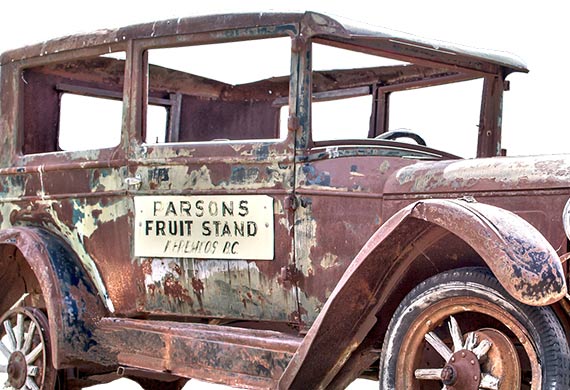
Bumper sticker history includes advertising and marketing displayed on vehicles before the bumper

It wouldn’t be until 1927, with the release of Ford’s Model A, that bumpers were adopted as a safety feature. As quickly as bumpers became commonplace, so did their ornamentation with makeshift signs attached using wire.

Bumper Stickers - The Sticker

Forest Gill, the owner of a Kansas City, KS print shop, is credited with using two wartime technologies (day-glow paint and adhesive-backed paper) in the mid-1940s to create the beginnings of what we now recognize as bumper stickers.

Initially, it was the tourism industry that seized the marketing value of this invention. The first known large volume request from Gill’s print shop was 25,000 bumper stickers for Marine Gardens in Clearwater, Florida. Roadside attractions were no longer limited to their often larger-than-life signage, their name and message were now traveling on highways throughout the country.

It didn’t take long for the giant wheels of political marketing to embrace the bumper sticker. During the 1952 presidential race between Dwight Eisenhower and Adlai Stevenson, bumper stickers gained significant national popularity. Bumper stickers have since been produced and used in most political campaigns, and every presidential election.

Bumper stickers were literally everywhere by the 1960 presidential election. They had become a favorite way for voters to declare their intentions at the ballot box.
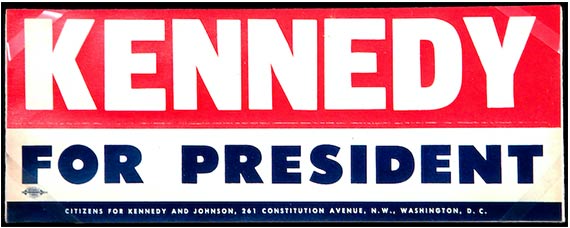
Bumper stickers became wildly popular after being used in political campaigns

Then, in 1968, the company that produced the beginnings of the bumper sticker printed 20 million of them for the presidential campaign of then Alabama governor George Wallace. By this time, bumper stickers had cemented their place in the marketing and advertising industries.

Bumper Sticker Evolution

Over the decades, bumper stickers have been made from various materials. The first bumper stickers were made using paper, but practicality and durability led vinyl bumper stickers to become the standard. Screen printing bumper stickers was commonplace until the 1990s when they were produced with a variety of different printing technologies.

Bumper stickers eventually evolved to include decals and placards. The most successful of them is the “Baby on Board” sign. The sign was developed and marketed by Michael Lerner, a Massachusetts businessman with no children. In less than a year of its release, Mr. Lerner sold 3 million of his signs.

Other significant, and wildly popular, bumper sticker creations include:

  • The ichthys, “Coexist”
  • My Child is an Honor Roll Student
  • Soccer Mom
  • Please Be Patient Student Driver
  • Stick Figure Family (decals)
  • Peace and Love
  • M.A.D.D. (Mothers Against Drunk Diving)

Stick figure decals evolved from the popularity of bumper stickers

In 1991, a Georgia resident was charged with violating a state law prohibiting automobile owners from attaching “any sticker, decal, emblem, or other device containing profane or lewd words.” In Cunningham v. the State, the owner successfully argued this law was unconstitutional. The court agreed with him, ruling that the law violated the 1st and 14th Amendments. As such, the bumper sticker was now protected by freedom of speech.

European Bumper Stickers

The United States saw a massive explosion of messaging and marketing through bumper stickers. But, 1969 saw European countries requiring white, oval bumper stickers with the iconic black outline, and a 1, 2, or 3 letter country code be displayed on all vehicles.

European country identifying decals are a part of bumper sticker history

The 1980s saw the European oval bumper sticker gain popularity in the US as a status symbol. And by the 2000s, as Europe phased out the sticker, it had gained increasing popularity with restaurants, popular vacation destinations, tourist attractions, and other marketing uses in the US.

Bumper Stickers

In this article, you discovered how bumper stickers were created, how they evolved over the decades, and how they’ve been used to convey information.

By knowing how bumper stickers evolved and, in many cases, earned their place in our memories, you can better appreciate their potential impact in a marketing strategy.

Without including bumper stickers in your marketing strategy, you are excluding a powerful means of communication, potentially leaving significant revenue opportunities on the table.

Sources:
archive.news.ku.edu/2011/february/14/bumperstickers.shtml
magazine.northeast.aaa.com/daily/life/cars-trucks/bumper-stickers/
nytimes.com/2012/09/23/magazine/who-made-that-bumper-sticker.html
outlook.monmouth.edu/opinion/33-volume-85-fall-2013-spring-2014/633-the-obsession-with-bumper-stickers
mtsu.edu/first-amendment/article/988/bumper-stickers

Clash Graphics Print Shop Atlanta Flyer Printing

2233 Peachtree Rd NE Ste 202 Atlanta, GA 30309

(678) 235-3464

To view the original version on Clash Graphics, visit: https://www.clashgraphics.com/printing-tips/history-of-bumper-stickers/

Wednesday, June 17, 2020

The Future of The Printing Industry

Not knowing where the printing industry is heading can put you at a disadvantage. Despite the explosion of online marketing and social media advertising, the printing industry is evolving but continues to be vibrant.

Future of the printing industry mixes traditional methods with technological advancements in paper ink and machinery

Clash Graphics gathered information about the future of the printing industry, what has happened over past decades, and new strategies and technologies driving it to remain relevant.

The Future of Printing

Making predictions is a risky business. However, there are three areas that top printers are embracing to remain profitable and relevant as technology and consumer trends change. Those areas are:

Innovation/Diversification - Through mergers, companies streamlining their processes, technological advancements, and changing market demands, only the printers that adopt new technology and transition from traditional print to more of a “communications company” will survive.

Digital Technology - In the future, print will remain relevant because of its reliability in driving an audience online. Ultimately, people like to hold printed objects. Through this tactility, marketers will undoubtedly continue to integrate print with digital technology.

Custom Print - The days of printing massive numbers of flyers, brochures, etc. to cover as many people as possible, are coming to an end. In today’s market, smaller, more customized runs that target specific customers and demographics are on the rise.

To grasp an idea of how printing has evolved over the years, read clashgraphics.com/printing-tips/how-many-types-of-printing/

What Happened to The Printing Industry?

For more than two decades, the printing industry endured a significant reduction in business volume, manpower, and, subsequently, revenue. This occurred due to the increases in business workplace technology (PC’s, software, etc.) and onsite printing capabilities (inkjet, laser, etc.). Other factors include:

Future of the printing industry and in office equipment for marketing and advertising development

  • Online direct marketing
  • Social media advertising
  • Increasing paper costs
  • Increased ink and supply costs
  • Postal rate uncertainties
  • “Paperless” initiatives
  • Healthcare cost increases
  • Increased cost for related support services

According to the Bureau of Labor Statistics (BLS), employment in the printing and related support activities industry (bookbinding, graphic design, data imaging, etc.) are expected to decline by roughly eighteen percent between 2016 and 2026.

Also, from BLS, continued loss of the market share to other media and continued automation causes net employment to decline in the future. But this is happening at a much slower pace than in recent years. In the decade between 2006 and 2016, the industry had declined by about thirty-four percent.

In contrast to BLS information, the Printing Industries of America (PIA) forecast a one to two percent increase in revenue from 2019 to 2020 and printers’ profits, are to sustain historic growth levels.

Changes in the Printing Industry

To compete with internet and social media marketing strategies, the printing industry has had to consolidate and diversify to remain both relevant and profitable. Services that were once third-party “related support activities” are now being integrated and offered in house.

Further defying BLS predictions, the majority of printers have adjusted their business models to account for changing industry trends and realities. Types of products that continue in demand include:

  • Direct mail
  • Menus
  • Specialty printing
  • Large format
  • Labels
  • Brochures
  • Business cards
  • Packaging
  • Promotional products
  • Product/Point-of-purchase displays

Future of the printing industry and large format print to continue meeting marketing and business needs

Some of the services that many printers have brought in-house include:

  • Kit fulfillment
  • Professional creative/graphic design
  • Web-to-print (documents, marketing, brand management)
  • Logistics management
  • Marketing development
  • Custom website creation and curation

For many printed products, like packaging, a substitute does not exist. For others like magazines, newspapers, books, and store catalogs, there are electronic equivalents. The internet, mobile technology, and tablet publishing have had a significant impact on the printing industry. However, once again, the statement that “print is dead” grossly overlooks key advantages of printed communication. Consider the following:

  • Printed material allows for easy distribution to a specific region or target market
  • Various printed publications maintain a level of popularity unrivaled by online/electronic media
  • Printed media are often more engaging than electronic equivalents
  • Printed material continues to produce positive results in marketing strategies and campaigns

With today’s online and technological capabilities, printers can assist a business from project creation to project completion, even distribution. As well, their consultants can help businesses build their brand and develop a comprehensive marketing strategy.

Future of the printing industry icludes printed material like newspapers magazines and easily circulated marketing products

Printing Technology

Significant advancements in technology have had an incredible influence on the printing industry. The following are just two of the printing technology trends making an impact on the industry:

Sustainable Packaging - Environmental concerns and high demand for recycled material have prompted the printing industry, specifically the packaging industry, to seek drastic changes in the form of:

  • The use of recycled paper
  • The use of flexible, biodegradable plastics
  • Using folding, collapsable, and reusable boxes
  • Using eco-friendly alternative ink when printing

By using friendly printing technology and techniques, the industry can improve biodegradability, recycling, and the use of sustainable raw materials.

3D Printing - The applications of 3D printing has gained significant interest in recent years. Some of the industries already implementing 3D printing include:

  • The Health Industry (printing skin for grafts and researching how to print organs)
  • The Food Industry (restaurant chefs use this technology to improve plating and design some foods)
  • The Fashion Industry (big brands use 3D printing in sneaker and t-shirt production among other applications)
  • The Architecture Industry (3D printing is widely used to create precise scale models and has been used to build/print full-size structures)

As new technologies are applied to the printing industry, machinery, systems, and raw materials become more efficient, sustainable, and in demand.

Future of the printing industry includes innovations and applications in 3d print

The Future of Printed Media

In this article, you discovered the factors influencing the future of the printing industry, what has affected it in the past, and the technology driving it forward.

By embracing new technology, a streamlined way of meeting customer needs, and offering diversified products and services, the printing industry has remained robust and relevant through the digital revolution.

Those that have failed to incorporate new technology and business strategies have either gone out of business, been absorbed by other companies, or are finding it more and more challenging to keep their doors open.

Sources:
qualityinfo.org/-/technology-reduces-employment-in-the-printing-industry
printing.org/press-room/printing-industries-of-america-to-bureau-of-labor-statistics-print-is-still-here-were
bls.gov/iag/tgs/iag323.htm
scholarworks.rit.edu/cgi/viewcontent.cgi?article=1048&context=books


Clash Graphics Print Shop Atlanta Flyer Printing

2233 Peachtree Rd NE Ste 202 Atlanta, GA 30309

(678) 235-3464

To view the original version on Clash Graphics, visit: https://www.clashgraphics.com/printing-tips/future-of-printing-industry/

Tuesday, May 19, 2020

How Many Types of Printing Are There

Avoid wasting your time and money on a bad print job. By knowing what types of printing are available to you, you can achieve stunning results on your next print project.

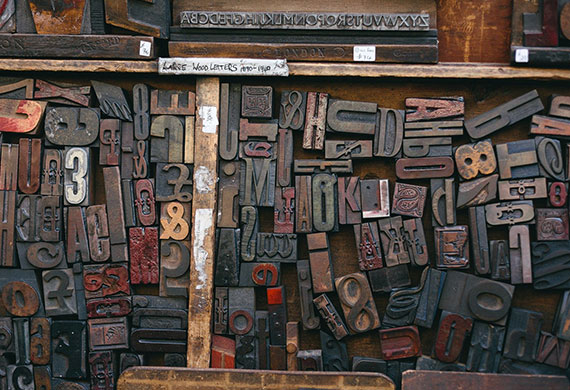
Wood printing blocks used in presses

Clash Graphics gathered information on 7 forms of printing to help you make informed decisions when selecting the right type of printing for your next print job.

Flexography

Flexography, sometimes called flexo, is an updated version of letterpress printing. This method of printing can be used on almost any type of substrate, including:

• Label stock
• Fabric
• Metallic film
• Corrugated cardboard
• Cellophane
• Bags
• Product packaging
• Plastic

Flexography used to print on various substrates

Flexography prints from a flexible printing plate that is wrapped around a rotating cylinder.
The process uses quick-drying, semiliquid inks transferred to the printing plate by rotating cylinders.

Offset Lithography (Offset)

Offset printing uses plates, frequently made from aluminum, which are used to transfer an image onto a rubber "blanket", and then rolls that image onto a sheet of paper. It's called offset since the ink is not transferred directly to the paper. Since offset presses run so efficiently once they are set up with plates and colors, offset printing is one of the best choices. Especially when more significant quantities are ordered, and provides accurate color reproduction and professional looking printing.

Offset printing uses a plate to transfer an image to a rubber blanket to roll the image onto paper

Digital Printing

Digital printing disposes of the need for plates, but instead uses toner for smaller printers and sometimes liquid ink in larger digital printers. Digital printing outperforms other types of printing when lower quantities are needed. Another benefit of digital printing is its flexible data capability. When each printed unit requires a unique code, name, or address, digital is the superior option.

Digital printing uses ink or toner to produce images from digital files

Read about the advantages and disadvantages of digital and offset printing at clashgraphics.com/printing-tips/digital-vs-offset-printing-explained/

Screen Printing

Screen printing is a technique in which mesh is used to apply ink onto a substrate, except in specific areas made impenetrable to ink by a blocking agent. A squeegee is moved across the screen to fill the open mesh with ink. A reverse stroke causes the screen to make contact with the substrate momentarily. Contact from the reverse stroke causes the ink in the mesh to wet the substrate and be pulled from it as the screen lifts off of the substrate. Only one color is applied at a time, so to produce a multicolored product, a single screen must be produced for each color.

Screen printing is a process which allows the application of one color at a time using a screen and squeegee

Find out more about screen printing at clashgraphics.com/printing-tips/screen-printing-heat-transfer-direct-to-garment-custom-t-shirts/

Wide-Format Printing

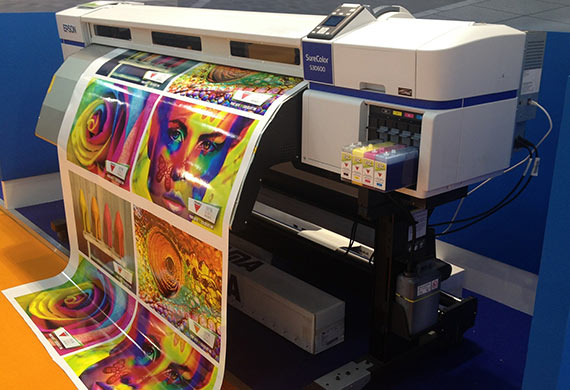
Large or wide-format printing is a medium that has been growing in popularity for advertising. Its purpose is to support maximum print roll width. The advantage of this type of printing is the ability to work with a bigger area. Wide-format printing can be used to produce banners, posters, murals, wallpapers, and billboards. This printing type is ideal for projects that require wide images, large texts, and visual or graphic-heavy designs.

Wide format printing allows for the easy creation of banners posters wallpaper and billboards

3D Printing

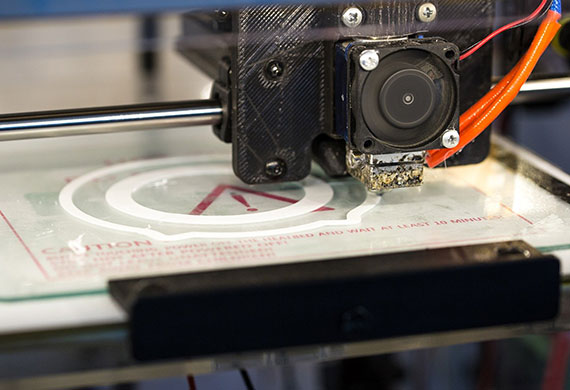
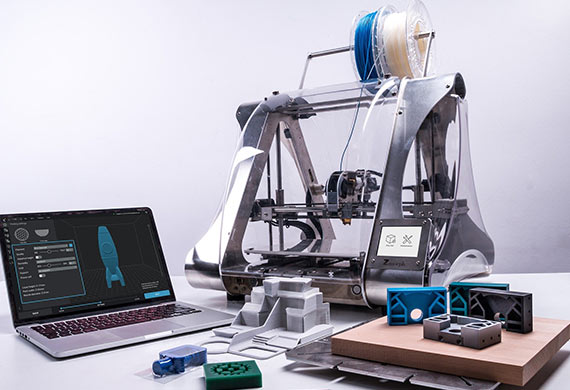
3D printing, also referred to as additive manufacturing, is the process of making a three-dimensional object from a digital file. 3D printed objects are made using an additive process. An additive process means that an object is created/formed by applying successive layers of material until the object is finished.

3D printing to make three dimensional objects from a digital file

LED UV Printing

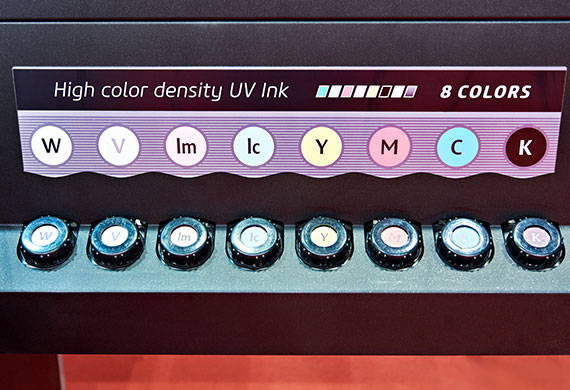
In traditional printing types, inks are typically solvent-based and dry as their chemical components evaporate. LED-UV inks dry (cure) instantly using a UV light.

The difference between UV and LED-UV is the light used to cure the ink. LED-UV generates an energy wavelength from light-emitting diodes (LED) entirely used to cure the ink. Traditional UV produces an energy wavelength from a mercury-vapor bulb that is less efficient, as only part of the wavelength is used to cure inks and/or adhesives.

LED UV printing cures ink instantly during the print process

Defining Your Print Project

Once you have determined which printing type fits your project best, your next determination should be the type and quality of the substrate or paper. For more detail about paper types and qualities, visit clashgraphics.com/printing-tips/paper-quality-and-type/

Regardless of how many times you’ve proofed your project before sending it to your professional printer, always request a prepress proof. A prepress proof allows you to see what the finished product will look like and allow last-minute adjustments in color and print.

Prepress proofs allow you to detect imperfections and needed corrections before a print run

Types of Printing

In this article, you discovered information about 7 types of printing and how to determine which one best suits your printing project.

By knowing what printing options are available to you, you can adjust your project as needed while being in full command of the end result.

When you are entirely reliant on others to produce your vision, you may lose valuable time and resources, waiting for them to get it right. If they ever do.

Sources:
web.tech.uh.edu/digitalmedia/materials/3350/Flexography.html
westga.edu/pubprint/offset-printing.php
printcopymail.umich.edu/copysvcs/digitalprinting.htm
wisegeek.com/what-is-screen-printing.htm
libguides.utk.edu/AVM3D_Print_Lib_Guide
flaar-reports.org/index.php/services/


Clash Graphics Print Shop Atlanta Flyer Printing

2233 Peachtree Rd NE Ste 202 Atlanta, GA 30309

(678) 235-3464

To view the original version on Clash Graphics, visit: https://www.clashgraphics.com/printing-tips/how-many-types-of-printing/

Monday, April 13, 2020

Choosing The Right Paper Quality and Type for Your Print Project

Don’t let the wrong paper ruin your print job or marketing materials. Make a more significant impact on your clients by knowing which paper is best suited for your printing projects.

Paper quality type print project

clashgraphics.com gathered the following information to assist you in making informed decisions when selecting the right type and quality of paper for your next print job.

Preferred Paper Stock for Printing

While there may be subtle differences in quality from each manufacturer, the best options for the paper stock include the following attributes:

• High Thickness (provides better stability)
• High Opacity (permits more substantial ink coverage)
• High Brightness (amplifies the brightness of the ink)
• Smooth Surface (more absorbent, reduces blotting and other imperfections)

The type of ink and method of printing may impact the outcome of your project. Discuss these and the following options with your graphic designer or print shop.

Types and Grades of Paper

Different types and grades of paper are more suited for different uses. Consider the following:

• Text and cover paper stocks are recommended for branding and premium marketing materials
• Bond or writing paper is recommended for branding pieces, like letterhead
• Uncoated offset paper is recommended for books, manuals, and uncoated writable business cards
• Opaque paper stock is recommended for marketing tools like business cards, flyers, and brochures
• Safety paper is ideal for checks and coupons
• Parchment is a popular option for certificates
• Pressure-sensitive stock is recommended for labels

Exceptional paper stocks possess a sturdy and robust feel, these attributes encourage your clients to look at your products and services the same way.

The combination of a paper’s properties will dictate how it should be used. It is your project that determines which of those properties is essential.

Printing paper quality and type

Common Printing Project Paper Weights

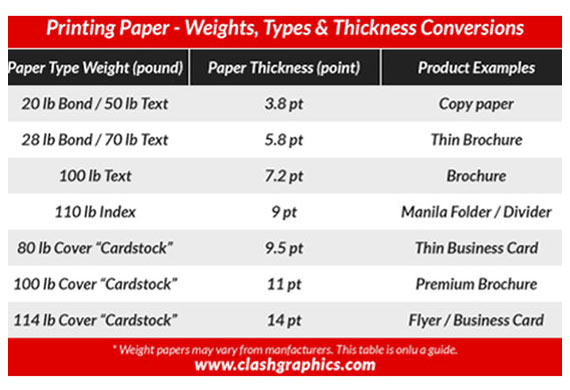
Paper weight can be measured and represented by several metrics. The team at Clash created this quick reference to identify the most common types, weights, and measurements of paper:

IMAGE CLASH GRAPH (ATTACHED TO ASANA TASK)

Paper quality weight and thickness chart

The measurements, attributes, and qualities identified in the chart above can be defined as follows:

Pound - Indicates how many pounds 500 sheets of a paper grade weighs.

Point - Represents the thickness of an individual sheet measured with a caliper that measures micrometers (thousands of an inch).

The following are popular paper weights and their uses:

Text - This paper is often referred to as “offset,” and has a wide range of applications.

Bond - Uncoated stock, often called “writing” paper, is most commonly used in office printers and copy machines.

Cover - These are mostly rigid and not easily folded. This paper is frequently used as publication covers, business cards, folders, and postcards.

Read more about paper weights and thickness at clashgraphics.com/printing-tips/printing-paper-weight-thickness-conversions-guide/

Common Paper Coatings

The stock you select for your printing project can be enhanced by coatings. Commonly used coatings include:

Matte - Gives the finished product a softer, glare-free appearance

Gloss - Delivers a polished sheen with vibrant, crisp images

Velvet - Gives paper a soft, luxurious coating

Spot UV Coating - Used to highlight an image or portion of your project

AQ Coating - Provides a high-gloss or mate surface to protect printed pieces

Linen - Offers the elegant look of woven linen

The type of coating you apply to your project can affect the readability and smoothness of the final product. Ask your print shop to see examples of each coating before deciding on one to use.

Choosing The Paper for Your Print Project

Paper quality type and weight

Using the information above with the paper/project associations listed below, you can identify the ideal paper stock for your printing project:

Standard White 70lb.

• Letterhead
• Envelopes
• Memo pads
• Notepads
• Message pads
• Newsletters
• Resumes

Matte Text 70lb

• Calendar (interior pages)
• Coloring book pages
• Booklet pages
• Brochures

Paper quality type matte text

2-Sided Gloss Text 80lb.

• Menus
• Booklet pages
• Comic book pages

White Linen Text 80lb.

• Business cards
• Postcards
• Greeting cards
• Letterhead
• Menus

2-Sided Gloss Text 100lb.

• Menus
• Calendar pages
• Brochures
• Flyers
• Newsletters
• Posters
• Door hangers

2-Sided Gloss Cover 100lb.

• Brochures
• Calendar covers
• Comic/Coloring book covers
• Catalog covers
• Flyers
• Posters

Uncoated Cover Stock 114lb.

• Writable business cards
• Writable postcards
• Flyers

Gloss Cover Stock 114lb.

• Business cards
• Postcards
• Greeting cards
• Posters

2-Sided Gloss Cover Stock 114lb.

• Business cards
• Postcards
• Greeting cards
• Event tickets
• Flyers
• Bookmarks

Unless you are ordering your print job online, ask your print shop for samples of the paper you are interested in. You can also request examples of finished prints before making a final decision.

Paper quality type and weight for your print project

How To Choose The Right Paper for Your Print Job

In this article, you discovered the different types, weights, qualities, and finishing options to help you make an informed decision when selecting paper for your next printing project.

By knowing how to select an appropriate paper type for your print job, you are helping your project convey the right message about your services and products.

Haphazardly selecting paper for your print job can be a potentially catastrophic mistake for your business, costing valuable time and resources.

Sources:
print.usu.edu/Paper_Types
cios233.community.uaf.edu/design-theory-lectures/all-about-paper/
hecec.human.cornell.edu/2016/09/07/what-resume-paper-should-i-use/

Clash Graphics Print Shop Atlanta Flyer Printing

2233 Peachtree Rd NE Ste 202 Atlanta, GA 30309

(678) 235-3464
To view the original version on Clash Graphics, visit: https://www.clashgraphics.com/printing-tips/paper-quality-and-type/

Tuesday, March 17, 2020

The Importance of Quality Customer Service to Growing Your Business


Poor customer service can kill your business. By knowing how quality customer service translates to business stability and growth, you can better train your employees and associates to exceed your customer’s expectations.

Happy employee providing quality customer service

clashgraphics.com gathered the following information on what quality customer service is, how it improves customer relationships with your business, and how it translates to growth.

What Is Quality Customer Service?

Quality customer service is comprised of the following traits:

• Providing fast, efficient, and friendly service
• Building strong relationships with your customers
• Receiving and quickly handling complaints
• Responding to all customer feedback
• Positive email, text, social media, and website interaction

Success in any business is reliant on its customers. The quality of your customer service plays a significant role in making them loyal to your brand.

Benefits of Quality Customer Service

When you consistently provide superior customer service, your business will benefit from increasing:

• The number of times your customers shop at your business
• The “basket size” or dollar value spent per customer, per transaction
• The customer’s lifetime value (CLV)
• The number of customers attracted by impeccable word-of-mouth advertising
• Customer satisfaction and favorable reviews
• Customer loyalty to your brand
• Your competitive advantage

Among the most significant rewards of quality customer service are your employees beaming with pride and the ability to dramatically reduce your marketing costs over time.

Growing business with quality customer service

At times, businesses are so similar in their products, prices, location, etc. that the only striking difference is in the quality of their customer service.

Today’s consumers tend to repeatedly shop where they feel comfortable, welcome, and heard. Whether you have a brick and mortar location or do business online, your customers will respond to how they are treated with their wallets.

How To Improve Customer Service in Your Business

By investing the time to improve your business’ customer service, you are investing wholly in the growth of your brand.

Quality customer service training to grow the business

To put this concept better into perspective, think about where you do your grocery shopping and answer the following questions:

• Is parking readily available, or are you dodging shopping carts to find a spot?
• Is the entryway to the store clean and free from foul odors?
• How do you feel once you are in the store?
• Is the store clean?
• Are the items you need in stock and readily accessible?
• How long did it take before you were greeted or acknowledged?
• Do any of the employees know you by name?
• Are there enough open registers to keep lines short and moving?
• How was your experience checking out and paying for your purchases?

You will be grocery shopping in-store or online your entire life (unless you have someone do it for you). It’s a household necessity. Why would you give your money and patronage to a store or brand that doesn’t, at least, make an effort to exceed your expectations?

As consumers, for the most part, we readily give our long-term patronage to businesses that treat us with respect and make us feel like the most crucial part of their business. Consider the following to improve your customer service:

Product Knowledge - The more knowledgeable your staff is about your products and services, the easier it is to answer customer questions and doubts.

Work Environment - The more satisfying and rewarding your workplace is, the more committed your staff will be.

Employee State-of-Mind - Within your work environment, are employees heard when they express concerns? Is your staff encouraged to think independently and responsibly during their shift? Micromanagement often creates a poor atmosphere for staff and customers alike.

Cleanliness - Keep your location inviting, pleasant, and tidy.

Clean sales and service location for superior customer service experience

Maintenance - Keep your production equipment, refrigeration units, etc. in good working order to avoid production slow-downs and customer frustration.

Training - Observe, coach, correct, and encourage your staff to continuously seek improvement in dealing with customers.

Customer Complaints - Establish a fast and straightforward policy for handling complaints or product returns. Take ownership of their problem and provide them with a solution promptly.

Trust - Trust is built by honoring your word. When you tell a customer you will provide or do something, do it. And do it right the first time.

Availability - Be available to your staff, willing to help them whenever they have questions or problems. Then encourage them to practice the same availability with each other and your customers.

By focusing on the well-being and betterment of your staff, you are supporting a superior level of customer service. You can measure this and the growth of your business by the following:

• Online Customer Survey
• Daily, Weekly, Monthly, and Annual Sales
• Average Basket Size
• Customer Count

You can also have survey cards printed. Hand the survey to your customers and encourage them to fill it out. Provide a box or container to maintain their anonymity (this also encourages them to be blunt when needed).

Customer surveys are only valuable when you are committed to acknowledging their concerns and making proactive changes.

Read more about increasing your company’s revenue at clashgraphics.com/printing-tips/4-strategies-guaranteed-increase-your-companys-revenue/

Customer Service

In this article, you discovered what quality customer service involves, how your business benefits from it, and how it converts to growth.

By promoting the highest level of customer service to your customers, you also foster a sense of pride amongst your employees and create an environment for your business to grow.

When you continuously provide mediocre service to your customers, you can expect your business to decrease and your revenue to tank.

Sources:
bizfluent.com/about-5437915-quality-customer-service-important.html
business.tas.gov.au/managing-customers-and-suppliers/the-importance-of-customer-service
www.k-state.edu/cecd/docs/pdfs/Session%201-%20Option%203%201.pdf

Clash Graphics Print Shop Atlanta Flyer Printing

2233 Peachtree Rd NE Ste 202 Atlanta, GA 30309

(678) 235-3464

To view the original version on Clash Graphics, visit: https://www.clashgraphics.com/printing-tips/importance-of-quality-customer-service-growing-your-business/

Tuesday, February 18, 2020

Looking for Yards To Mow to Grow Your Lawn Care Business

Are you trying to grow your lawn care business with little to no results? By knowing how to market your lawn care business, you can find more yards to mow and turn them into loyal customers.

Professional lawn care results help when looking for yards to mow

clashgraphics.com gathered the following information on marketing your lawn care business to attract new customers, and how to keep them.

How To Find Yards To Mow

Whether you are just beginning or you’ve been in the lawn care business for a while, you can always benefit from new customers and the revenue they bring with them. The following tips are designed to help you grow your lawn care business:

Printed Marketing Material - Until you meet a customer face-to-face, it’s likely going to be the printed marketing material that represents you and your business. The following will help you get the word out about your business:

• Business Cards (clashgraphics.com/printing-tips/tips-to-design-the-best-business-card/)
• Brochures
• Flyers (clashgraphics.com/printing-tips/marketing-with-flyers-use-size-design-and-flyer-printing/)
• Yard Signs
• Door Hangers
• Magnets

Avoid using stock images and overly wordy presentations on your printed material. Take the following into consideration:

• Your printed material needs to create immediate interest with your potential customer. Use images of yourself doing the work, and in their neighborhood if possible.
• Keep your presentation concise and informative.
• Don’t put services or claims in print that you may not be able to perform or keep.
• Use vibrant lawn and garden colors throughout your material (create a color theme).

Work with a print shop that has an internal graphic design department. They can likely help you go from concept to design, and finally to print.


Build A Website - Create a space that your existing and potential customers can visit. Include the following to lend credibility to your business:

• Use photos of your work
• Share your contact information and location
• Include a map of your service area
• Share your prices**
• Include monthly and annual packages
• Describe off-season services you provide
• Include your web address on all printed media and advertising

Get help when building your web site. It is essential to optimize as much as possible, from accessibility across multiple devices to the intentional use of keywords and key phrases. Your website should help your visitor (by providing a solution to the problem they are there for), and be optimized (so your website can be found in searches relevant to your business).

**According to HomeAdvisor, the prices for mowing and lawn maintenance can range from $49 - $219. Although the following number varies based on types of treatments and services, homeowners are spending an average of $133 on lawn services.

Word of Mouth - Perhaps the most effective way to gain new customers is to spread the word and create a level of customer satisfaction that compels them to do the same.

Use word of mouth advertising when looking for yards to mow

For new and existing lawn services, get the word out to everyone you know. This may include:

• Family members
• Neighbors
• Friends
• Coworkers

Canvas the areas where you provide services. Try to meet your potential customer face-to-face and give them your business card, flyer, or brochure. Invite them to visit your website and allow them to make an informed decision about hiring you for their lawn care needs.

Again, in this type of business, you, combined with the quality of your service and your customer interaction, will determine whether or not your business succeeds or not.

Referrals and Rewards - Reward your loyal customers when they refer you to a new customer that uses your services. You can do this in many ways:

• Gift Cards
• Discounted Services
• A free lawn mowing
• Service Upgrade

While these make great incentives, always remember that the quality and integrity of your services will ultimately be the reason your customers refer you.

Social Media - We live in an age where everyone is using some form of social media. They are doing this to keep up with friends, look for services, and offer feedback or comments on just about anything. In addition to your website, consider creating business pages on the following platforms:

• Facebook
• Twitter
• Instagram
• YouTube
• Pinterest
• Tumblr
• Get Pocket
• Scoop.it
• LinkedIn
• WhatsApp

You can write about your business, take videos of your work, give lawn care tips, and tricks of the trade, and post them on multiple platforms. Invite your customers, friends, and family to follow your pages, like, and comment on your posts.

The more quality information you post (relevant to your business), the more momentum you will gain with your followers and search engine rankings.

Non-Competing Partner Companies - Approach companies that provide home services that you are not in competition with, and exchange referrals. For example, a tree service company will likely have residential customers that need lawn care. Likewise, you may have customers that need their trees inspected or pruned.

In this type of relationship, both companies can get new business by referring their existing customers to each other. It’s a win-win.

How To Keep Your Lawn Care Customers

Keeping your existing and new lawn care customers relies mostly on how well you provide the services they have asked of you. Just as important though, is customer service.

Customer satisfaction and referrals help when looking for yards to mow

Always listen to your customers. Respond to criticism and praise with humility, authenticity, and honesty.

When your customer has a problem, give that problem your full attention and solve it efficiently. When the problem is solved, followup with your customer and thank them for the opportunity to fix whatever was wrong.

How To Get Lawn Care Customers

In this article, you discovered how to attract more lawn care customers to your business through marketing, service quality, and customer service.

By knowing how to market your lawn care company efficiently, you can build on your loyal customer base, and grow your business.

When you neglect your company’s marketing needs or fail to attend your customer’s needs, your business will likely lose revenue and struggle to survive.

Sources:
turfmagazine.com/business-management/9-marketing-tips-prepare-lawn-care-business-spring/
lawncare.org/lawn-care-business/

Clash Graphics Print Shop Atlanta Flyer Printing

2233 Peachtree Rd NE Ste 202 Atlanta, GA 30309

(678) 235-3464
To view the original version on Clash Graphics, visit: https://www.clashgraphics.com/printing-tips/looking-for-yards-to-mow-grow-your-lawn-care-business/

Wednesday, January 22, 2020

Digital vs. Offset Printing Explained

You can avoid unnecessary expenses for your printing needs. Knowing the differences between digital and offset printing can help you make smarter decisions when it’s time to print.

Digital vs offset printing color quality and cost differences

clashgraphics.com gathered the following information about digital printing and offset printing, the differences, turnaround time, quality, color, and cost-effectiveness.

What Is Offset Printing?

Offset printing is the most used form of commercial and bulk printing. Invented in 1798 by Alois Senefelder, offset printing or offset lithography is a process in which:

1. Original text and images are scanned or uploaded to a computer
2. Films are produced using a high-resolution imagesetter
3. The image is transferred to a metal, plastic, or paper printing plate
4. Rollers apply oil-based ink and water to the plate (water prevents the ink from bleeding to the non-image area)
5. The inked image is transferred to a rubber blanket (cylinder)
6. The image is then transferred to paper as it passes between the blanket and another cylinder
7. A new plate is produced, and the process is repeated for each color added to the image

Offset printing machine with multiple color runs

The term offset refers to the process of the image not being printed directly from the plate. Rather, it is offset or transferred to another surface that makes contact with the paper.

What Is Digital Printing?

Digital printing refers to printing from a digital-based image directly to media using toner or liquid ink. In this process, the toner or ink sits and dries atop the medium rather than being absorbed by it. Benny Landa, who is known as “the father of digital printing,” shocked the entire printing industry when he unveiled the world’s first digital color printing press in 1993.

Unlike offset printing, the technical steps required to produce reproduction plates are not necessary. Digital printing also allows you to make changes to your project on the fly, without needing to reset any machinery.

Digital large format printer vs offset printing

Project Turnaround Time

One consideration when choosing between digital and offset is how quickly you need the job done.

Offset - Due to the plate production process, fine-tuning of machinery, and typically higher order quantities, the turnaround time for an offset print job can be significantly longer.

Digital - With no need for plate production, machinery maintenance, and lower quantity print jobs, the turnaround time for digital print jobs is much faster.

Digital Printing Wins Turnaround Time

Print Project Quality

The print jobs you will have done are going to represent you or your business. Quality print is an absolute necessity to convey professionalism and confidence.

In this category, both offset and digital possess the capacity to produce high-quality print jobs.

Offset and Digital Printing Tie on Print Quality

Project Color Requirements

Some print projects may require exact color matches. Here are the differences between offset and digital.

Offset - Traditionally, offset printing uses four ink cylinders - Cyan, Magenta, Yellow, and Black (CMYK). Offset, however allows for the printing of true colors such as Pantone color matching and HKS:

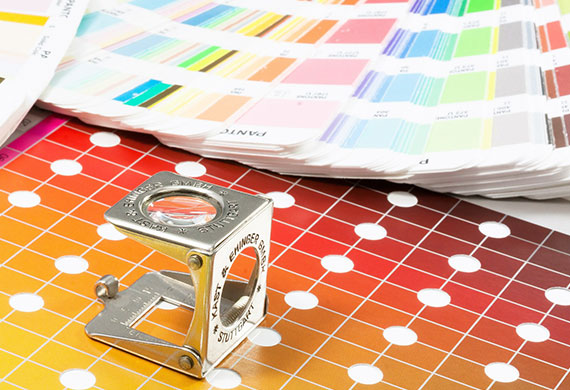
• Pantone Color Matching includes 1,114 individual spot colors
• HKS includes 120 spot colors and 3,520 tones

Digital vs offset printing with pantone colors

Digital - Digital printing uses inkjet or laser printers with a four-color-matching system. It is reliant on CMYK, lacking the capability to match the color and tone variations of Pantone and HKS.

Digital vs offset printing and cmyk color matching

If your print project requires an exact Pantone or HKS color match, digital will not fulfill your requirements.

Offset Printing Wins on Color Matching

Project Cost Effectiveness

Price is often the determining factor for which print process will be used.

Offset - The price for offset printing decreases as the printed number of units increases from a single or series of plates. The initial cost of plate production and machine setup makes smaller print jobs economically inefficient.

Digital - While the cost per unit is higher with digital printing, the costs associated with plate production and machine setup are eliminated.

For print jobs that require sequential numbering or individual personalizations, digital is the way to go, as a new plate would have to be produced for each individualization, making the print job astronomical in price.

Offset Printing Wins (for larger print jobs - over 500 units)

Digital Printing Wins (for smaller print jobs - less than 500 units)

The Difference Between Digital Printing And Offset Printing

Ultimately, digital and offset printing produce high-quality printed products. Their differences only become evident depending on your project’s color, budget, time, and quantity requirements.

Digital Vs. Offset Printing

In this article, you discovered the differences between digital and offset printing, their efficiencies regarding turnaround times, project quality, color limitations, and cost-effectiveness.

By knowing the efficiencies and drawbacks of digital printing and offset printing, you can better meet your printing needs while achieving your budget goals.

Failing to properly evaluate and select the best print options can generate an inadequate product, or create the need to completely rerun the project, simultaneously generating more expenses and frustration.

Sources:
pirate.shu.edu/~mckenndo/Offset%20Lithography.htm
printcopymail.umich.edu/copysvcs/digitalprinting.htm
landanano.com/about-us/benny-landa

Clash Graphics Print Shop Atlanta Flyer Printing

2233 Peachtree Rd NE Ste 202 Atlanta, GA 30309

(678) 235-3464
To view the original version on Clash Graphics, visit: https://www.clashgraphics.com/printing-tips/digital-vs-offset-printing-explained/